

 Sasha Campbell
As a farmer, the last thing you want to see in your garden is harmful insects and other pests damaging your crops.
Some insects are beneficial to have around. However, others are a nuisance and can be downright harmful to humans, plants, and livestock [1].
Common Garden Pests
Below is a list of 35 common pests on plants you’ll want to get rid of. We’ll also look at the damage they can cause and how to naturally get rid of them in your garden.
1. Caterpillars
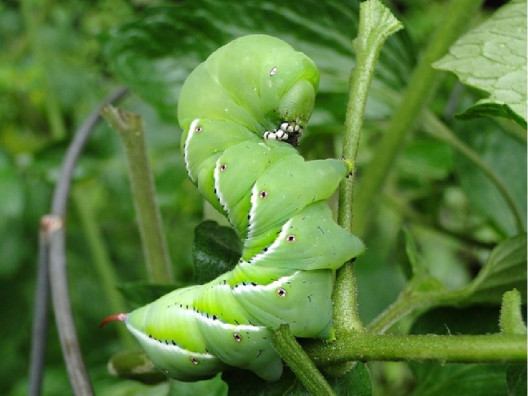
Caterpillars are among the insects that eat farmers’ crops.
It can be challenging to remove them, as they often hide well due to their camouflage and protective colors.
Some caterpillars, such as tomato hornworms, commonly attack peppers, tomatoes, eggplants, potatoes, and tobacco.
Gardeners generally refer to the ones found on tomato plants as hornworms because they have a “horn-like” projection on their rear ends.
2. Leaf-Footed Bugs
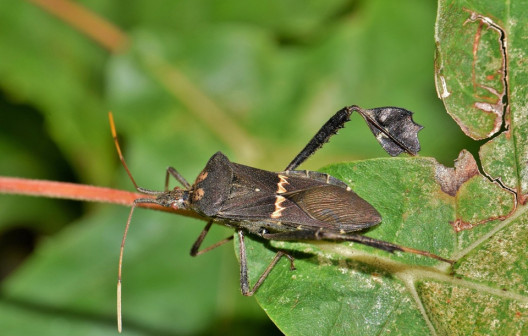
They adore tomatoes and pomegranates. Therefore, more damage is expected to those plants. Read: How to Get Rid of Leaf-Footed Bugs Naturally.
Leaf-footed bugs (Leptoglossus) don’t harm humans but have a foul odor when crushed.
Generally, you will see apparent signs of damage on leaves and fruit. Both adults and nymphs suck juices from fruits, seeds, stems, and tender plant parts.
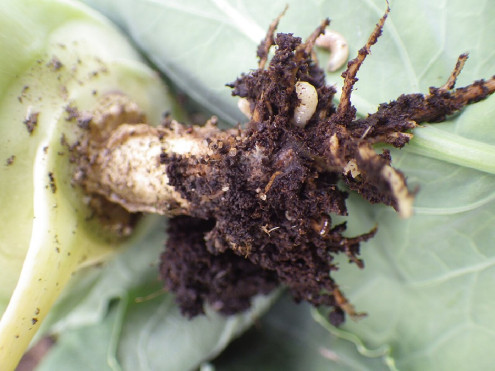
3. Cabbage Maggots
Photo “Kohlrabi Kohlfliegen-Maden im Strunk” by Josef Schlaghecken, licensed under CC BY 4.0. Source: Wikimedia Commons.
These crop pests damage plant roots and can kill young or weakened plants. Cabbage root maggots can be challenging to control.
Crops that cabbage maggots feed on include cabbage, radish, kale, Brussels sprouts, beets, cauliflower, and broccoli.
4. Grubs
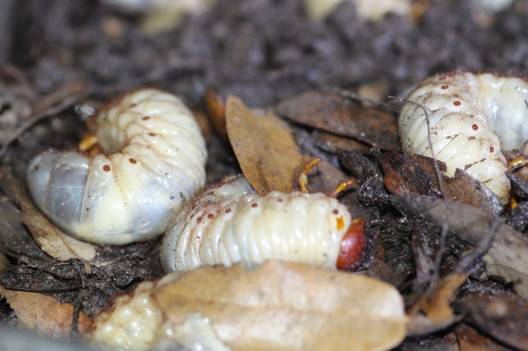
Grubs are the larvae of various voracious garden beetles, such as Japanese beetles, chafers, and June beetles. You usually find these pests (the grubs) in damp soil.
Grub worms eat plant roots, causing wilting plants and brown patches in lawns.
5. Cutworms
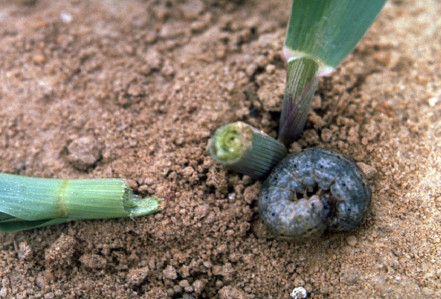
Photo by Hectonichus, via Wikimedia Commons, licensed under CC BY-SA 3.0. Image cropped from the original.
Among the pests that destroy plants, cutworms are most active at night and are found chiefly on seedlings and new transplants.
These fat, black, or gray worms mostly chew through ground-level stems. Yes, they are “bad” garden worms.
A cutworm is about 1 inch long and generally appears in May and June.
6. Aphids (Greenflies)

These vegetable garden pests appear in various colors and are often called greenflies. Black aphids, red aphids, white aphids, brown aphids, yellow aphids, green aphids, gray aphids, or even pink aphids!
They aren’t picky and like to hang out in large packs. Worse still, you can find them everywhere, so they can become a problem in almost any garden or farm.
Sap is their primary food source. These destructive crop pests can quickly weaken plants by feeding on sap, causing leaves to wilt. Aphids may also stunt plant growth.
However, they can be dealt with, so the very second you see them, start researching the most effective ways to get rid of aphids (greenflies) without harming beneficial insects.
7. Kissing Bugs
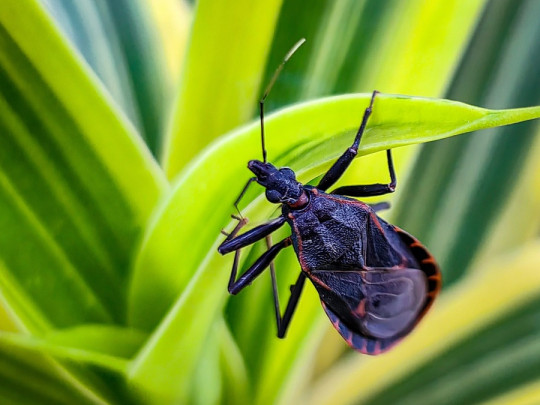
Photo “Kissing Bug” by Heigen Villacarlos, licensed under CC BY-SA 4.0. Source: Wikimedia Commons.
Kissing bugs feed on the blood of humans and other warm-blooded animals. They have a cone-shaped head and red, yellow, or orange stripes around their bodies.
Some species can spread Chagas disease through infected feces. Like mosquitoes, they bite and suck the blood of their victims.
8. Scale Insects

Image credit: “Invasive cedar scales” by Gilles San Martin, via Flickr, licensed under Creative Commons Attribution 2.0 (CC BY 2.0)
The male scale insect looks slightly different from the female.
Females appear as soft or hard bumps on plants and lack wings. The males, on the other hand, have wings and resemble tiny gnats.
Scale insects cause damage by sucking sap from plants. You may notice plants with yellow shades, and then the leaves drop.
If scales are not controlled swiftly, the plant will eventually die. These critters appear primarily on trees, greenhouse plants, and ornamental shrubs.
9. Earwigs

Image Credit: Photo by sankax on Flickr, Author: sankax, License: Creative Commons Attribution 2.0 (CC BY 2.0).
Are earwigs harmful to plants? Earwigs are generally considered beneficial insects. However, when there are too many of them, they can become destructive when populations grow too large.
While the damage is minimal, earwigs typically go after flowers, fruits, and leaves.
10. Sawflies
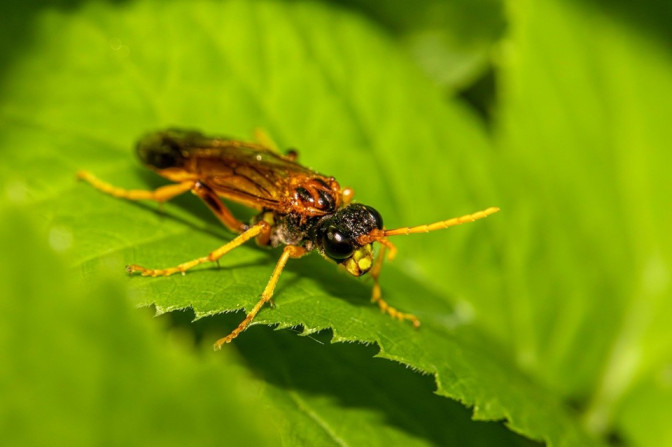
Sawflies are relatives of wasps. The female uses her saw-like ovipositor to create holes in the leaves where she lays her eggs.
Different species of sawflies target different plants. The larvae cause most of the damage by feeding on plant foliage.
11. Slugs and Snails
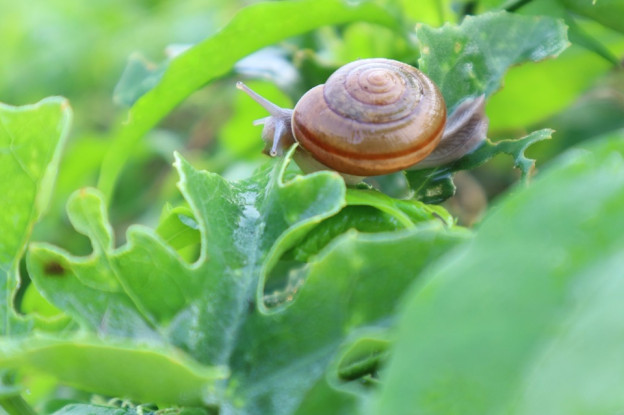
Slugs and snails are not insects but are common garden pests. They are most active in damp and/or shady gardens.
You can spot them in well-mulched areas or under rocks. They are most active at night and chew large holes in plants while feeding.
They typically eat rotting vegetation and plants like hostas, cabbage, lettuce, and basil.
12. Ants
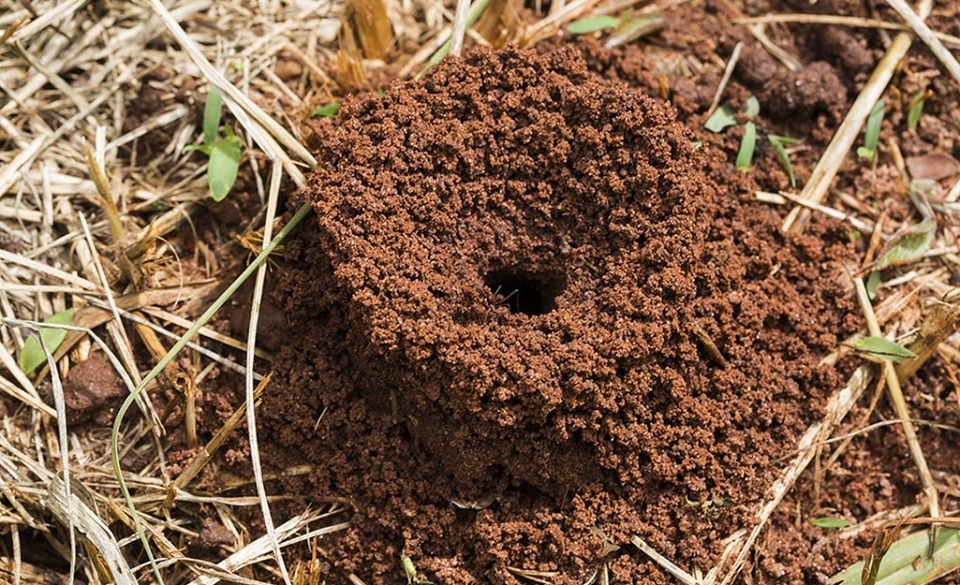
Ants are typically helpful in a garden, but they can become pests when they disturb the soil around plant roots. They also protect aphids and mealybugs from predators, potentially leading to more plant damage.
Driver ants are common in Nigeria and other parts of Africa. Large swarms of driver ants can seriously injure animals and vulnerable people.
13. Stink Bugs
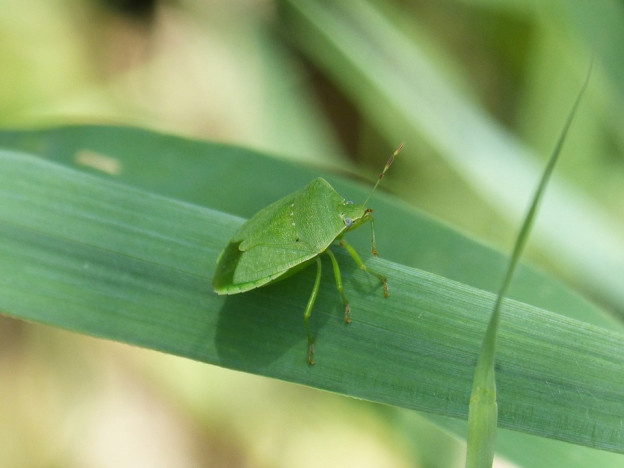
Known for releasing foul odors, plant-feeding stink bugs are present year-round and feed on plant juices.
Damage caused by stink bugs generally leads to early decay and spoilage.
Damage to leafy garden crops will show as yellow or white blotches. Moreover, the skins of tomatoes and other fruits will show cloudy spots where pests feed.
Adults are not always green. They might also be brown or grayish.
14. Grasshoppers
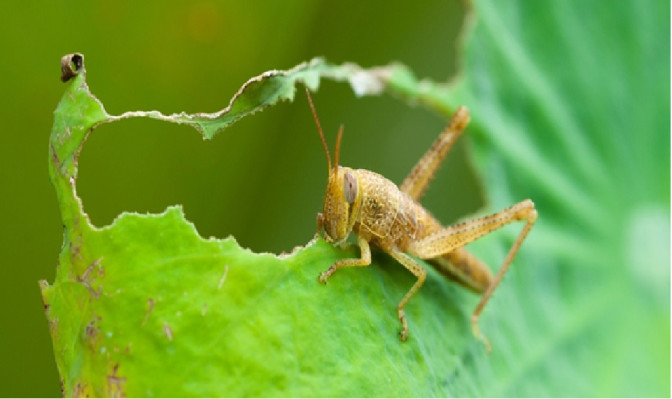
These harmful farm insects are voracious feeders that chew on a live plant’s leaves, flowers, and stems. Grasshoppers are green, brown, reddish-yellow, and are about 1½ inches long.
15. Tarnished Plant Bugs

Image credit: “Tarnished Plant Bug – Lygus lineolaris, Julie Metz Wetlands, Woodbridge, Virginia” by Judy Gallagher, via Wikimedia Commons, licensed under CC BY 2.0.
Another bug that might be eating your plants is the tarnished plant bug (TPB), Lygus lineolaris. These greenish-brown bugs feed on plant sap.
They can damage plants like strawberries, cotton, tomatoes, and celery. Damage includes catfacing and aborted fruit buds.
16. Thrips
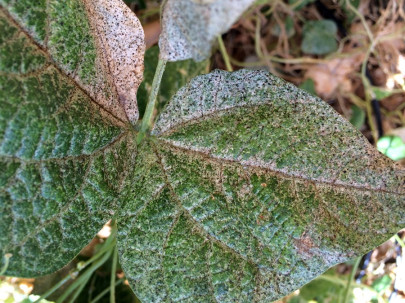
Thrips suck the juice from leaves, flowers, and fruits. If you notice that your plants have silvery speckling, streaks, or small white patches, these critters may be present.
Moreover, they feed in large groups; you will likely find them in greenhouses, as well as in indoor and outdoor gardens.
They will target carrots, onions, beans, garlic, squash, and flowering plants. Thus, getting rid of thrips is vital for healthy crops and plants.
17. Whiteflies
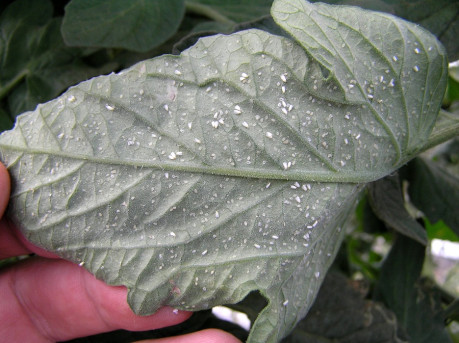
Commonly found in large groups on the undersides of leaves, whiteflies suck the sap from plants in gardens and greenhouses.
Heavy infestations can severely weaken plants. They cause leaves to shrivel and turn yellow, eventually falling off.
Whiteflies also secrete honeydew, which causes black, sooty mold. Infestations are usually found on squash, citrus trees, potatoes, peppers, okra, tomatoes, and plants in the cabbage family.
18. Leafrollers
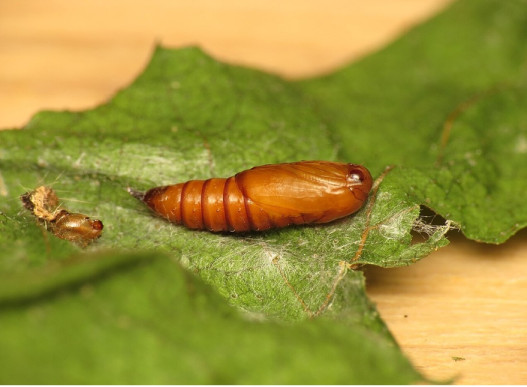
Photo “Tortricidae sp.” by Donald Hobern, licensed under CC BY 2.0. Source: Wikimedia Commons.
Leafroller insects are the caterpillars (larvae) of certain moths. You will see rolled leaves that contain caterpillars after the adult moth visits.
They tend to target woody plants and fruit trees. Large infestations can defoliate trees and damage fruit.
19. Mexican Bean Beetles
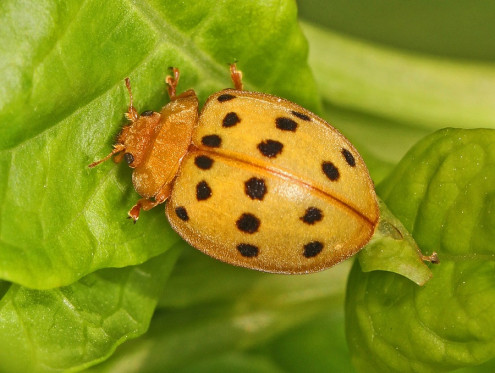
Image by Flickr user, available on Flickr, licensed under CC BY 2.0.
Although they resemble helpful ladybugs, Mexican bean beetles are destructive plant pests.
Mexican bean beetles eat various plants, including lima beans, snap beans, soybeans, alfalfa, and cowpeas.
These annoying little critters like to chew on the underside of leaves, creating a skeletonized appearance. Leaves may also curl and fall off.
20. Squash Bugs
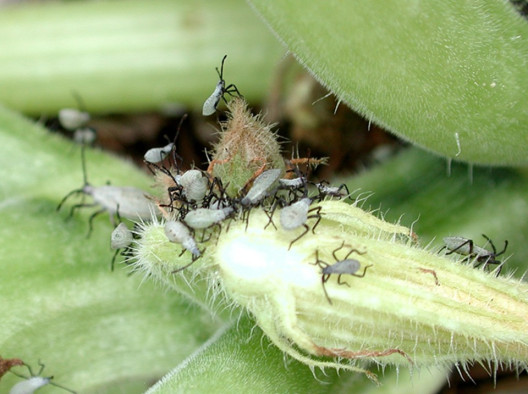
Photo “Squash Bug Nymphs (Anasa tristis) on Yellow Summer Squash Plant” by Pollinator, licensed under CC BY-SA 3.0; Source: Wikimedia Commons.
Squash bugs are a common and frustrating garden pest.
These bugs can become a major problem for gardeners. They love the wide, shady, sheltering undersides of the broad leaves of pumpkins, squash, and gourds.
Their eggs are small, smooth, yellowish-brown pebbles. You might find them in clusters on the undersides of your gourd’s leaves. Check out the natural ways to get rid of squash bugs.
21. Blister Beetles
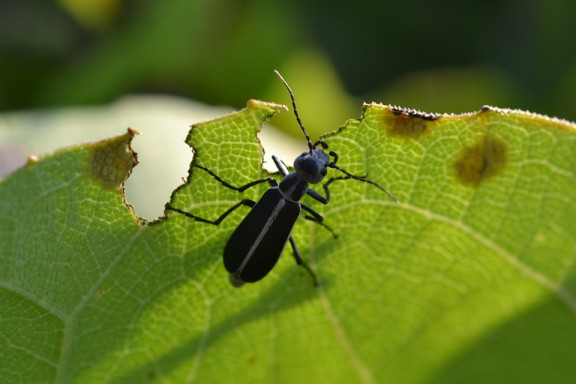
Photo “Marginated Blister Beetle (Epicauta funebris)” by Andrew C, licensed under CC BY 2.0. Source: Wikimedia Commons.
This beetle is a serious problem for many farmers trying to keep their hay in good shape. The blister beetle has a taste for the stuff and can quickly damage hay and forage crops.
Worse, blister beetles operate in swarms and contain a toxin called cantharidin that can poison animals if swallowed [2].
Hay contaminated with the toxin can make horses sick. The toxin is released if beetles are hurt or killed.
22. Harlequin Bugs
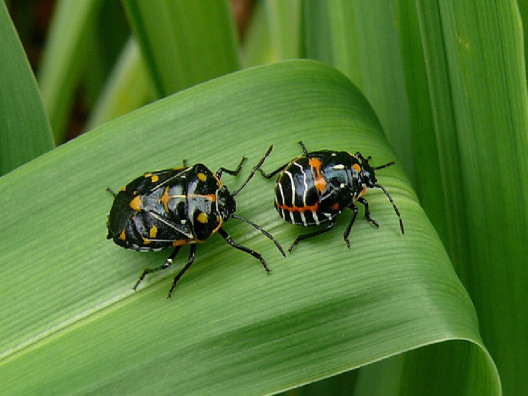
Picture credit: “Harlequin Bug adult and nymph” by Linda Tanner, via Wikimedia Commons, licensed under CC BY 2.0.
Harlequin bugs are harmful garden bugs. They are red, orange, deep blue, or black stink bugs that target cruciferous plants, such as cabbage and broccoli.
They can also attack tomatoes, squash, okra, and other plants. The affected plants will have cloudy, discolored puncture marks.
23. Beet Armyworms
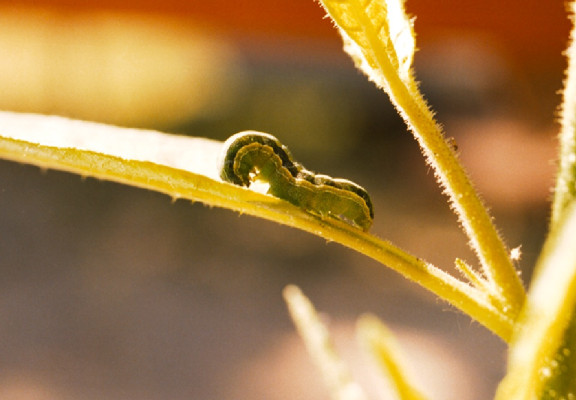
Photo “Spodoptera exigua larva feeding on Nicotiana attenuata” by Unknown author, originally published in PLOS Biology, licensed under CC BY 2.5. Source: Wikimedia Commons.
These armyworms feed on scallions, cucumbers, cabbage, corn, grass, grains, and other crops.
Beet armyworms feed heavily before entering the pupal stage inside a cocoon. They’re dubbed armyworms because they tend to move in groups.
24. Boxelder Bugs
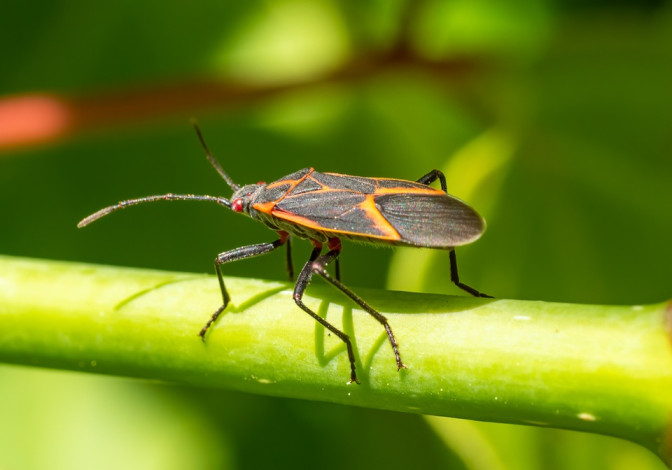
These well-known bugs have red spots on their black bodies. Their wings also stand out.
Are boxelder bugs harmful? Not really; however, they can become a nuisance when they appear all over your home. If not managed early, they may continue returning year after year.
Regarding crops, you only have to worry if you have fruit trees on your property. Damage can result in minor deformities in both leaves and fruit.
25. Flea Beetles
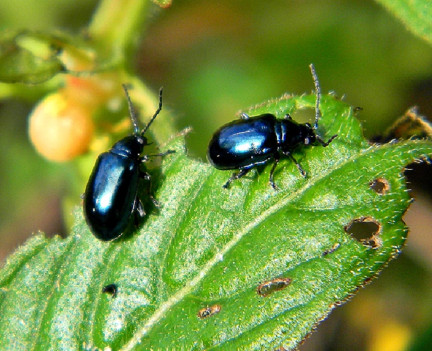
Image credit: “Metallic blue flea beetles (Altica sp.) (6528246639)” by Bob Peterson, via Wikimedia Commons, licensed under the CC BY-SA 2.0.
Flea beetles are tiny but resilient and persistent pests. When disturbed, they look and act like fleas, jumping high into the air and vanishing just as quickly.
Flea beetles can also spread disease among your plants. Some species can spread plant diseases, including Stewart’s bacterial wilt in corn [3]. Once spotted, they should be controlled as quickly as possible
These leaf-eating insects munch on vegetables. They like potatoes, cabbage, tomatoes, corn, and peppers.
26. Fruit Flies
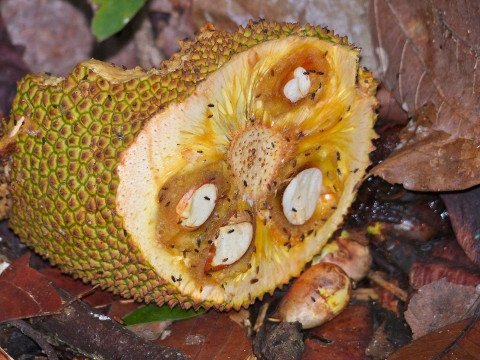
Image credit: “Jackfruit (Artocarpus sp.) attracting Fruit Flies (Drosophila sp.) (15011830244)” by Bernard DUPONT, via Wikimedia Commons, licensed under CC BY-SA 2.0.
Fruit flies are tiny flies that you have likely seen before. They love overripe and rotting fruits and vegetables.
Some species lay eggs in damaged or ripening fruits, where the larvae later feed. Later, the eggs hatch into maggots that feed on these fermenting fruits and vegetables.
Bananas, tomatoes, mangoes, and grapes are some of their favorites. Fruit flies may also be seen around the compost.
27. Black Vine Weevils
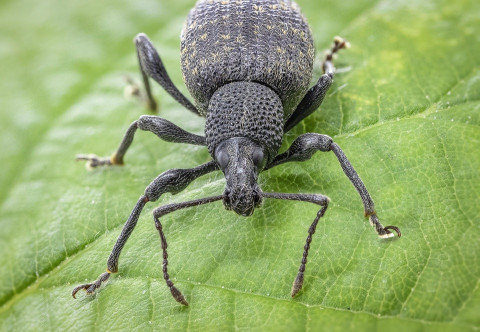
Black vine weevils are also pests that damage plants.
While in the larval stage, these pests target ornamental plants and fruits. Their favorites are cranberry, strawberry, rhododendron, blueberry, blackberry, and hemlock.
They can also become a serious problem in greenhouses because they target container plants. Black vine weevils are considered highly destructive garden pests.
28. Colorado Potato Beetles (Potato Bugs)
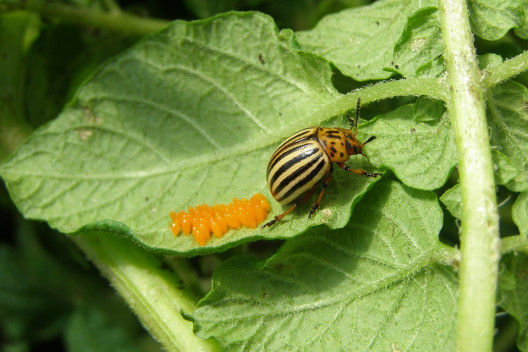
Photo by Adámozphoto via Wikimedia Commons, licensed under CC BY-SA 4.0.
Are potato bugs dangerous? Also called potato beetles, Colorado potato beetles are a potato farmer’s worst nightmare.
They spread out across many territories, and both adults and larvae can cause devastating damage to potato plants.
They’re easy to recognize by their yellow-orange bodies with black stripes. Unfortunately, they can be found far outside Colorado, so don’t get your hopes up based on the name alone.
29. Cucumber Beetles
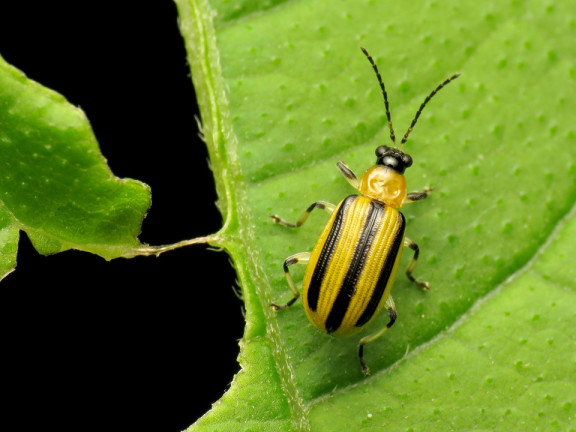
Image credit: Image by Katja Schulz, via Flickr, licensed under Creative Commons Attribution 2.0 Generic (CC BY 2.0).
These yellow bugs with black stripes on each wing are instantly recognizable. However, there are two common types of cucumber beetles: striped and spotted.
The striped cucumber beetle is more common than the spotted cucumber beetle, which has spots instead of stripes. Both can cause severe damage to plants.
The larvae feed on corn and cucurbit roots, while the adults feed on the blossoms and leaves of flowering plants. As such, they can be a force to be reckoned with in your garden.
30. Japanese Beetles
 Japanese beetles are insects that feed on the flowers, leaves, and fruits of various plants.
They go after asparagus, fruit trees, shrubs, corn, soybeans, roses, and other ornamental and vegetable plants.
They usually feed in small groups, making them easy to spot.
31. Pill Bugs (Roly-Polies)
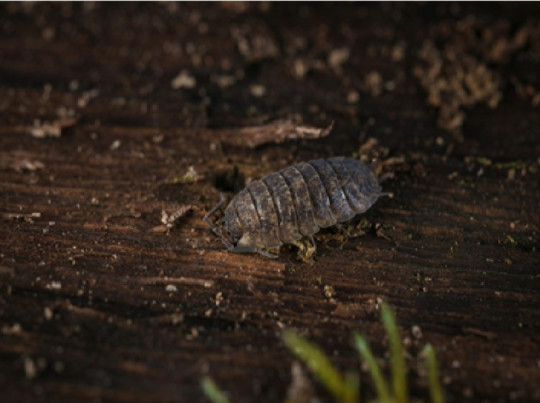
Pill bugs are terrestrial crustaceans. They love moist areas under fallen leaves, plant debris, or mulch.
Roly-polies may also feed on plant roots. However, they prefer already-dead plant or animal materials.
32. Lace Bugs
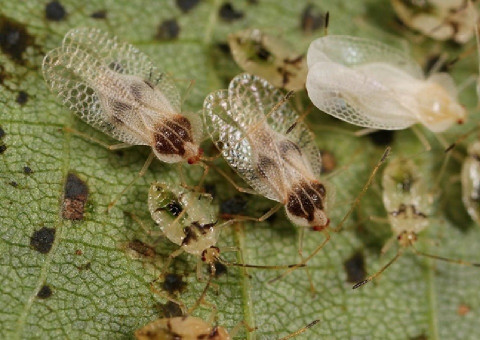
Lace bugs have a lacy-looking membrane covering their wings and upper bodies. They cause damage by sucking fluids from plants.
The bugs generally feed on the underside of leaves.
33. Leaf Miners
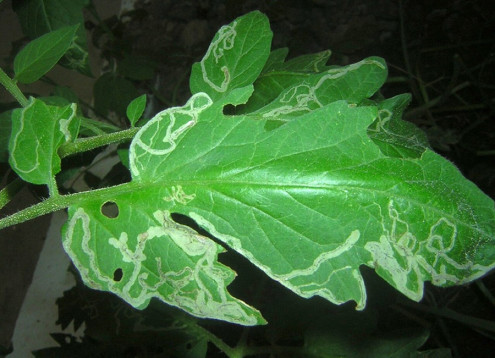
Image credit: Agromyzidae tomato leaf miners by Flowersabc, via Wikimedia Commons, licensed under CC BY-SA 2.0.
Winding, twisting white lines on leaves are a dead giveaway for leaf miners.
Thankfully, they aren’t as much of a threat as they are a pest since their damage is ultimately minor. They typically target garlic, beans, green onions, cabbage, peppers, and more.
Removing and destroying heavily affected leaves can help control leaf miners.
34. Mealybugs
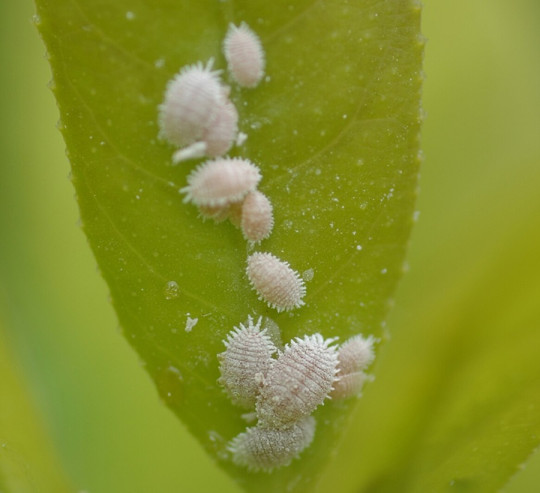
Image credit: “CSIRO ScienceImage 3590 Mealy Bugs” by CSIRO, via Wikimedia Commons, licensed under CC BY 3.0 AU.
Mealybugs are common garden insects. They can be a hassle, as they can even come indoors and attack plants on the windowsill.
Again, they’re tiny sap-suckers found worldwide. When viewed up close, these bad garden bugs look like tiny white cottony masses.
Mealybugs are best controlled by other pest controllers, such as ladybird beetles.
35. Spider Mites
 Photo “Brighamia insignis leaves with spider mites” by Forest & Kim Starr, licensed under CC BY 3.0 US. Source: Wikimedia Commons.
Spider mites are arachnids. These plant pests suck fluids from plant cells, weakening the plants.
The small yellow or brown spots on the leaves they’ve attacked tell you where they’ve been. Your plants may also start to look lifeless.
Takeaway
Insects can be a farmer’s best friend and worst enemy.
Some, like butterflies, ladybugs, and praying mantises, are helpful. Yes, some insects are beneficial as pollinators and natural predators, and they’re everywhere—in your garden box, too.
However, as the list above shows, some are vegetable garden pests that can damage your garden plants.
Regular monitoring is one of the best ways to protect an organic garden from pest damage. Many pests are constantly on the hunt for easy food sources, and your garden or farm can quickly attract them.
As a result, pay close attention to pests in your garden and look for natural ways to manage them. See our article on natural and homemade pesticides for vegetable gardens.




Add comment