

 Andre Campbell
Many gardeners have been frustrated by finding white grubs in the soil around their plants.
White grubs are the larval stage of several types of scarab beetles. They live in the soil and often feed on grass roots. After becoming adults, some species feed on plant leaves, flowers, or fruit [1].
These pests primarily feed on turfgrass roots, but heavy infestations can sometimes damage ornamental plants, flowers, and certain garden crops.
If you’re reading this, you likely want natural ways to reduce grub problems in your garden. Fortunately, several natural methods can help manage grub populations while reducing the need for conventional pesticides.
Identification
White grubs are the larvae of certain types of beetles.
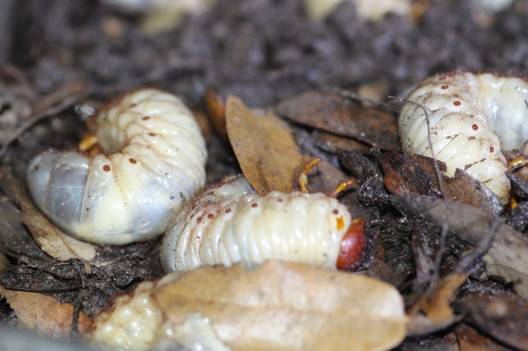
They usually have soft, creamy-white bodies, brown heads, and six legs near the front of the body. Many curl into a C-shape when disturbed.
Their size can vary depending on the species and how old they are. You will usually find them beneath the soil, where many species feed on grass roots and other plant roots.
Finding a few white grubs does not always mean you have a serious problem. However, large numbers can damage lawns and sometimes the roots of ornamental plants, shrubs, and young crops.
What Causes Grubs?
Grub infestations begin when adult beetles lay eggs in the soil.
Some beetles are more likely to lay eggs in moist soil. Their eggs and young grubs also need enough moisture to survive.
Once the eggs hatch, the larvae begin feeding on roots beneath the soil surface.
Signs of Grubs
Patches of yellow, brown, or dying grass may indicate white grubs. Damaged grass may also feel loose and pull away from the soil because the grubs have eaten the roots.
Increased mole activity can also be a sign. Moles eat grubs, but they also eat earthworms and other soil creatures. Lots of mole activity may be a reason to check for grubs, but it doesn’t prove you have a grub problem.
The number of grubs a lawn can handle depends on the grub species and the grass’s health. Some lawns may show damage with only a few large grubs per square foot, while healthy grass may handle more.
If you find several grubs along with thinning or dying grass, it may be time to take action. These signs may also suggest that grubs are present in other areas of your landscape, including nearby garden beds.
Life Cycle
The life cycle depends on the beetle type. Many common lawn grubs hatch in summer and begin feeding on grass roots [2].
As cold weather arrives, they move deeper into the soil. They return closer to the surface when the soil warms.
Some species complete their life cycle in about one year. Other grubs, including some May and June beetles, may spend several years developing.
How to Get Rid of White Grubs Naturally and Keep Them Under Control
Many grub treatments work best in late summer and early fall, when young grubs are actively feeding near grass roots.
However, some beetle larvae are beneficial decomposers [3]. Treatment is usually only needed when grub populations become excessive.
Below are some of the best organic solutions and home remedies for white grub control.
1. Beneficial Nematodes
Some species of beneficial nematodes can help control white grubs in lawns and other areas where damaging grubs are present. They search for various soil-dwelling pests and kill them.
You can buy beneficial nematodes online or at some garden centers. Mix and apply them according to the package directions. Different products may have different instructions.
One species commonly used against white grubs is Heterorhabditis bacteriophora [4]. Because nematodes are living organisms, you must store and apply them correctly.
Apply the nematodes during the cooler parts of the day and follow the package directions carefully. Keep the soil moist afterward for best results.
Once infected by the nematodes, grubs usually die within several days.
2. Hand Removal
If you find grubs while digging, planting, or turning the soil, remove them by hand.
Check the soil around damaged areas and pick out any white grubs you see. Drop them into a container of soapy water to kill them.
This method works best in small garden beds or when grub numbers are low. It will not control a large lawn infestation, but it can help reduce grubs in places that are easy to dig.
3. Milky Spore
Milky spore may help control Japanese beetle grubs over time [5]. However, it is effective only against Japanese beetle grubs and may not control other grub species.
Milky spore targets Japanese beetle grubs and is generally considered safe for people, plants, and most other organisms when used as directed.
Read the package instructions carefully to learn how to apply the product correctly.
Milky spore does not work quickly. In some areas, it may take several years to build up enough in the soil to reduce Japanese beetle grubs.
4. Birds and Chickens
Birds, chickens, and other animals may eat white grubs and help keep their numbers lower.
Encourage insect-eating birds by providing water sources, nesting sites, and bird-friendly habitat.
Chickens and some birds will scratch through the soil looking for grubs and other insects. One downside is that chickens may scratch up garden beds while searching for grubs, and both chickens and birds may also eat helpful insects.
5. Other Natural Predators
Many beneficial creatures help keep grub populations under control. Ground beetles, rove beetles, ants, toads, and certain parasitic insects feed on grubs or their eggs.
You can attract these helpful predators by maintaining a diverse garden. Use mulch, native plants, flowering herbs, and create natural habitat areas.
Also, avoid broad-spectrum pesticides whenever possible. They can kill beneficial insects along with pests, which is not ideal for a healthy ecosystem.
Natural predators might not eliminate a severe infestation, but they can reduce grub numbers.
6. Keep Grass and Soil Healthy
Healthy grass with strong roots can handle some grub feeding better than weak or stressed grass. Proper mowing, watering, and soil care can help the lawn recover from minor damage.
7. Beneficial Fungi
Some beneficial fungi can infect and kill white grubs in the soil. One example is Metarhizium, a fungus that attacks certain soil-dwelling insects.
Products containing Metarhizium may be used as a biological treatment for certain white grubs. The fungus infects the grub and eventually kills it.
Choose a product labeled for the type of grub you want to control. Follow the label carefully, since soil temperature, moisture, and application methods can affect how well it works.
8. Remove Excess Thatch
A thick layer of thatch can make it harder for some grub treatments to reach the soil. Dethatching will not kill grubs on its own, but it can help other grub treatments reach the soil where the pests are feeding.
Check the layer of dead grass and plant material between the green grass and the soil. If it becomes too thick, dethatching may help improve lawn conditions.
Removing excess thatch can also help water and grub treatments move into the soil more easily. However, a small amount of thatch is normal and does not need to be removed.
9. Bt galleriae (Btg)
Bacillus thuringiensis galleriae (Btg) is a naturally occurring bacterium that can help control certain beetle grubs.
Some grub-control products contain Btg. It can help control certain types of white grubs, including Japanese beetle and masked chafer grubs.
For best results, apply it when grubs are young and actively feeding, usually in late summer or early fall. Follow the package directions carefully.
10. Repair Thin and Bare Lawn Areas
Overseed thin areas with a grass that grows well in your region. Repair bare spots and follow the proper mowing height for your grass type.
Thick, healthy grass with strong roots can handle some grub feeding better than weak or damaged grass. A healthy lawn will not kill grubs, but it may suffer less damage from a small grub population.
11. Limit Irrigation
Avoid overwatering the lawn when adult beetles are laying eggs. Some grub-producing beetles prefer moist soil for egg laying, and their eggs also need moisture to survive.
However, do not let grass become badly stressed just to control grubs. Healthy grass can handle some root feeding better than weak grass.
Common Grub Species
Common white grubs found in lawns may include:
- European chafer grubs
- Japanese beetle grubs
- May/June beetle grubs
- Masked chafer grubs
These species feed on plant roots during their larval stage before developing into adult beetles.
Controlling Adult Beetles May Help
Neem oil works against some adult beetles rather than the grubs underground. It may reduce beetle feeding on treated plants, but it should not be the main treatment for white grubs.
If using a neem product against adult beetles, mix and apply it according to the product label. Spray the parts of the plant where beetles are feeding.
Neem products containing azadirachtin may disrupt insect feeding and development. They are less effective at killing lawn grubs that are already in the soil.
FAQ
Do grubs bite humans?
No. Grubs do not bite or sting people.
Are all grubs harmful?
No. Some beetle larvae help break down organic matter.
When should grubs be treated?
For many common white grubs, late summer and early fall are good times for control because the grubs are still young. The best timing depends on the grub species and the treatment you use.
Can a lawn recover from grub damage?
Yes. Lawns with minor to moderate grub damage often recover when you manage the infestation.
Proper watering, fertilization, and general lawn care can help damaged grass recover once the infestation is under control.
Will grubs kill plants?
Heavy grub infestations can damage roots enough to weaken or kill grass and some young or shallow-rooted plants. Healthy, established plants often recover once you control the grubs.
Takeaway
White grubs can damage lawns and plant roots when their numbers get too high. Beneficial nematodes, certain biological treatments, hand removal, and good lawn care can help keep them under control.
Check your lawn and garden regularly for signs of damage. Acting while grubs are still young makes them easier to manage and reduces the need for conventional pesticides.

 Sasha Campbell



How often should I use the soap and water method for grubs.
Thank you
Apply once every 7 days until they are gone completely.
Will this also kill firefly larva? I want to get rid of the food source for moles digging up my yard but don’t want to kill the fireflies, either.