

 Sasha Campbell
Onion flies are a common pest in onion fields. Their larvae can cause severe damage to your onion crops.
Fortunately, there are natural methods to help control these pests.
Identification
Onion flies look a lot like small gray houseflies. They are usually a little smaller and more slender than houseflies.
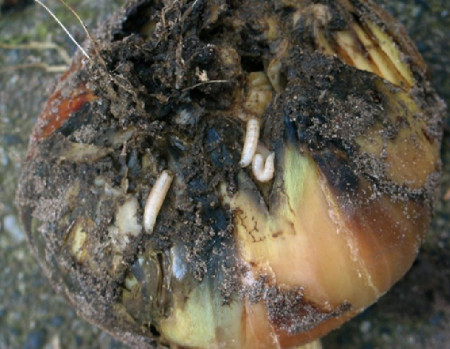
Adult onion flies are about 1/4 inch (6 mm) long. Their larvae, small white maggots, feed on onion bulbs and roots [1].
Affected plants wilt and turn yellow. The bulbs may also become soft and rot.
You’ll likely see the larvae inside the bulbs. The plants may also emit a foul odor.
How to Get Rid of Onion Flies Naturally
Keep your onion plants healthy with these home remedies and natural solutions.
1. Natural Predators
Some tiny parasitic wasps attack onion fly larvae. You can also encourage helpful insects, birds, ground beetles, and hedgehogs in your garden.
Steinernema feltiae, a beneficial nematode, is also effective against onion fly larvae [2].
Apply the nematodes to the soil around your plants. They will enter the larvae and release bacteria that kill them, helping control the onion fly population naturally.
These natural predators can help keep onion fly populations under control.
2. Remove Infected Plants
Inspect your garden regularly and uproot infected plants immediately.
Remove badly infected plants and throw them away in the trash. Do not compost them because the larvae may survive.
3. Powdered Hot Pepper
Powdered hot pepper may help discourage adult onion flies from landing near your plants. Sprinkle it around the plants and reapply after rain.
4. Use Floating Row Covers After Planting
Cover onions with lightweight floating row covers soon after planting. Secure the edges tightly so adult onion flies cannot crawl underneath to lay their eggs.
Remove the covers only when needed for weeding or harvesting.
5. Plant Onion Sets Instead of Seeds
Planting onion sets instead of seeds can reduce vulnerability to onion fly larvae. Sets grow faster and are more resilient, reducing the risk of damage from onion fly larvae.
6. Avoid Planting Onions in Rows
If possible, plant onions in scattered patterns instead.
Mixing onions with other plants may make it harder for adult female flies to find large groups of onions to lay their eggs in.
7. Companion Planting
Plant onions with carrots or other different crops instead of growing large blocks of onions by themselves.
Carrots can help confuse onion flies, while onions can also help confuse carrot flies. Mixing different plants can make it harder for onion flies to find onions.
Companion planting works best when combined with other methods, such as crop rotation and insect-proof mesh.
8. Protect Plants with Insect-Proof Mesh
If you’re growing onions in raised beds or larger garden areas, insect-proof mesh can keep adult onion flies away while still allowing sunlight and rain to reach your plants.
Secure the edges tightly so flies cannot crawl underneath.
9. Wood Ash
Wood ash may also help discourage onion flies from laying eggs around your plants.
Sprinkle it around the bases of your shallot, onion, and garlic plants. Reapply after rain for continuous protection.
Ash may also discourage slugs and snails from lingering in your garden.
10. Diatomaceous Earth
Sprinkle diatomaceous earth on the soil surface to help discourage adult flies from laying eggs. It works best when kept dry.
11. Yellow Sticky Fly Traps
Yellow sticky fly traps will also help reduce infestations by catching adult flies.
Place these traps around your garden. Also, regularly check and replace the traps to maintain effectiveness.
12. Rotate Your Crops Frequently
Crop rotation helps disrupt the life cycle of onion flies. Avoid planting alliums in the same spot each growing season, especially if the soil is currently infected with this pest.
Rotate with non-host crops to reduce the likelihood of infestation.
13. Soapy Water
Soapy water is an easy homemade remedy that can kill onion flies if applied properly.
Mix water with a few drops of dish soap, then spray soapy water directly on adult flies if you see them. It will not reach maggots feeding inside the bulbs.
14. Garlic Spray
Garlic spray is a natural repellent for many insect pests, including onion flies.
Crush a few garlic cloves and mix them with water. Strain and mix a little dish soap with the garlic water.
Finally, spray this solution on your plants. The spray’s potent odor will repel onion flies.
15. Neem Oil
Neem oil is a natural insecticide that may help discourage adult onion flies from laying their eggs. It works best before eggs are laid.
Make a homemade onion fly spray by combining 2 tablespoons of neem oil with 1 gallon of water.
Add a few drops of dish soap to help it stick to the plants.
Spray this mixture on your onions. Focus on the base of the plants and the surrounding soil.
16. Sand
Sand can also protect your onion bulbs and other alliums from this pest.
Cover the soil around young onion plants with a layer of coarse sand. This can make it harder for female onion flies to lay their eggs near the stems.
17. Control Weeds
Weeds can also provide shelter for onion flies. Therefore, keep your garden weed-free. Mulching also helps suppress weeds.
Takeaway
By using these natural remedies and organic products, you can protect your onion plants and other allium crops from onion flies.
Using several of these methods together usually works better than relying on just one.




I have learned much about onions thanks so much