

 Sasha Campbell
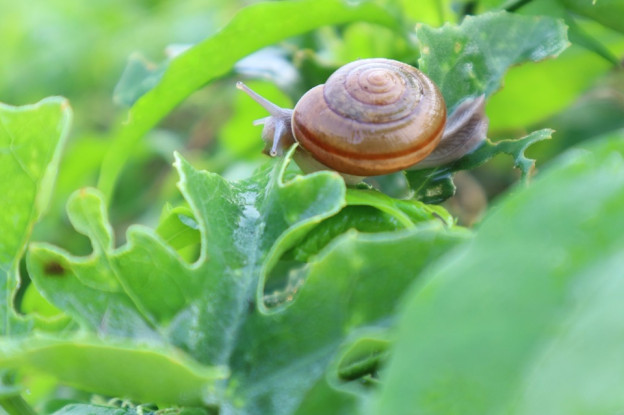
Shiny slime trails are a strong sign that slugs or snails have been in your garden. Irregular holes in leaves, especially when paired with slime trails, are another clue.
Slugs and snails are common garden pests, especially in cool, damp areas.
If slugs or snails are causing noticeable plant damage, it may be time to control their numbers. Young seedlings and tender plants often need the most protection.
Identification
Slugs have soft bodies and no visible outer shell, while snails carry shells on their backs. Both often leave shiny slime trails as they move.
Both slugs and snails may chew irregular holes in leaves, flowers, fruits, and young seedlings. Damage is often worse overnight or during cool, wet weather.
How to Get Rid of Slugs and Snails Naturally
Below are some home remedies and natural slug and snail control methods you can try. Some kill these pests, while others discourage them or help protect your plants.
1. Reduce Damp Hiding Places
Slugs and snails spend much of the day hiding in cool, damp places.
Remove unnecessary boards, weeds, dead leaves, unused pots, and other debris near plants that are being damaged. If you use boards as slug traps, check underneath them regularly.
Avoid leaving very thick layers of wet mulch directly around tender seedlings. Keeping the area tidy makes it easier to find slugs and gives them fewer places to hide.
2. Salt
Table salt can kill slugs and snails quickly by dehydrating them. However, avoid using it around garden soil or plants. Too much salt can damage plant roots and build up in the soil.
If you use salt, apply a small amount directly to the pest and keep it away from garden soil and plants. Never spread salt over garden beds as a slug barrier.
3. Remove Them by Hand
Removing them by hand may seem like a gross home remedy to stop slugs from eating your plants, but it works.
Wait about an hour after sundown, then look at your garden. Bring a flashlight so you can see the creatures.
You don’t need to use your bare hands, either. We recommend using tweezers or wearing gloves when picking them off.
Slugs and snails are most active during mild, damp weather [1]. They often come out at night or after rain.
Therefore, look in dark or shady areas, such as underneath rocks, boards, pots, and dense foliage. Also check these damp, protected places for eggs.
Slug and snail eggs are usually small, round, and clear to whitish. They are often found in clusters in damp, protected places.
Slugs and snails often feed on tender plants, including basil, cabbage, strawberries, lettuce, hostas, dahlias, beans, and some succulents. So look for them around these plants.
4. Beneficial Nematodes
Certain beneficial nematodes can help control pest slugs naturally.
One species, Phasmarhabditis hermaphrodita, attacks several kinds of slugs in the soil [2]. It is sold as a biological slug-control product in some countries.
Follow the package directions carefully, because results can vary by slug species and growing conditions.
5. Water in the Morning
Slugs and snails are more active in damp conditions at night.
If possible, water your garden early in the morning instead of late in the evening. This gives the soil surface time to dry before night.
A drier soil surface at night can make the area less inviting to slugs and snails. However, keep enough moisture in the soil for your plants to grow well.
6. Diatomaceous Earth
Food-grade diatomaceous earth is sometimes used as a dry barrier around plants. Slugs may avoid crawling across the dry, abrasive material, but it becomes much less useful when wet.
Apply a thin, dry layer around plants. Rain and watering can make the barrier less effective, so you may need to reapply it after the area dries.
Avoid breathing in the dust when applying it.
7. Raised Containers
Growing vulnerable plants in containers can make them easier to monitor and protect from slugs and snails.
Keep pots off damp ground when possible. Check the bottoms and rims often, as slugs and snails can climb containers and hide underneath them during the day.
8. Beer Traps
You can also bait and kill these creatures with beer. To create a homemade beer trap for slugs and snails, find a suitable spot to bury a container.
Make sure the spot is close to the affected area of your garden and yard. Now, fill the container with about an inch of beer.
Next, bury the container so slugs and snails can easily reach it. Leaving the rim slightly above the soil may help reduce the number of ground-dwelling beneficial insects that fall inside.
You can also use beer traps in greenhouses. Check the trap often and release any beneficial insects that fall inside.
Empty the trap as needed and replace the beer when necessary.
9. Natural Predators
Natural predators can help keep slug and snail numbers under control.
Many birds eat slugs and snails, including some jays, magpies, robins, starlings, and blackbirds. Frogs, toads, some ground beetles, and other garden animals may also feed on them.
Make your garden wildlife-friendly by providing shrubs, ground cover, a birdbath, and other safe places for helpful animals.
Chickens may also eat slugs, but watch them around young plants because they can damage garden beds.
10. Copper Tape
Copper tape may help discourage slugs and snails from crossing into protected areas.
Place a continuous strip around pots or raised beds. Make sure leaves and other objects do not form a bridge over the copper that pests can crawl across.
11. Vinegar
Vinegar can kill slugs and snails on direct contact. However, it can also damage plants.
If you use this method, spray only the slug or snail. Do not spray vinegar over garden plants or soil. Other control methods are usually better for use inside garden beds.
12. Protect Young Seedlings
Young seedlings are especially vulnerable to slug and snail damage.
Barriers and plant covers may help protect young seedlings while they become established. Bottomless plastic bottles or similar plant collars can provide some protection, although slugs may still climb over them.
Push the bottom edge slightly into the soil. Check inside and around the cover regularly, and make sure no slugs are already hiding near the plant.
13. Garlic Spray
Crush or blend one bulb of garlic with 1 liter of water. Let it stand for several hours, then strain the liquid.
You can dilute the mixture further before using it on plants.
Spray a small amount on the leaves of affected plants. Test it on a few leaves first, then wait a day to make sure it doesn’t damage the plant.
Garlic spray may help discourage feeding, but results can vary. Reapply after rain.
14. Grapefruit Traps
Grapefruit peels can be used as simple hiding traps for slugs and snails.
Place empty grapefruit peel halves upside down near plants showing slug or snail damage. Slugs and snails may hide underneath the peels overnight.
In the morning, lift the peels and remove any slugs or snails hiding underneath.
15. Other Traps
Commercial slug and snail traps, such as Slug Saloon or Snailer, are designed to help trap these pests around vulnerable plants.
Place the traps near areas where you notice slug or snail activity. Follow the product directions for setting, checking, and emptying the traps.
You can also make a simple hiding trap by placing a board, damp cardboard, or an overturned pot near damaged plants. Slugs and snails may hide underneath during the day.
Check these hiding places each morning and remove any pests you find.
16. Iron Phosphate Slug Baits
Iron phosphate baits are another option for controlling slugs and snails. The pests eat the bait, stop feeding, and later die.
Look for a product labeled for slug and snail control and follow all package directions. If you garden organically, make sure the exact product is approved for organic use.
Store unused bait out of reach of children and pets. Also, check the active ingredient before buying, since not all slug and snail baits contain iron phosphate.
Takeaway
Slugs and snails can seriously damage seedlings, vegetables, flowers, and other tender plants.
You do not need to use every method on this list. Start by removing hiding places, watering in the morning, handpicking slugs and snails, and protecting vulnerable plants.
If the problem continues, traps, beneficial nematodes, copper barriers, or iron phosphate bait may help reduce their numbers.




Which of these methods do you recommend that will not harm the earth worms?
All of them, except #1, 9, and 11.
Thank you! I’ve wondered if DE was safe for garden worms. I appreciate the information.