

 Sasha Campbell
Instead of throwing away your eggshells, you can reuse them in several ways.
Eggshells are made mostly of calcium carbonate. They also contain very small amounts of other nutrients. However, whole or roughly crushed shells break down very slowly in soil [1]. Grinding them into a fine powder helps them break down faster.
Before adding eggshells to your garden, consider testing your soil. Adding more calcium will not help plants if the soil already contains enough.
How to Use Eggshells In and Around Your Garden
Here are several practical ways to reuse eggshells in your garden and backyard.
1. Slow-Release Soil Amendment
Calcium is important for plant growth. Stunted growth and curling young leaves may signal a calcium deficiency. However, other plant problems can cause similar symptoms, so test your soil before adding calcium.
Finely powdered eggshells can slowly release calcium as they break down. Large shell pieces may remain in the soil for a year or longer.
Eggshells are not a fast treatment for blossom-end rot, apple cork spot, or other calcium-related problems. These problems may occur even when the soil contains calcium.
Blossom-end rot is often connected to uneven watering, damaged roots, or trouble moving calcium and water into developing fruit. Apple cork spot may also be affected by growing conditions and an imbalance of nutrients in the tree.
If a soil test shows that your garden needs calcium, ask your local extension office which product and amount to use.
2. Add to Compost
Eggshells can go into a regular compost pile. Rinse and dry the shells, then crush or grind them before adding them.
Small pieces break down faster than large ones. However, you may still find bits of shell in finished compost because eggshells break down slowly.
Spread the shells through the compost instead of leaving them in a thick pile.
3. Seed Starter
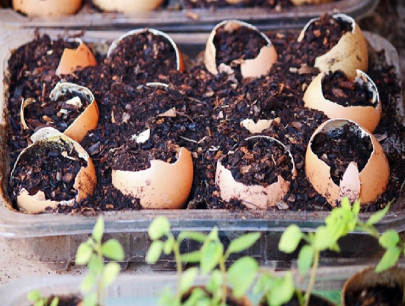
Clean eggshell halves can serve as tiny containers for starting seeds.
Make a small drainage hole in the bottom and place the shells in an egg carton. Fill them with seed-starting mix and plant one seed in each shell.
Eggshells hold very little soil, so seedlings may outgrow them quickly. Move each seedling into a larger container when its roots need more space [2].
Do not plant an unbroken shell around a seedling. It may take too long to break down and could slow root growth. Remove the shell or gently crack it into many pieces before planting.
4. Clean Garden Pots
Crushed eggshells can act as a gentle scrub for dirty garden pots and containers.
Place some crushed shells in the pot with warm water and a small amount of dish soap. Scrub the pot or gently shake the mixture inside it to loosen dirt.
Rinse the pot well afterward. Avoid using eggshells on surfaces that scratch easily.
5. Provide Calcium for Birds
Clean eggshells can provide calcium and grit for some wild birds, especially during nesting season.
Shells from hard-boiled eggs have already been heated. Bake shells from raw eggs for about 20 minutes at 250°F to reduce the risk of Salmonella. Allow them to cool, then crush them into pieces smaller than a dime.
Offer the shells in a separate dish or on a low platform. Do not mix large, sharp pieces into birdseed.
6. Add to a Worm Bin
Finely ground eggshells can be useful in a worm composting bin. The shells provide grit, which worms use in their gizzards to help break down food [3].
Rinse and dry the eggshells before grinding them into a fine powder. Sprinkle a small amount over the bedding from time to time.
Do not add a thick layer. A small amount every few months should be enough for an average home worm bin.
7. Deter Cats
Some cats dislike walking over rough materials. Crushed eggshells spread over bare soil may make a garden bed less comfortable for them.
This method will not work for every cat. Pinecones, closely spaced sticks, fencing, and motion-activated sprinklers may provide better protection.
Do not use large, sharp shell pieces where children or pets may step on them.
8. Calcium Supplement for Laying Hens
Laying hens need enough calcium to produce strong eggshells. A complete layer feed should be their main source of nutrition.
Clean, dried, and crushed eggshells may be offered as an extra source of calcium. Place them in a separate container so each hen can take what she needs. Oyster shell is another common calcium supplement.
Do not use eggshells as a replacement for complete chicken feed. Chicks, young birds, and hens that are not laying may not need extra calcium.
How to Prepare Eggshells for the Garden
Rinse the shells to remove any egg left inside. Allow them to dry completely.
If the shells smell unpleasant or will be used for birds or chickens, heat them according to the instructions in the appropriate section above.
Crush the shells by hand or place them in a bag and roll over them with a rolling pin. For faster breakdown, grind the shells into a fine powder with a clean grinder or food processor. Avoid breathing in the fine dust.
Add the powder to your compost or mix a small amount into garden soil. Do not depend on eggshells to correct a serious calcium shortage. Test the soil first if your plants show signs of a nutrient problem.
Be careful when adding eggshell powder to houseplant soil. Calcium carbonate may slowly raise the soil’s pH, which may not suit plants that prefer acidic soil.
Do Any Plants Need Eggshells?
No plant needs eggshells specifically. Plants need calcium, but they can get it from the soil or other soil amendments.
Tomatoes, peppers, squash, zucchini, broccoli, and cauliflower need calcium for healthy growth. However, adding eggshells will not help if the soil already contains enough calcium.
For example, blossom-end rot in tomatoes and peppers is often linked to uneven watering or root damage. Adding eggshells at planting time does not reliably prevent it. Keep the soil evenly moist, add mulch, and avoid damaging the roots.
Roses and houseplants also do not need regular applications of eggshells. Test the soil before trying to correct a calcium problem.
Takeaway
Eggshells can be added to compost, ground into a slow-release soil amendment, offered to birds, or used as a calcium supplement for laying hens.
However, eggshells break down slowly. They are not a quick fertilizer, an effective mulch, or a dependable treatment for pests and plant disorders.
Before adding them to soil for calcium, have the soil tested to find out whether more calcium is truly needed.




Add comment