

 Andre Campbell
Because kissing bugs can bite humans and animals and may carry parasites that cause Chagas disease, it is important to keep them away from homes and sleeping areas.
In this article, we will discuss some of the most effective natural control methods for managing these bugs.
Identification
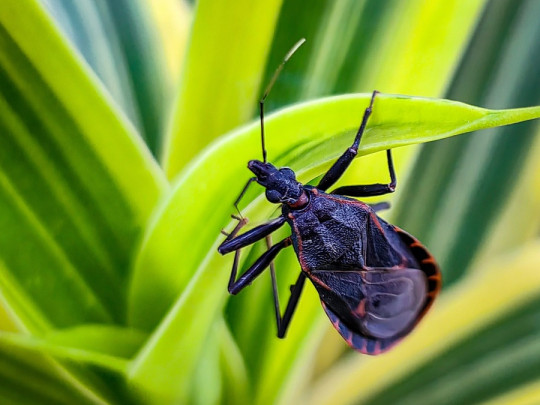
Kissing bugs are also known as triatomine bugs or cone-nosed bugs [1]. They are bloodsuckers in the subfamily Triatominae of the family Reduviidae.
Kissing bugs are not like other bugs that you may see on plants. These bugs can be dangerous because they bite and suck blood from people and many animals.
People and animals can contract Chagas disease when parasite-containing feces from kissing bugs enter the body through broken skin, the bite wound, or the eyes, nose, or mouth [2].
While this may sound unpleasant, the feces themselves do not cause the disease. Instead, infection occurs when the parasite inside the feces enters the body.
How to Get Rid of Kissing Bugs Naturally
The following are some of the best natural kissing bug treatment options to help repel and manage these pests.
1. Clear Out Wood and Rock Piles
Keep piles of rock and wood well away from your house and other locations nearby to help keep kissing bugs away.
These are great places for bugs to hide during the day. Also, remove bush piles as soon as possible.
2. Diatomaceous Earth (DE)
Use diatomaceous earth to kill kissing bugs by applying it to places where they might hide in your home and garden. When purchasing for organic gardening or indoor use, food-grade DE is the best option.
Diatomaceous earth is a natural insecticide that is mildly abrasive. Therefore, it is effective against these and other harmful bugs.
When bugs crawl over the powder, it damages their protective outer coating, causing them to dehydrate and eventually die.
3. Bottle Trap
Take a bottle, preferably one large enough to hold a flameless candle. Cut the top off and keep it.
Next, add strips of non-stick tape vertically to the bottom half of the bottle, allowing the bugs to climb up them.
Kissing bugs are often attracted to outdoor lights at night. This attraction may make light-based traps useful for monitoring their presence.
Therefore, put the light inside the bottle and turn it on. Next, put the top back on upside down to create a funnel.
At night, the bugs will be drawn to the light and climb onto the non-stick tape inside the bottle. However, it will be difficult for them to climb back out.
4. Essential Oils
Certain essential oils might help repel kissing bugs. However, their effectiveness varies, and they should not be relied on as the sole control method.
Mix a couple of drops of a strong essential oil, such as citronella, mint, or tea tree, with water to create a natural kissing bug repellent. Apply it around entry points, cracks, crevices, and other areas where the bugs may hide.
5. Pyrethrin
Pyrethrin is an organic insecticide used to kill kissing bugs and other insect pests.
It works by targeting the insect’s nervous system, causing paralysis and eventually death.
Follow the package instructions for the right mix, then spray it directly onto the bugs.
6. Insect-Repelling Plants
Herbs such as lavender, rosemary, and citronella grass have strong scents. These aromas may help discourage some insects and could make areas around your home less attractive to pests, including kissing bugs.
Plant these around your home or garden to help create a natural barrier.
7. Reduce Outdoor Lighting
Adult kissing bugs are attracted to lights at night. Therefore, turn off unnecessary outdoor lights or switch to yellow “bug” lights.
This will help reduce the number of bugs attracted to your home.
8. Neem Oil
Research suggests that compounds in neem may disrupt the development of kissing bugs. They may also reduce the survival of the parasite that causes Chagas disease within these insects [3].
However, more research is needed to determine how effective neem is under real-world conditions.
To try neem as a deterrent, spray a diluted neem oil solution around areas where kissing bugs may hide or enter your home.
9. Garlic Spray
Garlic sprays are commonly used as natural insect repellents. However, their effectiveness against kissing bugs has not been well studied.
To give it a try, spray around entry points, cracks, crevices, and other areas where kissing bugs may hide.
10. Bug Zapper
A bug zapper may be used outdoors and, depending on the model, indoors as well.
Some kissing bugs may be attracted to the light emitted by bug zappers, which can shock them on contact. However, these devices should not be relied on as the primary method of control.
11. Seal Cracks and Crevices
Last but not least, this is a vital step to prevent triatomine bugs from infesting your house.
Seal every hole or gap in your house where these insects can crawl through. This includes those in roofs, windows, doorjambs, screens, or cracks in walls.
12. Natural Predators
Some birds, lizards, and other insect-eating animals may feed on kissing bugs. However, these natural predators alone are unlikely to eliminate an infestation.
Encourage their presence by creating a wildlife-friendly environment.
Takeaway
Kissing bugs might have a cute name, but they are anything but adorable. They can pose a health risk to people, dogs, and other animals [4].
Take action as soon as you notice these insects around your home. These natural kissing bug control methods can help reduce the likelihood of an infestation and make your property less attractive to these pests.
However, if you notice a severe infestation, consult a pest control professional.

 Sasha Campbell



I’m infested on my whole right side of my body with kissing bugs. I don’t know how I got them, I got bit by a tick so I thought and now this happened. I go to the emergecnu room an they dust me off tell me it’s just scabs.. give me benadryl an send me on my way. I feel like I’m dying I’ve been dealing with this for weeks I have almost a 2 year old girl an I’m terrified being around her. Better yet I hate having her see me like this. I need help please idk how much longer I can fight this doctors won’t take me seriously no matter how much proof I have nothing is enough I’m in an out within 5 minutes. I can’t keep up anymlrr
@Janna – If it was indeed a kissing bug bite get an anti parasite med like ivermectin or fenbenazole its over the counter at farm supply stores. Lookup what your weight is for my dosage. For 2 weeks If it’s something else that bit you tell them it was a venomous spider bite or go to another clinic if they don’t take you in. Seriously ticks can carry lime disease. I’m not sure what you take for that