

 Andre Campbell
Boxelder bugs rarely damage plants, but they can become a nuisance around your home. In fall, they may gather on sunny walls and enter buildings in large numbers.
Their droppings can stain curtains, walls, furniture, and other surfaces. Crushing the bugs may also leave stains and release a bad smell.
To get rid of boxelder bugs naturally, start by sealing gaps, fixing screens, and vacuuming up any bugs you find indoors. These steps can help block their entry and remove bugs already inside without using insect sprays.
How to Identify Boxelder Bugs
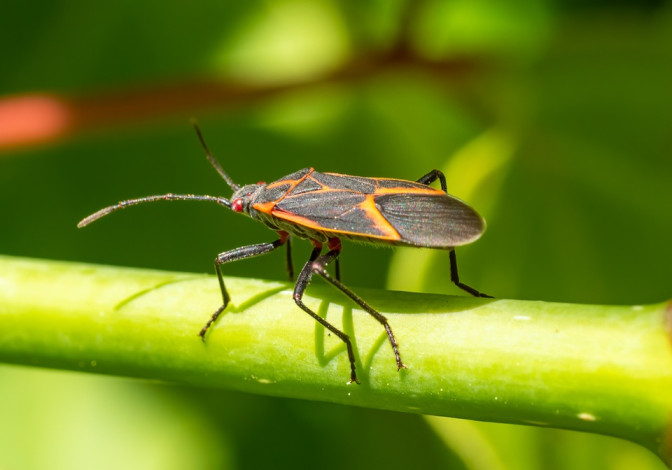
Adult boxelder bugs, sometimes called maple bugs, are about 1/2 inch long. They are mostly black, with three narrow red or orange stripes just behind the head. Their wings also have red lines along the edges [1].
Young boxelder bugs are bright red at first. They develop more black markings as they grow.
These bugs mainly feed on female boxelder trees, which produce seeds. They eat the leaves, flowers, and seeds. They may also feed on male boxelder trees and some maple and ash trees.
Boxelder bugs are active during warm weather. In late summer and fall, adults look for dry, sheltered places to spend the winter. Some enter cracks around homes and hide inside walls or attics.
They do not reproduce inside homes. However, they may come out of hiding on warm winter days and gather near windows.
Do Boxelder Bugs Harm Plants?
Boxelder bugs rarely cause serious harm to healthy trees. Western boxelder bugs may also feed on fruit, causing small marks or uneven growth. This damage is usually minor [2].
You do not need to treat a tree just because you see a few bugs on it. Control is mainly needed when large groups gather around your home or start coming indoors.
An indoor boxelder bug infestation doesn’t mean the bugs are breeding there. They usually entered the building while looking for winter shelter.
How to Get Rid of Boxelder Bugs Naturally
Looking for a boxelder bug home remedy? Start by sealing gaps and removing the bugs you see. These simple steps can help without using insect sprays.
The best approach is to block entry points before fall and remove any bugs that get inside. Here are seven ways to manage them.
1. Seal Cracks and Gaps
Boxelder bugs can squeeze through small openings around your home. Sealing these gaps can help prevent boxelder bugs from entering.
Check around doors, windows, pipes, siding, and the base of your house. Seal unwanted gaps with caulk, weatherstripping, or another suitable material.
Add door sweeps where needed. These strips help close the gap beneath a door. Check the seal along the bottom of your garage door, too.
Do not block vents or small drainage holes in brick walls. These openings help air move or water drain. Use suitable screens or covers where needed.
Make repairs before the bugs begin looking for winter shelter. Sealing outside gaps helps keep more bugs out, but bugs already hiding inside may still appear. Vacuum them as you find them.
2. Repair Screens
Check the screens on windows, doors, and vents. Repair small holes or replace badly damaged screens.
Make sure each screen fits tightly around its edges. Bugs may enter through gaps even when the screen itself has no holes.
Use mesh that keeps insects out while allowing enough airflow.
3. Vacuum Indoor Bugs
Vacuuming is one of the easiest ways to remove boxelder bugs inside your home.
Collect bugs from windows, floors, and walls. Avoid crushing them, as this may leave stains and a bad smell.
Empty the vacuum bag or canister into a sealed trash bag right away. A shop vacuum may be useful if you have many bugs.
Vacuuming or sweeping is the best way to remove bugs that enter your living space [1].
4. Sweep Them Up
Use a broom and dustpan to collect boxelder bugs from patios, walkways, and other hard surfaces.
Sweep gently to avoid crushing them. Place the collected bugs in a container of soapy water, then dispose of them once they are dead.
Using soapy water in a container is different from spraying dish detergent on plants. Avoid homemade detergent sprays, which may damage leaves.
If you want to try a homemade boxelder bug trap, keep sealing gaps and removing bugs too. Use the soapy water container for bugs you collect. Do not expect bugs to enter it on their own.
5. Use a Garden Hose Outdoors
A strong stream of water can wash groups of boxelder bugs off tree trunks and outdoor walls. Some bugs may drown, but others may return.
Repeat this step when large groups gather again. UC IPM recommends hosing as a simple outdoor control method [2].
Use only enough pressure to remove the bugs. Avoid damaging plants, paint, window seals, or siding. Do not aim water into cracks, vents, or electrical fittings.
6. Remove Fallen Seeds
Female boxelder trees produce winged seeds that feed these bugs.
Rake up fallen seeds beneath and around the trees. Sweep seeds from patios and driveways. A shop vacuum may also help collect them.
This may reduce a nearby food source, but it will not stop all boxelder bugs. Adults can fly in from trees on other properties.
7. Clear Hiding Places Near Your Home
Boxelder bugs may shelter under leaves, boards, rocks, and other debris.
Remove unwanted piles close to your house. Rake up leaves along the base of the house and keep firewood away from outside walls.
Pay extra attention to the south and west sides of your home. These areas often get more sun and attract large groups of bugs.
You do not need to clear every leaf or rock from your garden. Focus on clutter beside the house.
Are Sprays Needed for Boxelder Bugs?
Most boxelder bug problems don’t require insecticides. Sealing gaps, vacuuming, and hosing are often enough.
Even insect sprays made from natural ingredients are pesticides. They can harm plants or other insects if used incorrectly.
Insecticidal Soap
A labeled insecticidal soap may reduce outdoor groups when sprayed directly on the bugs. However, it does not provide lasting protection.
Choose a product labeled for the pest and the place you want to treat. Follow all mixing and use directions.
Some products may be used on tree trunks or plants. Do not assume that a plant spray is also suitable for siding or painted walls.
Avoid replacing insecticidal soap with dish detergent. Dish detergents are not made for pest control and may burn plant leaves.
Neem-Based and Other Outdoor Sprays
Some neem-based products list boxelder bugs, but products differ. Do not assume that any bottle of neem oil will control them or can be sprayed on house walls.
If large groups keep gathering around your home, a labeled outdoor spray may help. However, more bugs can arrive after treatment.
Choose a product labeled for the bug and the surface you want to treat. Follow the directions for mixing, timing, and keeping people and pets away.
Keep sprays out of storm drains and away from ponds. Follow all bee warnings on the label.
For a serious outdoor problem, ask a licensed pest-control professional for help.
Should You Use Diatomaceous Earth?
Diatomaceous earth is a dust that can dry out insects that contact it. It must stay dry to work. However, it is not a first choice for managing large groups of boxelder bugs.
If you use it, choose a product labeled for pest control and the place you plan to treat. “Food-grade” alone does not mean it is a suitable insect-control product.
Follow the label directions. Avoid breathing the dust or getting it in your eyes. It can irritate your eyes and nose, and breathing a large amount may cause coughing or trouble breathing [3].
Should You Remove a Boxelder Tree?
Removing a female boxelder tree may reduce a nearby food source. However, it may not stop the bugs from gathering around your home.
Adults can fly in from other trees, even when there is no boxelder tree in your yard.
Try sealing gaps, cleaning up fallen seeds, and removing bugs first. A healthy tree provides shade and supports wildlife. Ask a trained tree expert before removing a large tree.
Home Remedies to Avoid
Some home remedies may cause more problems than they solve.
Avoid boiling or very hot water. It can burn people and damage plants, grass, paint, and other surfaces.
Vinegar and essential oils are not recommended as main controls for boxelder bugs. Strong mixtures may damage plants or surfaces. Start with sealing gaps and removing bugs instead.
Avoid crushing the bugs. Their bodies and droppings may stain surfaces, and crushed bugs can release a bad smell.
Do not spray pesticides indoors or into wall spaces to control boxelder bugs. Remove bugs that enter living areas with a vacuum or broom.
When Should You Start Prevention?
Check your home before fall, while the weather is still warm. Repair screens and seal gaps before boxelder bugs begin looking for winter shelter.
These repairs can help keep boxelder bugs away from your living spaces, though you may still see them outdoors.
Watch sunny walls and areas around doors and windows. If groups gather, remove them and check for nearby entry points.
Bugs seen outdoors in spring are often leaving their winter shelters. Spraying them then does not prevent another invasion the following fall [1].
Takeaway
Boxelder bugs rarely harm healthy plants, but large groups can be a nuisance around your home.
Start with simple steps: seal gaps, repair screens, vacuum indoor bugs, and remove fallen seeds and debris near the house.
Outdoor boxelder bug sprays may help in some cases, but they usually offer limited control. Keeping the bugs from entering is the most useful step.

 Sasha Campbell



Add comment