

 Sasha Campbell
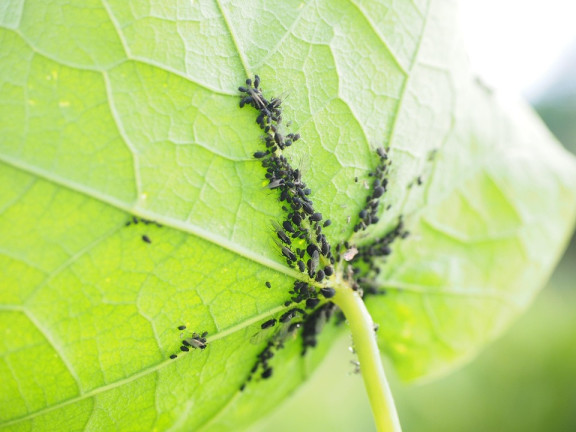
Aphids are tiny insects that feed on plant sap. Some aphids are called greenfly or blackfly because of their color.
Many aphids make a sticky waste called honeydew. Honeydew attracts ants and may lead to black sooty mold on leaves [1]. Aphids are common garden pests, but a few aphids do not always harm a healthy plant.
Several natural and organic methods can help control aphids without using pesticides that kill many kinds of insects.
Do You Need to Treat Aphids?
You do not always need to treat a plant as soon as you see an aphid. Healthy, mature plants can often handle a small number of them.
Ladybugs, lacewing larvae, hoverfly larvae, and tiny parasitic wasps feed on aphids. These helpful insects may control the problem for you [2].
Treatment may be needed when:
- Aphid numbers are growing quickly.
- Young plants are weak or damaged.
- Leaves are curling or turning yellow.
- New growth looks twisted or stunted.
- Plants show possible signs of a virus.
- Sticky honeydew is covering the plant.
Plant viruses may cause spotted, curled, yellow, or oddly colored leaves. However, insect feeding, plant diseases, and growing problems may cause similar symptoms. A local garden expert may need to identify the cause.
Signs of an Aphid Infestation
Look for these signs:
- Curled or twisted leaves
- Yellowing leaves
- Weak or stunted growth
- Sticky honeydew on leaves or stems
- Black sooty mold growing on the honeydew
- White shed skins on the leaves
- Groups of tiny, pear-shaped insects
- Ants moving up and down the plant
Aphids often gather on tender stems, new growth, flower buds, and the undersides of leaves.
Ants and sooty mold do not always mean aphids are present. Scale insects, whiteflies, and other sap-feeding pests also make honeydew. Check the plant closely before choosing a treatment.
How to Get Rid of Aphids Naturally
Start with the safest and simplest method. You may need to use more than one method if the aphid population is large.
1. Spray Them With Water
A strong stream of water is one of the easiest ways to remove aphids.
Spray sturdy plants with a garden hose. Aim at the stems, new growth, and undersides of the leaves.
Many aphids that fall off cannot return to the plant. The water also washes away honeydew and some sooty mold [3].
Repeat every few days if needed. Spray early in the day so the leaves can dry.
Do not use a hard stream of water on seedlings, flowers, or other delicate plants.
2. Pick or Wipe Them Off
For a small infestation, wipe the aphids off with your fingers, a damp cloth, or a cotton swab.
You can also pick them off and drop them into a container of soapy water.
Check the plant again after a few days. Aphids reproduce quickly, so a few missed insects may start a new colony.
3. Prune Infested Leaves and Shoots
If aphids are crowded onto only a few leaves or shoots, prune those parts from the plant.
Place the infested material in a bag or dispose of it away from the garden. This can quickly lower the number of aphids.
Do not remove too much healthy growth at one time. Heavy pruning may weaken the plant. It may also cause the plant to produce tender new growth that attracts more aphids.
4. Use Insecticidal Soap
Insecticidal soap is one of the most dependable low-risk treatments for aphids. It must touch the aphids to kill them.
Spray the stems and both sides of the leaves. Pay close attention to curled leaves and new growth where aphids may hide.
A ready-to-use insecticidal soap is safer than many homemade mixtures. It is made for plants and comes with clear directions.
Some gardeners make aphid sprays with pure liquid Castile soap. However, Castile soap is not the same as insecticidal soap, and its ingredients vary by brand. A product labeled as insecticidal soap is the safer and more dependable choice.
Commercial insecticidal soaps are made for plant use. They do not contain many of the detergents, dyes, or perfumes that may damage leaves [4].
Do not use laundry detergent, dishwasher soap, or a household product that contains bleach, degreaser, perfume, or moisturizer.
Soap sprays may harm helpful insects they touch. Avoid spraying ladybugs, lacewing larvae, hoverfly larvae, bees, and other useful insects.
5. Apply Neem Oil
Neem oil may help control aphids. Some neem products coat the insects, while others make them stop feeding.
Choose a neem product that lists aphids and the plant you want to treat. Mix and apply it exactly as the label says. Neem products come in different strengths, so one recipe will not work for every product.
Spray the aphids and the undersides of the leaves. Test the spray on a small part of the plant first.
Do not apply neem oil to dry, wilted, or stressed plants. Avoid spraying in hot weather or strong sunlight. Do not spray open flowers when bees and other pollinators are visiting.
Neem may not kill aphids right away. You may need to apply it again according to the product label [5].
6. Apply Horticultural Oil
Horticultural oil can control aphids by coating them. The spray must touch the insects to work.
Spray the affected stems and both sides of the leaves. Follow the product label because mixing rates vary.
Do not spray dry, wilted, or stressed plants. Avoid using oil during very hot weather or when rain is expected.
Some plants are sensitive to horticultural oil. Test a small area first and check the label for a list of sensitive plants.
Do not mix horticultural oil with sulfur products. Follow the label for how long you must wait between using oil and sulfur.
7. Isolate Infested Houseplants
Move an infested houseplant away from your other plants. This can help stop winged aphids and young aphids from spreading.
Check nearby plants. Look closely at their new growth, stems, and leaf undersides.
Keep the infested plant separate while you treat it. Return it to its usual place only after several checks show no live aphids.
8. Use Rubbing Alcohol on Houseplants
Rubbing alcohol can help with a small aphid infestation on a houseplant.
Dip a cotton swab in 70% isopropyl rubbing alcohol. Touch or wipe the aphids with the swab. Avoid soaking the leaves.
Alcohol may damage tender leaves, flowers, and new growth. Test it on a small part of the plant and wait one or two days before treating more areas [6].
Use this method only for a few aphids. It is not practical for a large outdoor infestation.
9. Control Ants Around Aphid Colonies
Ants feed on the sweet honeydew that aphids make. Some ants protect aphids from ladybugs, lacewings, and other predators.
If ants are constantly visiting an aphid colony, controlling them may help natural predators reach the aphids.
For trees, an insect barrier placed around the trunk may stop ants from climbing. Do not place a sticky product directly on young or thin bark. Use a tree wrap under it and follow the product directions.
You may also use enclosed ant bait near the base of the plant. Avoid broad insect sprays because they can kill helpful insects along with the ants.
Learn more about controlling ants naturally.
10. Encourage Beneficial Insects
Many helpful insects feed on aphids. These include:
- Ladybugs and their larvae
- Green lacewing larvae
- Hoverfly larvae
- Damsel bugs
- Soldier beetles
- Aphid midges
- Tiny parasitic wasps
Grow small flowers that provide pollen and nectar. Sweet alyssum, yarrow, dill, and other small-flowered plants may attract some of these insects.
Avoid broad insecticides. These products may kill the predators that provide long-term aphid control.
Learn how to recognize beneficial insects so you do not mistake them for harmful garden pests.
11. Remove Aphid-Host Plants Nearby
Some weeds and plants that grow from old, dropped seeds can support large aphid colonies. Aphids may later move from these plants to nearby seedlings or vegetables.
Check plants around the garden for aphids, curled leaves, and sticky honeydew. Remove heavily infested weeds near crops.
Place the infested plant material in a bag or move it away from the garden.
Do not remove every flowering plant. Some flowers provide food and shelter for ladybugs, hoverflies, lacewings, and other helpful insects.
12. Use Row Covers
Fine insect mesh or a row cover made to block small insects may protect young plants from winged aphids.
Cover seedlings before aphids arrive. Make sure the plants are free of aphids before placing the cover over them.
Secure all the edges. Aphids are tiny and may enter through small gaps.
Check the temperature under the cover because plants can become too hot. Remove the cover when plants begin to bloom if they need bees or other insects for pollination.
Row covers may also protect plants from several other insect pests.
13. Use Reflective Mulch
Silver reflective mulch may help keep winged aphids away from young plants. The reflected light makes it harder for them to find and land on the plants.
Place the mulch around seedlings or young vegetable plants. You can use commercial silver mulch or aluminum foil in a small garden.
This method may also lower the risk of some plant viruses that aphids spread [3].
Reflective mulch works best while plants are small. It becomes less useful when the leaves cover most of the shiny surface.
Watch the soil temperature during very hot weather. Reflective or plastic mulch may cause the soil and plants to become too hot.
14. Use Yellow Sticky Traps for Monitoring
Yellow sticky traps can show when winged aphids are entering a greenhouse, indoor growing area, or garden.
Place the traps near the plants and check them often. Replace them when they become full or lose their stickiness.
Sticky traps will not control aphids that are already feeding on a plant. Most aphids in a colony do not have wings, so you must also inspect the leaves and stems.
Sticky traps are most useful in greenhouses and indoor growing areas. They may be less useful in a large outdoor garden [7].
The traps may also catch helpful insects. Use only as many as you need for monitoring.
15. Check for Overwintering Aphids
Some aphid species spend winter as eggs on trees and shrubs. Other species stay active during winter in warm climates, greenhouses, or protected areas.
Aphid eggs are tiny and may be hard to identify. Do not remove unknown eggs because they may belong to helpful insects.
If the same tree has an aphid problem every year, ask a local garden expert to identify the pest. A dormant horticultural-oil product may help control the winter eggs of certain aphids on fruit trees.
Only use a product labeled for the plant and pest you want to treat.
16. Use Products Labeled for Organic Gardening
Commercial products labeled for organic gardening may help with a serious aphid infestation.
Some contain neem oil, azadirachtin, insecticidal soap, horticultural oil, or Beauveria bassiana.
Examples include:
Look for the OMRI Listed seal if organic certification matters to you. The product must also list aphids and the plant or crop group you want to treat.
An organic label does not mean a product is harmless. Some products may harm bees, beneficial insects, people, or plants when used incorrectly.
Product labels and approved uses may change. Always read and follow the current label before applying any pest-control product.
Methods That May Have Mixed Results
The following remedies may help in some situations, but they are less dependable. Do not use them as your only form of aphid control.
17. Essential Oils
Some essential oils have shown promise against aphids in studies. These include oils made from rosemary and other strong-smelling plants [8].
However, a homemade essential-oil spray may not work as well as a tested product. Essential oils can also burn leaves or harm helpful insects.
If you use an essential-oil product, make sure its label lists aphids and the plant you want to treat. Follow all label directions. Do not place undiluted essential oil on a plant.
18. Garlic Spray
Garlic sprays are popular home remedies. Their strong smell may discourage some aphids, but results can vary.
Homemade garlic sprays have not been tested on every plant or aphid species. Garlic, oil, and soap may burn tender leaves.
If you use a garlic spray, test it on one leaf first. Wait at least 24 hours before spraying the whole plant. Do not spray during hot or sunny weather.
Treat garlic spray as an extra step, not as your main aphid treatment.
19. Use Trap Crops
Trap crops may draw certain aphids away from plants you want to protect.
Nasturtiums are sometimes used as trap plants. However, different aphid species prefer different plants. Nasturtiums will not attract every type of aphid.
Check trap plants often. If they become heavily infested, treat or remove them before the aphids move to nearby crops.
Trap crops work best as part of a larger pest-control plan.
20. Grow Strong-Smelling Plants
Some gardeners grow garlic, chives, rosemary, and other strong-smelling plants near their crops. These plants may discourage certain aphids.
However, companion planting will not stop every aphid. Different aphid species respond to different plants, and results may vary.
Use repellent plants as an extra step rather than your only form of control.
How to Help Prevent Aphids
You cannot keep every aphid out of your garden, but these steps may lower the risk of a large infestation:
- Check new plants before bringing them home.
- Inspect transplants before placing them in the garden.
- Look under leaves and around new growth each week.
- Keep plants healthy and water them based on their needs.
- Avoid giving plants too much nitrogen fertilizer.
- Encourage ladybugs, lacewings, hoverflies, and other predators.
- Separate infested houseplants from healthy ones.
- Remove badly infested weeds near young crops.
- Use row covers over pest-free seedlings.
- Avoid broad insecticides that kill aphid predators.
Too much nitrogen creates soft, tender growth that aphids often prefer. Use only the amount your plants need [3].
You can also provide clean water, shrubs, and safe nesting areas for insect-eating birds. Some birds eat aphids and other small insects. However, birds should not be your main aphid-control method.
Frequently Asked Questions
What is the fastest way to remove aphids?
Spray sturdy plants with water or wipe the aphids off by hand.
Insecticidal soap can kill aphids it touches. It will not kill aphids that are hidden under curled leaves, so you may need to treat the plant again.
Do aphids come back every year?
Yes, aphids may return each year.
Some species spend winter as eggs. Others may stay active all year in warm climates, greenhouses, or protected indoor areas.
Winged aphids can also travel to your garden from other plants.
Can dish soap kill aphids?
Some soaps can kill aphids, but household dish detergents may burn or discolor plant leaves.
A product labeled as insecticidal soap is a safer choice. It is made for use on plants and comes with clear mixing and safety directions.
Are aphids harmful to all plants?
No. Aphids do not feed on every plant. Many aphid species feed on only certain kinds of plants.
A few aphids usually cause little harm to a healthy, mature plant. Large colonies may damage young, weak, or stressed plants.
Some aphids also spread plant viruses.
Will aphids kill a plant?
A small number of aphids will not usually kill a healthy plant.
A large infestation may weaken a seedling or young plant. Root aphids and virus-carrying aphids may also cause serious problems.
Why are ants around my aphids?
Ants eat the sweet honeydew made by aphids. Some ants protect aphids from their natural enemies.
Reducing the number of ants may make it easier for ladybugs, lacewings, and other predators to control the aphids.
Takeaway
A few aphids are not always a serious problem. Check the plant for damage and look for helpful insects before using a treatment.
Start by spraying aphids off with water, wiping them away, or pruning badly infested growth. If those steps are not enough, insecticidal soap, neem, or horticultural oil may help.
Pest-control sprays may affect plants and any insects they touch. Follow all label directions and avoid spraying flowers while bees are visiting.
Regular checks and early action are often the best ways to keep aphids under control.




[…] Aphids are tiny insects that drink plant juices. A few aphids usually will not harm a mature apple tree. But large groups can curl leaves, slow new shoots, and sometimes damage fruit. […]
[…] spray used to kill aphids may also harm the insects that eat […]