

 Sasha Campbell
Sweet violet is a small plant with pretty flowers and many useful qualities. Its leaves and flowers are edible. It can also grow as a living ground cover and bring early color to shady parts of the garden.
Known by the botanical name Viola odorata, sweet violet is a perennial in the Violaceae family. This means it can live for several years when the climate and growing conditions are right.
Sweet violet is native to much of Europe, parts of western Asia, and northwestern Africa. It now grows in many other parts of the world [1].
You may also hear it called English violet, garden violet, fragrant violet, or sweet blue violet.
For gardeners interested in edible weeds, sweet violet is worth knowing. It provides edible leaves and flowers while filling spaces where some sun-loving plants may struggle.
What Does Sweet Violet Look Like?
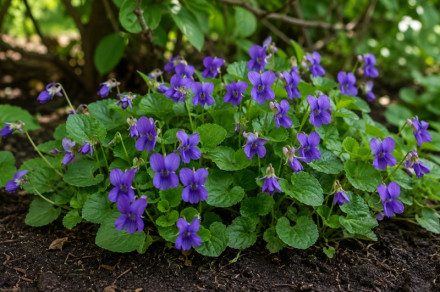
Sweet violet is a low-growing plant that forms small clumps or mats.
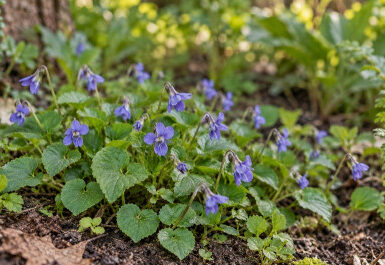
Its green leaves are heart-shaped. They have gently rounded or scalloped edges and grow from the base of the plant.
Each flower grows alone on a thin stalk. The flowers have five petals. The lowest petal is larger than the others and has a small spur behind it.
The flowers are often violet, deep purple, or blue-purple. Some cultivated kinds may have white, pink, or pale flowers.
Sweet violet usually blooms in late winter or spring, depending on the climate. Its flowers are known for their sweet smell. In fact, the species name odorata refers to its scent.
However, scent should not be the only feature you use to identify this plant. Some flowers may have a weak smell, especially during certain weather conditions.
How Big Does Sweet Violet Grow?
Do not expect sweet violet to become a tall plant. It stays close to the soil.
Most plants grow around 4 to 6 inches tall. They may spread wider as they grow.
Sweet violet produces creeping stems called stolons. These stems grow across the soil and help the plant form new roots and leaves. Its heart-shaped leaves, short height, and spreading stolons are some of its main features [2].
This low growth makes sweet violet useful along borders, beneath taller plants, and as a ground cover.
Is Sweet Violet Edible?
Yes. The leaves and flowers of correctly identified Viola odorata plants are edible [2].
The flowers have a light flavor and can be used in sweet or savory foods. Candied violet flowers have also been used for many years to decorate cakes and other desserts.
You can add young leaves to salads or cook them like other tender greens.
However, proper plant identification is very important. Do not eat a plant simply because it has a purple flower or heart-shaped leaves. Many unrelated plants may have similar leaves or flowers.
Common names can also cause confusion. A plant with “violet” in its name may not belong to the Viola genus. Learn the botanical name and features of the exact plant you want to eat.
What Does Sweet Violet Taste Like?
Sweet violet flowers have a light, floral flavor. Their smell is often stronger than their taste.
The leaves have a much milder flavor. Young leaves are usually the better choice because older leaves may become tough.
You do not need to use large amounts of sweet violet in a meal. A few flowers can add color to a salad, dessert, or drink.
If you have never eaten sweet violet before, begin with a small amount. This can help you notice an allergy or upset stomach before eating more.
Nutrients and Plant Compounds in Sweet Violet
Researchers have found several natural plant compounds in sweet violet. However, this does not prove that eating small amounts will provide special health benefits [3].
The amount of each compound can also change. Soil, climate, growing methods, plant variety, and the part being tested may all affect the results.
Sweet violet is normally eaten in small amounts. It is best treated as a colorful addition to meals rather than an important source of nutrients. It should not replace medicine or a balanced diet.
Benefits of Sweet Violet in the Garden
Sweet violet has several useful qualities beyond its edible leaves and flowers.
It stays low, spreads over open areas, handles partial shade, and produces attractive flowers. This makes it useful in places where you do not want to leave the soil bare.
Sweet violet is also a perennial in suitable climates. Once established, it can return each year without being replanted.
However, very hot or dry conditions may cause it to struggle. It grows best in temperate areas with some shade and steady moisture.
Spreading Ground Cover
One of the best garden uses for sweet violet is as a living ground cover.
The plant forms clumps and spreads through stolons. Over time, several plants can create a loose green mat.
This growth helps cover spaces between larger plants. It may also leave less open ground for unwanted weeds to grow.
However, sweet violet is not a perfect weed barrier. Strong weeds can still grow through or around it.
Sweet violet may spread quickly when growing conditions suit it. NC State Extension notes that its spreading habit can cause it to become weedy in some places [2].
If you have a small or carefully arranged flower bed, you may need to trim the runners. You can also grow the plant in a container to control its spread.
Before planting sweet violet, check whether it causes problems in your local area.
Useful for Shady Garden Areas
Many edible garden plants need plenty of sunshine. Sweet violet is different.
It grows well in partial or dappled shade. Dappled shade is the soft light that passes through the leaves of trees or shrubs.
The plant prefers moist, well-drained soil. The ground should hold some moisture without staying soaked.
Sweet violet may grow well in woodland-style gardens, beneath shrubs, beside shaded paths, or near taller plants. A place with morning sun and afternoon shade can also work.
Hot, open areas may be less suitable, especially when the soil dries quickly.
Sweet Violet and Garden Wildlife
Sweet violet can also help garden wildlife.
The plant can serve as food for the caterpillars of some fritillary butterflies. NC State Extension lists sweet violet as a plant that supports fritillary butterfly larvae [2].
Its early flowers may also provide food for visiting insects when fewer plants are blooming.
This gives gardeners another reason to keep some sweet violets instead of treating every plant as an unwanted weed.
Where Does Sweet Violet Grow Best?
Sweet violet can grow in several types of soil.
It may grow in clay, loam, or sandy ground. It can also handle a wide range of soil pH levels. However, moist soil with good drainage is usually best.
Partial shade or dappled light is ideal. The plant does not perform as well in strong sun, especially in hot areas.
Add compost or another form of organic matter if the soil is poor. This helps the ground hold moisture while still allowing excess water to drain away.
How to Grow Sweet Violet From Seed
Sweet violet can be grown from seed, but the seeds may sprout slowly.
You can sow them in pots, trays, or a prepared seedbed. Autumn is often a good time to sow sweet violet because winter cold may help break the seeds’ natural dormancy.
Dormancy is a resting stage that keeps a seed from sprouting too soon. Many violet seeds benefit from a cool period before they begin to grow [4].
Seeds sown in spring may need to be chilled before planting. Always follow the seed seller’s directions, as the best treatment can vary.
Keep the soil lightly moist, but do not make it soggy. Germination may be slow or uneven, so do not throw the pots away too soon.
Once the young plants are large enough to handle, move them into moist soil in partial shade.
Growing Sweet Violet by Division
Division is often an easier and faster way to get more plants.
Carefully lift an established clump from the soil. Separate it into smaller sections, making sure each section has healthy roots and leaves.
Replant the pieces at the same depth at which they were growing. Water them and keep the soil moist while the roots settle into their new place.
NC State Extension lists both seeds and division as ways to grow more sweet violet plants [2].
Growing Sweet Violet in Containers
You do not need a large garden to grow sweet violet.
The plant grows well in containers, making it useful for patios, small gardens, and other limited spaces. A pot can also help stop it from spreading farther than you want.
Choose a container with drainage holes. Use soil that holds some moisture but doesn’t stay waterlogged.
Place the container in partial shade or gentle morning sun. Check the soil often because pots may dry out faster than garden beds.
Growing sweet violet in a pot can also make harvesting safer. You will know which plant you have grown and which products have been used around it.
Common Sweet Violet Problems
Sweet violet is usually easy to grow, but it can still have some problems.
Slugs and snails may chew holes in the leaves. Spider mites may also feed on the plant, especially during hot, dry weather.
Diseases such as powdery mildew and leaf spot may sometimes appear. Powdery mildew looks like a white or gray powder on the leaves. Leaf spot causes brown, black, or yellow marks.
Good airflow can help lower the risk of disease. Give plants enough room to grow and avoid keeping the soil constantly soggy.
When possible, water near the base of the plant. This helps keep the leaves dry.
When to Harvest Sweet Violet
Harvest the flowers when they are fresh and fully open.
For leaves, choose young and tender growth. Younger leaves usually have a better texture for salads and other fresh dishes.
Harvest only what you need. Leave enough healthy leaves so the plant can continue growing.
A dry morning, after the dew has disappeared, is a good time to collect the flowers. Avoid picking wet, damaged, old, or dirty flowers.
How to Use Sweet Violet in the Kitchen
Sweet violet can be used in several simple ways.
Scatter fresh flowers over salads, fruit, puddings, cakes, and other desserts. You can also freeze clean flowers in ice cubes for decorative drinks.
The flowers may be used to make violet sugar, syrup, tea, or traditional candied violets. The Royal Horticultural Society lists sweet violet as suitable for sweet foods, savory foods, and tea [5].
You can eat young leaves fresh or cooked like other tender greens. Start with a small amount if you haven’t eaten them before.
Can You Eat Wild Sweet Violets?
You can eat correctly identified sweet violets from a clean and safe location. However, collecting wild plants requires great care.
Never eat a wild plant unless you are completely sure of its identity. Do not rely only on flower color, leaf shape, or smell.
Avoid plants growing beside busy roads. They may be covered with dirt or pollutants from passing vehicles.
Do not collect plants from places that may have been sprayed with herbicides, pesticides, or other chemicals.
Also avoid plants growing near animal droppings or in places pets or livestock often use as toilets.
Washing removes dirt and small insects, but it may not remove all pesticide residues.
Do not eat flowers from florists. They are usually grown for decoration and may have been treated with chemicals that are not approved for edible crops.
Choose plants labeled for culinary use if you plan to eat them. If a nursery plant was not sold for food, the Royal Horticultural Society recommends growing it for at least three months and harvesting only later flowers. This helps lower the risk of pesticide residues [5].
Wash safe, correctly identified leaves and flowers gently before eating them. People with pollen or flower allergies should be especially careful.
Colorado State University Extension also recommends eating only a small amount of a new edible flower at first. This can help you notice an allergy, sensitivity, or upset stomach [6].
Sweet Violet vs. Other Violets
The Viola genus includes hundreds of species. Finding a violet does not automatically mean you have found Viola odorata.
Sweet violet is known for its fragrant flowers, heart-shaped leaves, creeping stolons, and short growth. Each flower usually appears alone on its own slender stalk.
Learn the features of the exact violet growing in your area. Do not depend only on flower color because several violet species may have purple, blue, pink, or white flowers.
If you are unsure, ask a local plant expert or experienced forager for help. Do not eat the plant until you have confirmed its identity.
Is Sweet Violet Really a Weed?
That depends on where it grows.
In an edible garden or woodland border, sweet violet can be a useful perennial ground cover. In a carefully maintained bed, it may become a weed if it spreads beyond its space.
Its ability to spread is part of what makes it useful. It is also why gardeners should watch its growth and remove runners when needed.
Is Sweet Violet Worth Growing?
Sweet violet offers a surprising number of uses for such a small plant.
Its flowers and leaves are edible. The flowers are fragrant, and the plant can grow in partial shade. It works as a low ground cover and may support the caterpillars of some fritillary butterflies.
Sweet violet can return each year where the climate suits it. It may also spread into a larger patch, although its runners may need to be controlled.
For an edible weed garden, sweet violet can be both beautiful and practical. With correct identification and safe harvesting, Viola odorata may deserve a permanent place in your garden.




[…] Sweet violet and common blue violet flowers have a mild, sweet flavor. Use them on cakes or in fruit salad, syrup, jelly, and tea. […]