

 Sasha Campbell
There are many edible weeds growing in gardens and backyards. However, only eat weeds that you can identify with complete confidence.
Some edible weeds look like poisonous plants. If you are unsure, do not eat them.
Edible Garden Weeds
Below is a list of edible wild greens and weeds you might want to give a try.
1. Chickweed

Like many other wild plants, common chickweed has a mild spinach-like flavor and contains helpful nutrients.
This small plant has tiny white flowers, soft stems, and small oval leaves. It is often seen on lawns.
Chickweed contains nutrients such as magnesium, potassium, calcium, and vitamins A and C. You can make chickweed pesto or add it to sandwiches, soups, and salads.
2. White Clover
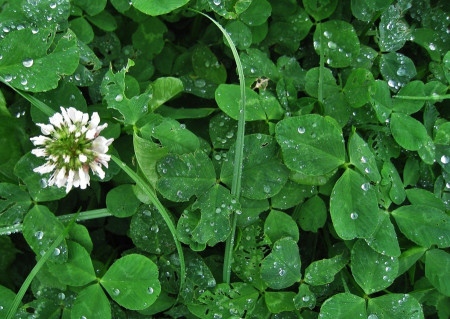
This common lawn weed attracts pollinators, such as bees, to the garden. White clover grows easily and abundantly, and its flowers can be used to make a sweet tea.
The dried flowers can also be ground into a powder and mixed with regular flour when baking. Alternatively, bake some edible clover-and-strawberry cookies.
Red clover is also edible. Another benefit is that both red and white clover make great cover crops.
Purchase clover seeds online.
3. Dandelion
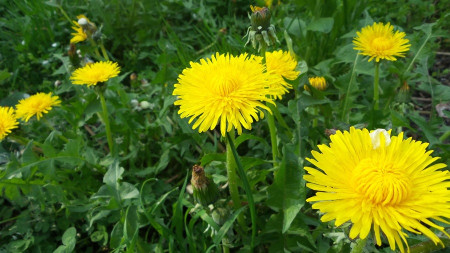 Image credit: “Common Dandelion (Taraxacum officinale)” by Sunasce007, via Wikimedia Commons, licensed under CC BY-SA 4.0
Most people are familiar with seeing dandelions growing in lawns and gardens. Some gardeners dislike them because they believe they spoil the look of lawns.
Dandelions are considered weeds; however, they have many edible parts. You can eat the leaves cooked or raw when young, and the flowers can be used to make jelly, syrup, wine, or other treats.
Bees also love this edible backyard plant.
Purchase dandelion seeds online.
4. Greater Burdock
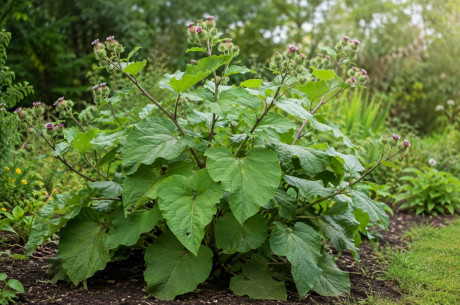
This sticky weed can be a real nuisance in the garden, but it can also add a tasty flavor to curries or be roasted alongside other root vegetables.
Moreover, fermented burdock roots and dandelion have traditionally been used to make a popular drink [1].
However, you need to carefully identify this wild plant to avoid confusion with harmful weeds. Greater burdock produces purple, thistle-like flower heads when it blooms.
5. Stinging Nettle
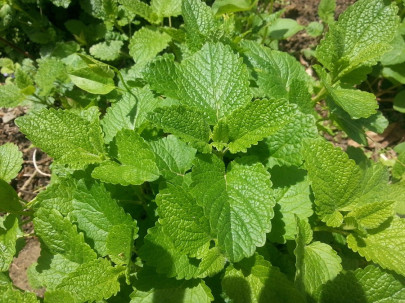
These common garden weeds can also be used as cooking ingredients. Cooking removes the sting and makes nettles safe to eat.
Cooks have long valued stinging nettle for its extra flavor in omelets or in vegetable-based cakes.
Moreover, stinging nettle can replace or supplement spinach in many recipes. Stinging nettles are also a good source of iron [2].
6. Lamb’s Quarters
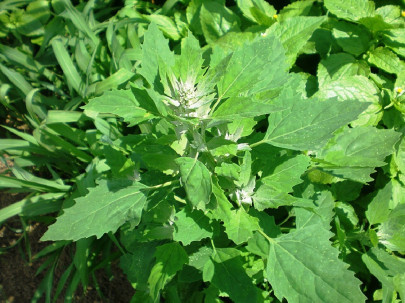 Image credit: “Chenopodium album” by Hugo.arg, via Wikimedia Commons, licensed under CC BY-SA 4.0
This is another kind of weed that humans can eat.
Lamb’s quarters are useful edible weeds and can be used as a substitute for other leafy greens. However, blanch or cook them to reduce the oxalic acid content.
Lamb’s quarters are highly nutritious, containing B vitamins, iron, calcium, and protein. Additionally, you can easily recognize lamb’s quarters by the sharp-toothed leaves and white powdery coating on the plants.
Other common names include goosefoot, fat hen, and wild spinach.
7. Purslane
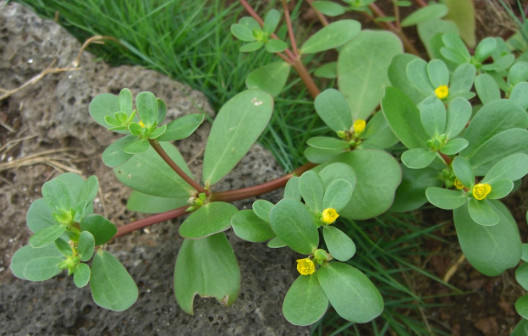 Image credit: “Common Purslane (Portulaca oleracea)” (cropped) by Jason Hollinger, via Wikimedia Commons, licensed under CC BY 2.0.
This is an edible backyard weed with small, oval leaves and yellow flowers. Purslane has a mild flavor and is rich in nutrients.
The stems are usually reddish, and the leaves are thick and juicy.
The leaves, flower buds, and stems can be sautéed and added to seafood dishes or eaten on their own. You can also add them to green juice along with other greens.
Buy purslane seeds online.
8. Curly Dock
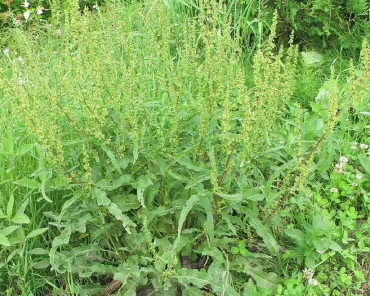
Image credit: “Rumex crispus” (cropped) by Gilles Ayotte, via Wikimedia Commons, licensed under CC BY-SA 4.0
Many dock species are edible, including curly dock.
Curly dock often grows in similar areas to nettles. Some people also rub dock leaves on nettle stings, although there is little scientific evidence that it works.
Cook the leaves in soups and other dishes. Young leaves can also be eaten raw.
The young leaves have a slightly tart, lemon-like flavor that can add a citrus note to dishes. However, they contain high amounts of oxalic acid, so eat them in moderation.
9. Broadleaf Plantain
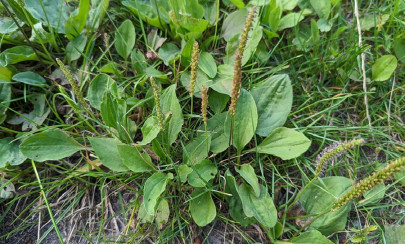
Image credit: “Greater Plantain (Plantago major)” by Michel Langeveld, via Wikimedia Commons, licensed under CC BY-SA 4.0.
Another backyard weed you can eat is broadleaf plantain. Big clumps of it can spread quickly along paths, in flower beds, and on lawns.
Broadleaf plantain is very common. You can use it like spinach or kale in recipes that call for those vegetables.
Use the leaves and flower heads, but pick the leaves when they are young for the best flavor.
10. Garlic Mustard
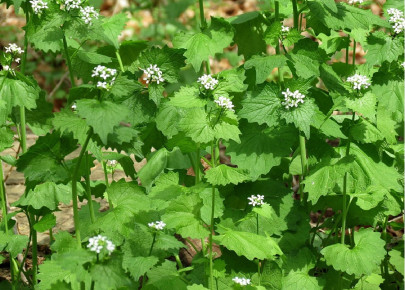
Picture credit: “Garlic Mustard (Alliaria petiolata)” by Katja Schulz, via Wikimedia Commons, licensed under CC BY 2.0
Garlic mustard is an invasive herb in many areas, but one that also contains several helpful nutrients. It contains vitamins A and C, as well as omega-3 fatty acids.
It also provides minerals such as iron, calcium, manganese, selenium, and potassium.
Moreover, because it is garlicky and spicy, you can use it in many dishes, including pesto and chimichurri.
11. Sheep Sorrel
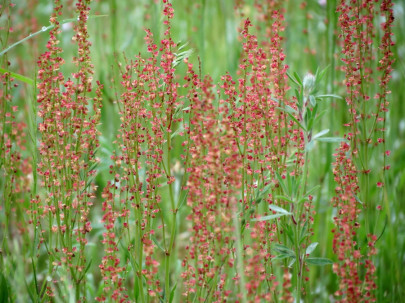
Image credit: Photo by Katja Schulz, via Flickr, licensed under CC BY 2.0
Sheep sorrel contains oxalic acid. Blanching the leaves reduces the amount, but people prone to kidney stones should eat it only in small amounts.
The sharp, lemony taste of the young stalks pairs well with fatty meats like pork or lamb. Moreover, the leaves are arrow-shaped, making them easily identifiable.
12. Thistles
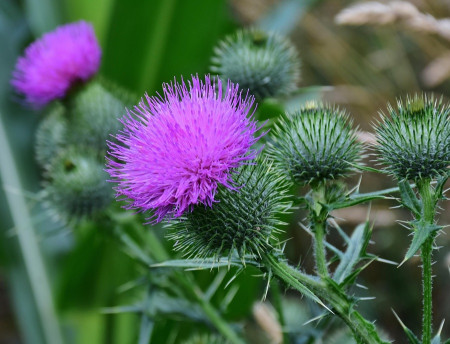
There are many species of this weed, and all of them are generally disliked by gardeners. Many thistles in the genera Cirsium and Carduus are edible when correctly identified [3, 4].
Young leaves, peeled stems, roots, and flower buds are edible after removing the sharp spines. The purple flower heads are easy to recognize when the plant blooms.
13. Sweet Violet
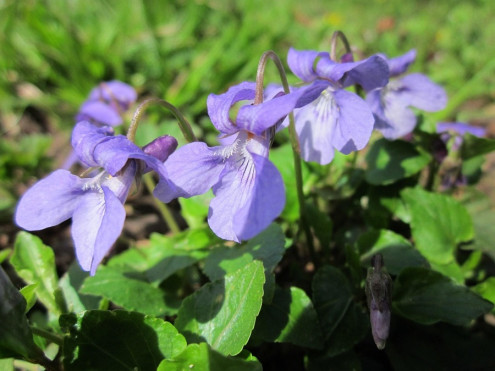
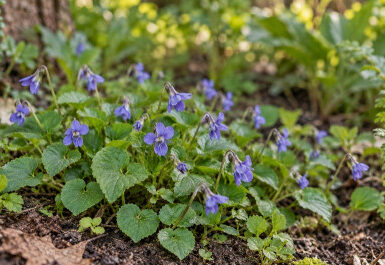
Among the wild edible plants in your yard, sweet violet (Viola odorata) is becoming popular in vegan cooking.
Both the leaves and flowers can be eaten. However, do not eat the roots because they may upset your stomach.
Sweet violets contain vitamin C and have a sweet, sugary flavor. Use them to make teas, syrups, jams, or garnish salads. Look for their sweet-smelling purple flowers.
Only harvest violets from areas that have not been sprayed with pesticides, herbicides, or other chemicals.
14. Ramsons
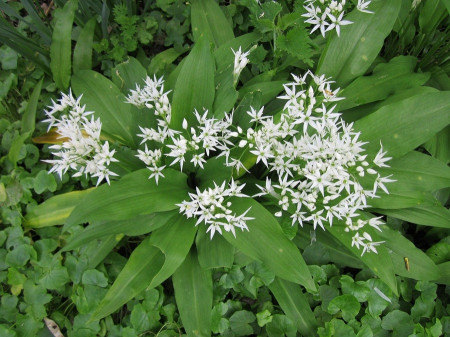
The leaves are edible and can be used in salads and sandwiches.
Ramsons, otherwise known as wild garlic, are also rich in vitamins A and C, calcium, and iron. They have been used in traditional herbal medicine, but more research is needed to confirm these health benefits.
Be careful when harvesting wild garlic because it can be confused with toxic plants. The leaves should smell strongly of garlic when crushed, not like onion or grass.
Never harvest wild garlic unless you are completely sure you have identified it correctly.
15. Wild Amaranths
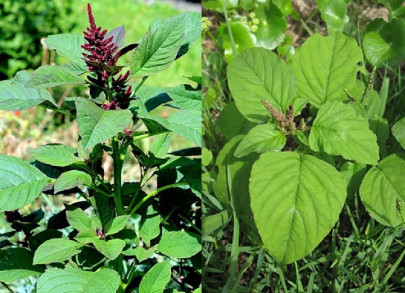
Image credits: “Amaranthus hypochondriacus” by Karelj, via Wikimedia Commons, licensed under CC BY-SA 3.0 | “Amaranthus viridis leaf” by Harry Rose, via Wikimedia Commons, licensed under CC BY 2.0.
Many parts of wild amaranth (pigweed), including the leaves and seeds, are edible when correctly identified and prepared [4].
These weeds can be difficult to remove; however, you can put them to good use in the kitchen. Amaranth is also known as callaloo bush.
The young leaves are fine to eat raw in salads, and the older leaves can be steamed or used in a stir-fry.
Purchase red amaranth seeds online.
16. Hairy Bittercress
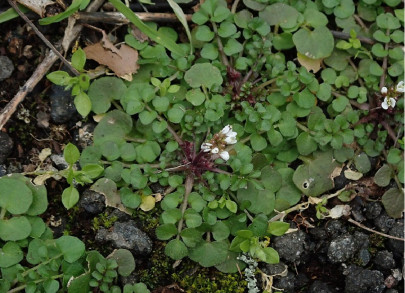
Image credit: “Hairy Bittercress (Cardamine hirsuta)” by Daniel Cahen, via Wikimedia Commons, licensed under CC BY 4.0.
Unlike most of these edible yard greens, hairy bittercress is a cold-weather plant that you can add to winter salads and soups.
It has a peppery flavor, much like watercress, and tastes great in salads, soups, and sandwiches.
17. Common Mallow
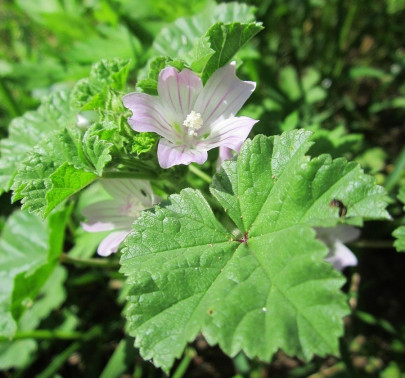
Common Mallow (Malva neglecta) is a frequently seen mauve-flowered wild plant that thrives in most places.
The leaves, flowers, stems, and seeds are edible. You can eat the young plants raw in salads. However, it’s best to steam or sauté mature plants.
Mallow is a source of vitamins A, B, and C, as well as calcium and magnesium.
Where Not to Harvest Edible Weeds
Avoid harvesting edible weeds from roadsides, pesticide-treated areas, areas where pets relieve themselves, or places that may be polluted. The safest weeds are those grown in clean, untreated areas.
A Quick Safety Tip
Some edible weeds, including lamb’s quarters, curly dock, and sheep sorrel, contain oxalic acid.
Most people can enjoy them in moderation after cooking. However, people with kidney disease or a history of kidney stones should ask their doctor before eating them regularly.
Frequently Asked Questions
Can you eat weeds from your backyard?
Yes, many backyard weeds are edible. However, only eat plants you can identify correctly, and avoid weeds growing near roads, treated lawns, or areas sprayed with chemicals.
Should you wash edible weeds before eating them?
Yes. Wash all wild greens carefully to remove dirt, insects, and possible contaminants.
Are garden weeds safe to eat?
Some garden weeds are safe to eat, but only after they have been correctly identified. Avoid eating weeds from areas treated with chemicals or places where they may have been contaminated.
What weeds should you never eat?
Never eat a weed unless you know exactly what it is. Some poisonous plants look very similar to edible ones.
How do you know if a weed is edible?
Learn to identify the plant by its leaves, flowers, stems, and growth pattern before eating it. Never rely on a single feature because some poisonous plants look similar to edible ones.
Can you grow medicinal plants at home?
Yes. Many medicinal herbs are easy to grow in containers or garden beds.
If you’re just getting started, a medicinal garden kit provides a convenient selection of seeds and growing instructions, making it easier to build a dedicated herb garden.
Takeaway
Pulling weeds may not be your favorite garden job, but some of those weeds can become tasty and healthy food. Instead of throwing them away, you can discover the tasty and nutritious wild foods growing in your backyard.




Ages twenty through forty, I studied nutrition and herbology. Then I sold the books to pay bills. Without them, much has slipped my memory. Herbal information that others might provide, would be highly appreciated.
Do you have a photo of tansey?
This is a photo of tansy (Tanacetum vulgare): https://commons.wikimedia.org/wiki/File:Tanacetum_vulgare_20041012_2570.jpg
Tansy (Tanacetum vulgare) is edible, but it should only be consumed with extreme caution because it contains thujone, a toxic compound.
[…] of the biggest benefits of stinging nettle as an edible weed is its nutritional […]
[…] Hairy bittercress is an edible weed. The tender leaves are the part most often eaten. The flowers are also edible, although they can be […]
[…] Sheep sorrel is a small wild plant that is easy to walk past without noticing. Yet its bright green leaves, sour flavor, and ability to grow in poor soil make it an interesting edible weed. […]
[…] gardeners interested in edible weeds, sweet violet is worth knowing. It provides edible leaves and flowers while filling spaces where […]
[…] young curly dock leaves have a history of use as wild food. They must be identified correctly and eaten with care because the plant contains […]
[…] growing in the grass and think they are weeds. However, common blue violet (Viola sororia) is also an edible wild plant. You can eat its leaves and flowers when you identify and harvest the plant […]
[…] beginner’s guide to foraging wild edible plants explains how to get started, identify plants, choose safe places to forage, harvest responsibly, […]