

 Sasha Campbell
Pruning tomato plants means removing some leaves and shoots to control how they grow. It can help keep plants neat, improve airflow, and make them easier to support. It may also help some plants produce larger tomatoes that ripen sooner.
However, pruning can reduce the number of tomatoes a plant produces. That is why you should only remove the parts that need trimming.
The best way to prune depends on the type of tomato you are growing. Determinate and indeterminate tomatoes grow in different ways, so they need different care.
In this guide, you will learn when to prune tomato plants, which parts to remove, and how to do it.
Why Should You Prune Tomato Plants?
Tomato plants grow new leaves, branches, and side shoots as they get bigger. Some types can become very bushy.
Pruning means cutting away parts of a plant. This can help control the plant’s size and make it easier to support.
Removing some leaves and shoots can also improve airflow. This helps the leaves dry faster after rain or watering, which may lower the risk of some plant diseases [1].
Some gardeners prune tomato plants to help the fruit grow larger and ripen sooner. Removing lower leaves can also keep them away from soil that may carry plant diseases.
But pruning is not always needed. Tomato leaves make food that helps the plant grow. Removing too many leaves can weaken the plant and expose tomatoes to strong sunlight. This can cause sunscald, which leaves pale or damaged patches on the fruit [1].
Pruning also involves a trade-off. A pruned plant may produce fewer but larger tomatoes. A plant with more branches may produce more fruit, depending on its variety and growing conditions [2].
Know Your Tomato Type Before Pruning
Before you start cutting, find out whether your tomato plant is determinate or indeterminate. Each type grows differently and needs a different amount of pruning.
Determinate Tomato Plants
Determinate tomatoes are also called bush tomatoes. They grow to a set size and produce most of their fruit over a shorter period.
These plants usually need very little pruning. Cutting away too many branches can reduce the number of flowers and tomatoes they produce.
If you want to prune a determinate plant, you can remove suckers that grow below the first flower cluster. There is usually no need to remove suckers above that point [1].
Indeterminate Tomato Plants
Indeterminate tomatoes keep growing and producing flowers and fruit as long as the weather and growing conditions allow.
These plants can become tall and bushy. Some gardeners remove selected suckers to control their size, improve airflow, and make them easier to support.
What Are Tomato Suckers?
Tomato suckers are small shoots that grow where a leaf branch meets the main stem. This spot is called the leaf axil.
A sucker starts as a small shoot. If you leave it alone, it can grow into a large branch with leaves, flowers, and tomatoes.
Suckers are not bad for the plant. They can produce fruit, too. Keeping more suckers may give you more branches and tomatoes. Removing some can make the plant less crowded.
Many gardeners growing indeterminate tomatoes remove selected suckers but keep one or two strong side shoots. The best choice depends on how they want to shape and support the plant [[1, 2].
When Should You Prune Tomato Plants?
Wait until your tomato plants are growing well before you begin pruning. You do not need to remove every small shoot as soon as you plant them.
Check indeterminate plants often while they are growing. Small suckers are easier to remove than large ones. You can usually pinch them off when they are only a few inches long [1].
Try to prune on a dry day. This gives cut areas time to dry and may help lower the risk of disease spreading.
Avoid heavy pruning when a plant is weak, damaged, or struggling to grow. Give it time to recover first.
How to Prune Tomato Plants
You do not need to remove lots of growth to prune a tomato plant. Follow these simple steps.
1. Remove Selected Suckers
Look for small shoots growing between the main stem and leaf branches. On indeterminate plants, pinch off the suckers you do not want while they are still small.
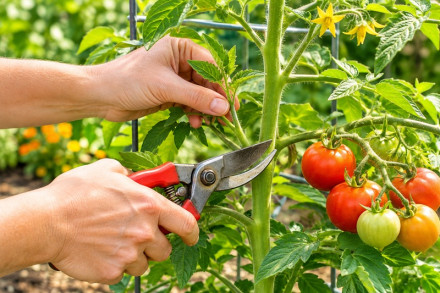
You can remove soft suckers with your fingers. Use clean, sharp pruning shears for larger shoots.
You do not have to remove every sucker. Keep some healthy side shoots if you want the plant to grow more branches and produce more fruit.
2. Remove Damaged or Diseased Leaves
Check your plants for yellow, damaged, or diseased leaves. Remove leaves that are clearly affected, especially those near the soil.
Use clean pruning shears to cut away diseased plant parts. Clean your hands and tools before working on another plant. This helps stop diseases from spreading between plants [1].
Keep healthy leaves whenever possible. They help the plant make the food it needs to grow.
3. Trim Some Lower Leaves
Some gardeners remove leaves and side shoots from the lowest 6 to 12 inches of the plant. This is most useful when leaves touch or grow close to the soil.
Removing some of this lower growth can improve airflow and keep leaves away from soil that may carry plant diseases.
Do not remove too many leaves at once. Iowa State University Extension advises removing no more than one-third of a tomato plant’s leaves at a time [1].
4. Support the Plant
Tomato plants can become heavy when they grow and produce fruit. Use stakes, trellises, or tomato cages to support them.
Plants grown on stakes are often pruned to one or a few main stems. Plants grown inside large cages can keep more of their branches and usually need less pruning [2].
As the plant grows, guide loose branches back into the support. This helps stop the stems from breaking under the weight of the tomatoes.
5. Consider Topping Tall Indeterminate Plants
Topping means cutting off the growing tip at the top of a tomato plant. This stops the stem from growing taller and helps the plant focus on its existing fruit.
Gardeners in places with cold winters sometimes top indeterminate plants about four to six weeks before the first expected fall frost. This gives the tomatoes already on the plant more time to grow and ripen.
In warm places without regular frost, topping is not usually needed just because a plant has grown tall. Only consider it when the plant is near the end of its growing period.
Do not top determinate tomatoes. Cutting off their growing tips can greatly reduce the harvest.
Quick Tomato Pruning Checklist
Before pruning, remember to:
- Check whether your tomato plant is determinate or indeterminate.
- Remove selected suckers from indeterminate plants.
- Cut away diseased or damaged leaves.
- Remove lower leaves that touch the soil.
- Use clean, sharp pruning tools.
- Prune when the leaves are dry.
- Keep enough healthy leaves to protect the tomatoes from strong sunlight.
- Avoid removing more than one-third of the leaves at a time.
- Make sure the plant has proper support.
Common Tomato Pruning Mistakes to Avoid
Avoid these common mistakes when pruning:
- Removing every sucker: Suckers can grow into branches that produce flowers and tomatoes.
- Cutting away too many healthy leaves: The plant needs its leaves to grow and make fruit.
- Pruning wet plants: Wet leaves can make it easier for some diseases to spread.
- Using dirty tools: Dirty pruning shears can carry disease from one plant to another.
- Pruning every tomato type the same way: Determinate tomatoes need less pruning than indeterminate types.
Takeaway
Tomato plants do not all need the same amount of pruning. Determinate types usually need little trimming, while indeterminate types can benefit from removing selected suckers and some lower leaves.
The key is to avoid cutting away too much. Keep healthy leaves, support the branches, and remove only the growth that needs attention. This will help you manage your plants while protecting their ability to produce tomatoes.




[…] rotating crops with other vegetables. Other home remedies for tomato fungus are staking and pruning your tomato plants. These actions improve air circulation and help keep the leaves […]