

 Sasha Campbell
Hugelkultur gardening is a natural way to build a garden bed using old logs, branches, leaves, grass clippings, compost, and soil. Instead of throwing away fallen trees and other yard waste, you can use these materials to create a raised bed for growing vegetables, herbs, and other plants.
This gardening method makes good use of materials that may already be available in your yard. As the wood and other plant matter break down, they become part of the growing environment.
A hugelkultur bed may also help retain moisture and reduce the amount of soil you need to buy when filling a raised garden bed. It is a useful method for gardeners who want to use natural resources more efficiently.
Let’s look at what hugelkultur gardening is, its benefits, and how to build your own hugelkultur bed at home.
What Is Hugelkultur Gardening?
Hugelkultur (pronounced HYOO-gul-kulture) is a German word that means mound or hill culture. It is a gardening method that uses logs and branches as the base of a raised garden bed.
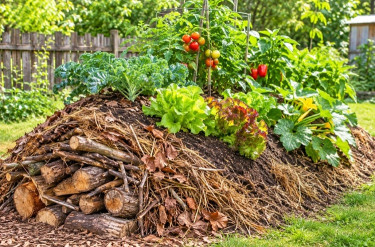
The woody materials are covered with smaller branches, leaves, grass clippings, compost, and soil. The finished bed looks like a long mound of soil. Vegetables and other plants can grow on the top and sides.
The wood inside the bed slowly breaks down over time. This process adds organic matter to the growing area and provides food for earthworms, fungi, bacteria, and other helpful soil organisms.
Hugelkultur is associated with German and European gardening traditions. Today, it is popular with gardeners interested in permaculture and sustainable gardening [1].
Benefits of Hugelkultur Gardening
Gardeners choose to build hugelkultur beds for several reasons.
1. May Help Retain Soil Moisture
One potential benefit of hugelkultur gardening is improved moisture retention.
Wood and other organic materials can absorb and hold water. As the logs and branches break down, they may help the bed retain moisture and make it available to plant roots.
This can help during dry periods when garden plants need a steady water supply. However, young hugelkultur beds still need regular watering, especially while plants are getting established.
2. Makes Use of Yard Waste
Do you have old branches, fallen logs, and dry leaves in your yard?
Instead of sending these materials to the dump, you can use them to build a hugelkultur bed.
This is a good way to recycle natural garden waste. It also reduces the amount of soil needed to fill a deep raised bed.
3. Adds Organic Matter to the Soil
As wood, leaves, and other plant materials break down, they become organic matter.
Organic matter helps improve soil structure. It also supports earthworms, fungi, bacteria, and other organisms that play a role in healthy soil.
Over time, these materials become part of the garden’s growing environment.
4. Creates More Growing Space
A hugelkultur bed is built above the ground, creating a raised planting area.
The sloping sides can provide extra space for growing certain vegetables and herbs. This can be helpful if you have a small garden and want to make good use of the available space.
5. Can Reduce Gardening Costs
Building a hugelkultur bed can help lower the cost of starting a raised garden.
Instead of filling the entire bed with purchased soil, you use logs, branches, leaves, and other natural materials to fill the lower section.
You will still need enough good-quality soil and compost at the top to give plant roots a suitable place to grow.
Materials Needed to Build a Hugelkultur Bed
You do not need expensive equipment to make a hugelkultur garden. Many of the materials can come from your own yard.
Here are some common materials:
- Old, untreated logs and tree trunks
- Small branches and twigs
- Dry leaves
- Grass clippings
- Straw
- Finished compost
- Garden soil
- Water
Choose natural wood that is safe for garden use. Avoid painted, treated, or chemically contaminated wood.
Also avoid black walnut because it contains natural compounds that may affect some plants’ growth. Cedar and other slow-decaying woods are less suitable if you want the wood to break down within a reasonable time. Avoid using freshly cut willow branches because they may sprout after being buried [1].
If you collect grass clippings from a lawn, make sure they have not been treated with herbicides that could harm your garden plants.
How to Build a Hugelkultur Garden Bed
Building a hugelkultur bed isn’t difficult, but it takes planning. You can make one directly on the ground or build a variation inside a deep raised garden frame.
Follow these steps to get started.
Step 1: Choose a Good Location
Choose a spot that receives enough sunlight for the vegetables you want to grow.
Many vegetables, especially tomatoes, peppers, and squash, grow best with about six to eight hours of direct sunlight each day. Leafy vegetables such as lettuce and kale can often grow with less sunlight.
Choose an area with good drainage. Avoid low spots where water regularly collects and leaves the soil waterlogged.
If your garden is on a slope, position the bed along the land’s contour, across the direction of downhill water flow. This can help slow runoff and allow the wood and other organic materials to absorb moisture.
Make sure there is enough room to walk around the bed and care for your plants.
Step 2: Lay Down the Logs
Start by placing your largest logs and wood pieces on the ground.
Arrange them in a long row to form the bed’s center. You can also dig a shallow trench and place some of the logs inside it.
Use older or partly decayed wood when possible. You can also use fresh wood, but it breaks down slowly.
When small pieces of wood are mixed into the soil, the organisms that break them down may use some of the nitrogen that plants need. Keeping the large wood pieces below the main planting soil and adding nitrogen-rich organic materials can help reduce this problem [1].
Step 3: Add Smaller Branches and Twigs
Place smaller branches and twigs over and around the logs.
Try to fill large spaces between the logs. This helps create a more stable structure.
The smaller pieces will also break down over time and become part of the growing bed.
Step 4: Add Leaves and Other Organic Materials
Cover the wood with dry leaves, straw, and other suitable plant materials.
You can also add grass clippings, vegetable scraps, and well-aged or properly composted animal manure.
Manure should be at least six months old or carefully heat-composted before use in a vegetable garden. Never use fresh manure in a vegetable garden bed because it may contain harmful germs [2].
These materials help balance the carbon-rich wood with nitrogen-rich organic matter. This supports the organisms that break down the different layers.
Do not add meat, dairy products, pet waste, or plant material infected with serious or persistent diseases.
Step 5: Add Compost and Soil
After adding the organic materials, cover the bed with a thick layer of good-quality garden soil and finished compost.
Make sure there is enough growing soil to give young plants room for their roots to develop. The amount needed will depend on the size and shape of the bed and the vegetables you plan to grow.
If you are building a hugelkultur bed inside a raised garden frame, make sure the frame is deep enough to hold the wood and still leave plenty of room for planting soil and compost [1].
Keep the sides of the mound gently sloped rather than too steep. This makes planting easier and helps prevent soil and seeds from washing away during heavy rain.
Step 6: Water the Bed
Water the bed thoroughly. If possible, water each layer as you build it.
This helps wet the wood and other organic materials and provides moisture for the organisms that break them down.
If possible, allow the bed to rest for several months before planting. This gives the materials time to settle and begin decomposing.
However, you can plant sooner if you have added enough good-quality soil and compost at the top.
What Vegetables Grow Best in a Hugelkultur Bed?
You can grow many types of vegetables and herbs in a hugelkultur garden.
Some good choices include:
- Tomatoes
- Peppers
- Cucumbers
- Squash
- Beans
- Cowpeas
- Lettuce
- Kale
- Radishes
- Basil
- Thyme
Choose plants based on your local climate, growing season, and how much sunlight your garden gets.
You can also grow different crops together, as long as they have enough room and similar growing needs.
Legumes such as beans and cowpeas work with helpful soil bacteria to obtain nitrogen from the air. They can be useful crops during the first few growing seasons, but still watch for signs of nitrogen deficiency.
Caring for a Hugelkultur Garden
A hugelkultur bed still needs regular care.
Water your plants as needed, especially during the first growing season. Don’t assume the wood will provide all the moisture your plants need.
Watch for signs of nitrogen deficiency, such as pale or yellow leaves and slow plant growth. If you notice these problems, adding finished compost or a suitable organic fertilizer may help.
Weeds should also be removed before they spread. Add more compost or soil when needed to replace materials lost as the bed settles.
Remember that the wood inside the bed will slowly rot and break down. As this happens, the mound will become shorter. This is a normal part of the process. You may need to add more soil or compost each year to maintain the planting surface [1].
Is Hugelkultur Gardening Worth Trying?
Hugelkultur gardening is an interesting way to turn old wood and garden waste into a useful growing space.
It can help reduce the amount of soil needed for raised beds, make use of natural materials, and support the gradual improvement of soil structure.
However, it is not a perfect solution for every garden. The bed takes time to build, the wood breaks down slowly, and young beds may need extra watering and nutrients.
It is also worth knowing that scientific evidence supporting some of the popular claims about hugelkultur is limited. Washington State University Extension explains that there are no peer-reviewed scientific studies specifically testing the hugelkultur method, so many of its claimed benefits have not been fully proven [3].
If you have fallen branches, old logs, and other natural materials available, building a small hugelkultur bed can be a worthwhile gardening project.
Start with a manageable size, use safe materials, and give your plants enough good-quality soil to grow. Over time, you can watch the wood and other organic matter become part of your garden’s natural growing system.



Add comment