

 Sasha Campbell
Nets and row covers offer a simple way to protect vegetable plants. They place a barrier between your crops and the insects, animals, or weather that may harm them.
Some covers block insects and birds. Others protect young plants from frost, strong wind, or cool temperatures. When used correctly, they can reduce plant damage and lower the need for insecticides.
Research from Japan also suggests that the color of insect netting may matter. Red nets helped protect Welsh onions from onion thrips. The researchers concluded that these nets could reduce the number of insecticide treatments needed.
What Are Garden Nets?
Garden nets for vegetables are mesh materials placed around or above plants. The holes may be very small or quite large.
Fine netting can block many small insects when its holes are the right size. Netting with larger holes may keep away birds, moths, and some beetles.
Most garden nets allow sunlight, rain, and fresh air to reach the plants.
What Are Row Covers?
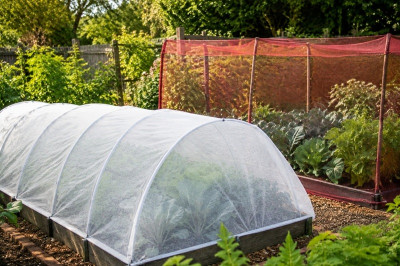
Row covers are sheets of fabric placed over vegetable crops. Some rest lightly on the plants. Others sit on hoops and form a low tunnel.
The material allows some light, air, and water to pass through. Different weights provide different levels of protection.
How Are They Different?
Garden netting has visible holes and mainly acts as a physical barrier. It usually provides good airflow but offers little warmth.
Row-cover fabric has tiny spaces between its fibers. Lightweight types mainly block insects. Thicker types hold warmth around plants and provide better frost protection.
Benefits of Nets and Row Covers
These covers are especially helpful when young plants face insects, cold nights, or strong wind.
They can also form part of an integrated pest management plan. This means watching for pests and using several control methods. Gardeners begin with lower-risk choices and use pesticides only when needed [1].
Keep Insects Away
Nets and row covers can protect vegetables from flea beetles, cabbage moths, cabbage loopers, cucumber beetles, leaf miners, onion flies, and squash bugs.
The covers stop adult pests from reaching the plants. This limits feeding and makes it harder for them to lay eggs on the leaves.
The holes must be small enough to block the target pest. All edges must also remain sealed.
Protect Young Seedlings
Young seedlings cannot handle as much damage as mature plants.
A few flea beetles may leave small holes in leaves. Caterpillars may eat an entire seedling before it becomes established.
Covering crops after planting gives them time to grow stronger. Larger plants can often survive a small amount of pest damage later.
Reduce Insecticide Use
A secure cover may lower the need for insecticides. This can save time and reduce the risk of harming bees, lady beetles, lacewings, and other useful insects.
However, nets also keep helpful insects away from covered plants. You may need to remove them when flowers open and pollination begins.
New Research on Red Nets
Japanese researchers published a study in 2024 that compared red, white, black, and mixed-color insect nets. They tested the nets against onion thrips.
These tiny insects feed on onions and many other crops. They can also spread harmful plant viruses.
The researchers tested several net colors and mesh sizes in a laboratory. They then tested 0.8 mm red netting in fields of Kujo leeks, also called Welsh onions.
Nets containing red fibers kept more thrips away than standard black or white nets. Some red nets reduced thrips movement even when their holes were larger than the insects’ bodies [2].
Could Red Nets Cut Insecticide Use?
The fully covered field plots had fewer thrips than the partly covered and uncovered plots. They also produced market-quality onions after two insecticide treatments.
Based on the results, the researchers estimated that partly covered plots would need one more treatment. They believed uncovered plots would need at least twice as many treatments as fully covered plots.
The team concluded that red nets could reduce the number of insecticide applications needed by 25% to 50%.
This does not mean that red nets will cut every type of pesticide use by 50%. The study focused on one main pest and one crop in Japan.
Why Might Red Nets Work?
Normal insect nets physically block pests. If an insect is larger than the holes, it cannot pass through.
Red nets may provide another kind of protection. The researchers called this “optical pest control.” It uses the way insects see and react to light.
Scientists think onion thrips do not have eye receptors that are sensitive to red light. However, they are still studying exactly how red netting keeps these pests away.
More Research Is Needed
Red nets may not work the same way against every pest or on every crop. More trials are needed in different climates and growing systems.
Gardeners should not assume that red shade cloth or any red fabric will have the same effect. The fiber color, the light it reflects, and the mesh size may all matter.
Choose the Right Mesh Size
Mesh size means the size of the holes in a net.
Fine netting may be needed for thrips, flea beetles, leaf miners, and small flies. Larger holes may be enough to block cabbage moths, cucumber beetles, or birds.
Fine mesh reduces airflow more than wide mesh. Choose the largest holes that will still block the pest you need to stop.
Choose the Right Cover Weight
Lightweight floating row covers mainly protect plants from insects. They let most sunlight reach the crop and hold little heat.
Medium covers offer insect protection and some warmth. Heavy covers provide better frost protection, but they block more light.
Some heavy row covers can block 40% to 50% of sunlight. They may also trap enough heat to kill plants on warm days [3].
DIY Row Covers for Gardening
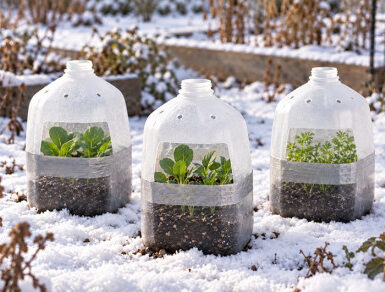
You do not always need to buy a complete row-cover system. Homemade garden row covers can protect seedlings from insects, cool wind, and light frost.
However, the amount of frost protection depends on the fabric you use. Choose fabric made for garden use and check the product label for its level of cold protection.
Avoid heavy household blankets during the day. They may block too much sunlight. Solid plastic can also trap dangerous heat if it is left closed on a sunny day.
DIY Hoops for Row Covers
You can make DIY hoops for row covers from flexible PVC pipe, strong wire, or another smooth material. Push both ends firmly into the soil or attach them to the sides of a raised bed.
Make sure the hoops are smooth and strong. Sharp edges may tear the fabric, while weak hoops may fall during wind or rain.
Place the hoops close enough to prevent the material from sagging. Make the tunnel tall enough to hold the plants as they grow.
Protect Crops From Frost and Wind
Floating row covers hold some of the warmth rising from the soil. The amount of protection depends on the fabric’s weight.
Place the cover over the bed before temperatures fall. Make sure it reaches the ground on every side.
A supported cover can also shelter seedlings from strong wind. Secure it well so the material does not flap against the plants.
Install Covers Early
Install insect netting as soon as you sow seeds or set out transplants.
If you wait until damage appears, pests or eggs may already be on the plants. A cover could trap them inside and protect them from birds and other predators.
Inspect each plant before covering it. Remove any insects, caterpillars, or eggs you find.
Avoid Trapping Soil Pests
Some pests spend part of their lives in the soil. Adult insects may then emerge beneath a newly installed cover.
For example, root maggot pupae may remain in soil near crops they attacked the year before.
If root maggots were a problem, do not place a row cover over soil where the same crop or another host crop grew the year before [4].
Seal All the Edges
A row cover will not keep insects out if they can enter around its edges.
Hold the material down with soil, boards, smooth rocks, garden pins, or sandbags. Pay close attention to corners where wind may lift it.
Leave enough loose material for the plants to grow. Check the edges after strong wind or heavy rain.
Let Pollinators Reach Flowers
Cucumbers, melons, pumpkins, and most squash need insects to carry pollen between flowers.
Remove their covers when flowering begins so bees can reach the blooms. Without pollination, the plants may produce few fruits or fruits with poor shapes [5].
Some cucumber and squash varieties can form fruit without pollination. These are called parthenocarpic varieties. Check the seed packet before leaving them covered.
Watch for Heat and Dry Soil
The temperature beneath a cover can rise quickly on sunny days. Extra warmth may help during cool weather, but too much can cause wilting and leaf damage.
Lift the sides or remove the cover if the growing area becomes too hot.
Many covers allow rain to pass through, but a light shower may not soak the soil. Feel the soil beneath the cover and water when it begins to feel dry.
A soaker hose or drip line works well beneath covered rows.
Use Bird Netting Safely
Pull bird netting tightly over a strong frame. Do not leave loose sections where birds, snakes, or other animals may become trapped.
Check the net each day. If an animal becomes trapped, release it only if you can do so safely. Contact a wildlife rescue group if it is injured or difficult to free.
Keep the net above the crop so birds cannot stand on it and peck the fruit underneath.
Check and Store Your Covers
Look beneath covers once or twice each week. Check for dry soil, weeds, trapped insects, disease, plant damage, and excess heat.
Remove insect covers when the main pest season ends or when flowers need pollination.
After use, clean the material and let it dry. Store it away from sunlight, moisture, and rodents.
Are Nets and Row Covers Worth Using?
Nets and row covers can protect seedlings, block pests, reduce wind damage, and shelter vegetables from cold weather. They may also lower the need for insecticides.
Red insect nets provide another promising option. Japanese researchers concluded that this netting could reduce needed insecticide applications by 25% to 50% in Welsh onion fields.
For the best results, choose the right material, install it early, seal every gap, watch for heat, and remove it when pollinators need access. These simple steps can help you grow healthier vegetables while using fewer pest-control products.




[…] One protective measure to consider is floating row covers. […]
[…] Fine-mesh row covers can stop adult leaf miners from reaching your plants and laying eggs. Place the cover over the crop soon after planting. Seal the edges with soil, boards, or landscape pins. […]
[…] A floating row cover can help keep stink bugs off a crop. Put it on before the bugs arrive, and fasten the edges so they cannot crawl underneath. […]