

 Sasha Campbell
This article helps you sort through organic treatments and home remedies for plant diseases.
Infectious plant diseases are caused by pathogenic organisms such as bacteria, viruses, and nematodes [1]. Fortunately, there are natural ways to address the problem.
Losing even a few units of crops to diseases can be devastating if they’re your entire income. Plus, you spent all the time, money, and care building your fields and gardens.
Below is a list of the most common plant diseases, their causes, and how to identify and treat them organically.
1. Bacterial Canker
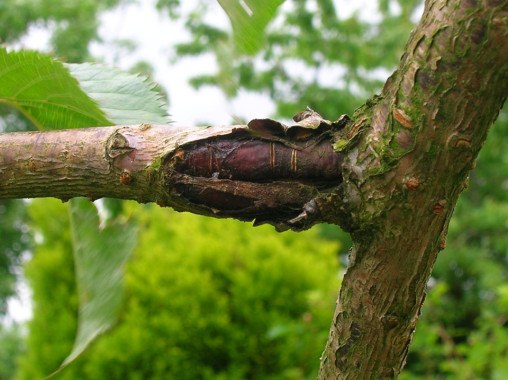
Image “Bacterial Canker on Cherry” licensed under CC BY-SA 3.0 via Wikimedia Commons.
Bacterial canker is one of the primary bacterial diseases in some fruit trees.
This cherry tree killer likes to show up after the trees have been wounded. It does so through pruning or another method that creates a gash in the bark.
Bacterial canker manifests as sunken, water-soaked, gummy lesions on the trunk or twigs.
Bacterial Canker Treatment
One way to control bacterial canker is to prune trees while they are in bloom and to remove weeds and grass around the tree’s base.
Additionally, Monterey Complete is an excellent natural treatment for bacterial canker disease.
2. Blossom End Rot
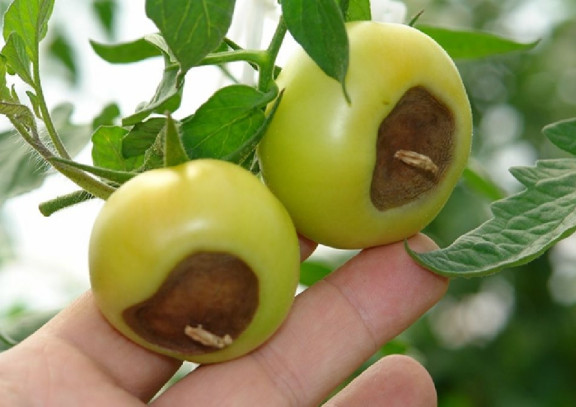
Blossom end rot is most commonly found in tomatoes and peppers. It is not a disease but a plant disorder caused by a lack of calcium or inconsistent watering.
Preventing Blossom End Rot
Mix bone meal or oyster shells into the soil to raise calcium levels. Mulch can also help keep the soil evenly moist and retain moisture for long periods.
With mulch, your water will be evenly distributed, helping to prevent blossom-end rot from taking hold.
3. Brown Rot
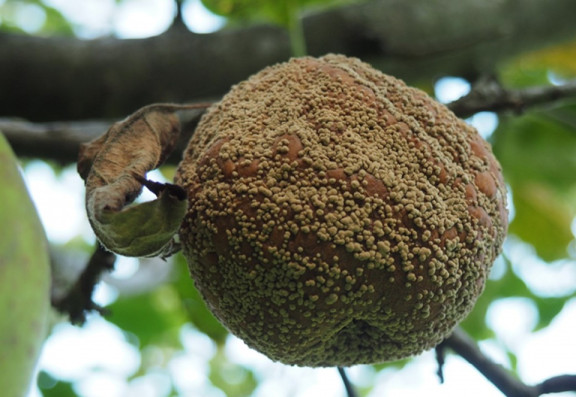
Brown rot is another prevalent fruit killer. It mainly affects stone fruits like plums, nectarines, cherries, and peaches.
Fruits will show circular brown spots with rotting areas, producing clumps of gray spores.
Getting Rid of Brown Rot
Remove infected fruits and prune diseased branches as soon as possible. Additionally, keep the surrounding area clean of fallen fruit and twigs.
4. Clubroot

Image: Clubroot by Lesley L. licensed under CC BY-SA 2.0 via Flickr.
Brassicas, such as mustard, cauliflower, kale, and cabbage, face the highest risk from this soil-borne disease.
When it implants, it causes the roots to grow abnormally, which blocks the proper absorption of water and nutrients.
The plants around the base will turn brown or yellow and die. The spores can survive in the soil for many years, so treatment is crucial.
Controlling Clubroot
Fungicides will not work, so to prevent clubroot, focus on crop rotation and garden cleanup.
Additionally, weed carefully and keep your soil’s pH neutral or slightly alkaline. Test it often during the season with a soil test kit.
5. Anthracnose
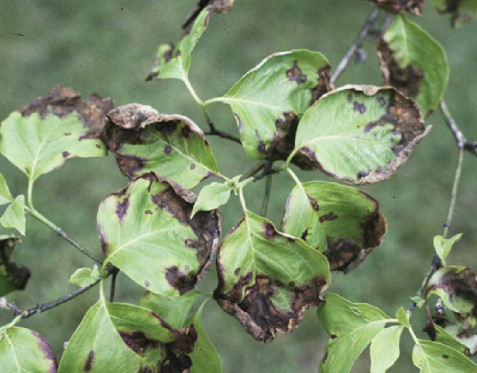
Photo: Dogwood anthracnose (Discula destructiva) leaf blotch by NatureServe (photographer: Mary Ann Hansen, Virginia Polytechnic Institute and State University / Bugwood.org), shared under a Creative Commons Attribution 2.0 License.
Anthracnose is caused by the fungus Colletotrichum lagenarium [2]. It generally affects tropical foliage plants, succulents, trees, and woody ornamentals.
Treating Anthracnose
Prune dead and infected plant parts and destroy them. Infected plants should also be removed from the garden.
Another way to control this plant disease organically is to use CEASE. This non-toxic fungicide will address the problem. Moreover, it will not harm your crops or pollinators.
You can make a natural fungicide for trees and vegetable plants. Just mix 3 tablespoons of apple cider vinegar, 1 teaspoon of liquid soap, and 1 gallon of water.
Shake well and use this homemade fungicide spray to treat anthracnose and other fungal diseases.
6. Damping-Off
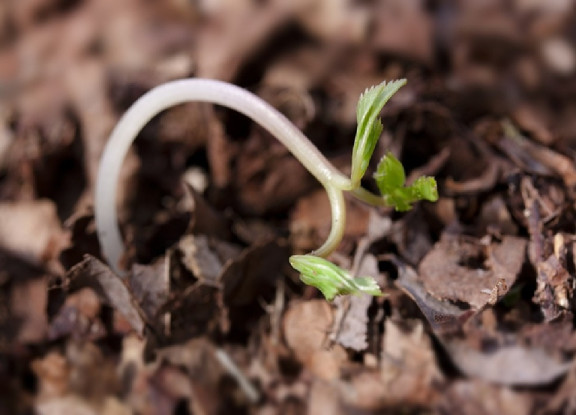
Damping-off affects seeds and new seedlings. Unfortunately, once it has taken hold, there is no cure, as it causes new growth to become mushy and water-soaked, killing the seedling at the base.
Preventing Damping-Off
Use well-drained soil to avoid overcrowding your crops. Moreover, good air circulation can protect seedlings from damping-off.
7. Downy Mildew
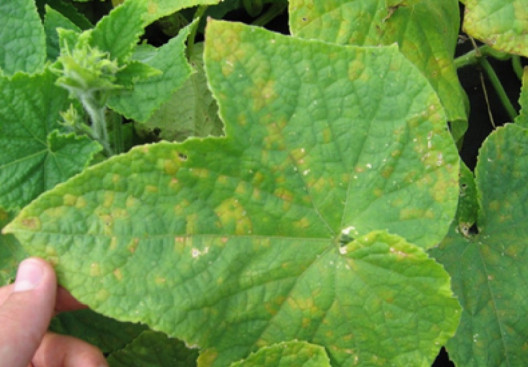
Photo: Downy mildew on cucurbits by the Cornell IPM Image Gallery (photo credit: Amara Dunn, NYS IPM), shared under a Creative Commons Attribution License on Flickr.
This mildew appears on the upper leaf surfaces as yellow or pale green spots. The undersides have a white, fluffy fungal growth.
The downy masses will appear after a rain, then disappear again when the sun comes out.
Getting Rid of Downy Mildew
To naturally control downy mildew, try staking your plants. Also, water the plants early in the morning so they can dry out during the day.
Additionally, eliminate humidity and moisture around your plants, and apply BANISH as needed. You can also use Monterey Organic Copper Fungicide Spray to treat downy mildew.
8. Early Blight
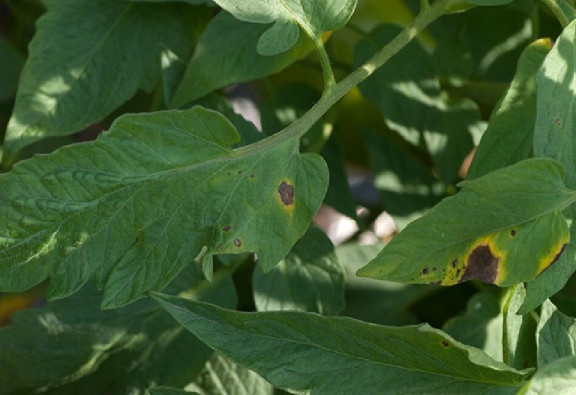
Early blight is a common disease of tomato and potato plants. It creates brown spots in a bullseye pattern on the older leaves, turning them yellow and causing them to wither.
Preventing Early Blight
Pruning, staking, and keeping the soil clean and debris-free give plants a good chance of survival. Furthermore, adding organic compost can help protect vegetation from soil-borne spores.
Fungastop organic garden fungicide can also protect against this fungal disease.
You can also make a DIY fungal spray for plants using baking soda. Combine 1 teaspoon of baking soda with 1 teaspoon of liquid soap and 1 quart of water.
Shake well and use this homemade antifungal spray to coat affected plants. Baking soda kills some soil fungi and diminishes the effects of others.
9. Fusarium Wilt
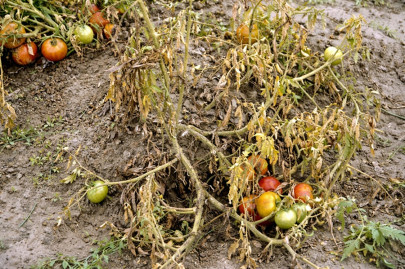
This plant disease attacks crops like potatoes, eggplants, peppers, and tomatoes.
Infected plants wither, turn yellow, and die. However, the symptoms usually do not appear until later in the growing season.
Controlling Fusarium Wilt
There is no effective treatment; only infected plants are removed from the garden when discovered. You should also treat the soil using a method like soil solarization.
10. Gray Mold
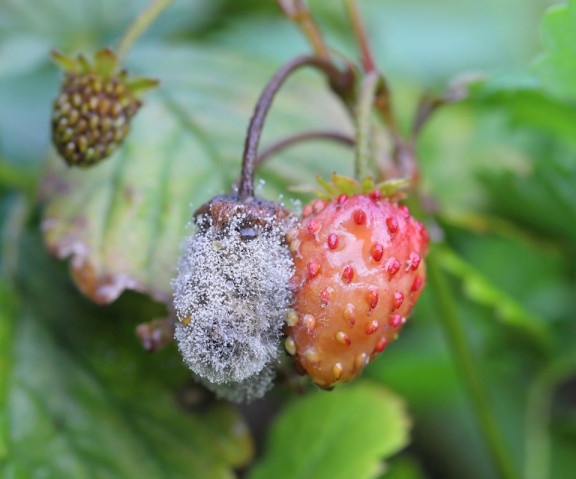
Gray mold appears as a cluster of gray spores that attach to the fruit or vegetable and spread. It usually develops in high humidity and causes rot in areas of the fruit.
Treating Gray Mold
Stake plants and improve airflow. Additionally, water the plants early in the morning with a soaker hose, allowing them to dry.
Arber Bio Fungicide can also help control gray mold on plants.
11. Late Blight
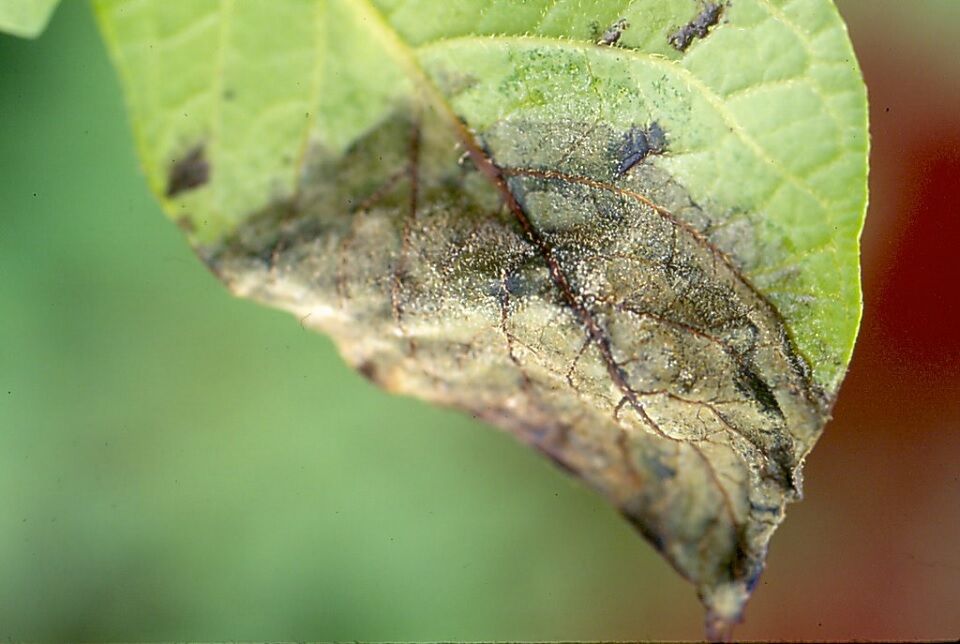
Tomatoes and potatoes are most affected by this disease, which occurs late in the growing season.
Late blight appears as water-soaked, dark green, or purple-brown spots on leaves. Interestingly, this disease caused the Irish Potato Famine in the 1840s [3].
Controlling Late Blight
Remove volunteer plants from the garden and practice good crop rotation to help prevent late blight. Also, all debris must be destroyed following a harvest.
12. Leaf Curl
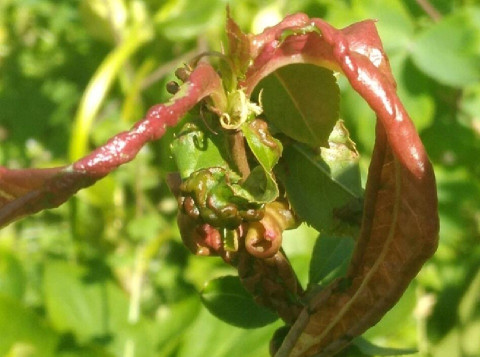
Image: Taphrina deformans (Peach Leaf Curl) by SK53 (via iNaturalist), licensed under CC BY-SA 4.0 on Wikimedia Commons.
Leaf curl is an annoying plant disease affecting peaches, almonds, and nectarines. It is the bane of orchard farmers almost everywhere.
Leaves start to curl and look severely distorted. They may also have a purple or reddish cast.
Treating Leaf Curl
Prune trees and spray them entirely with a copper fungicide.
13. Leaf Spot
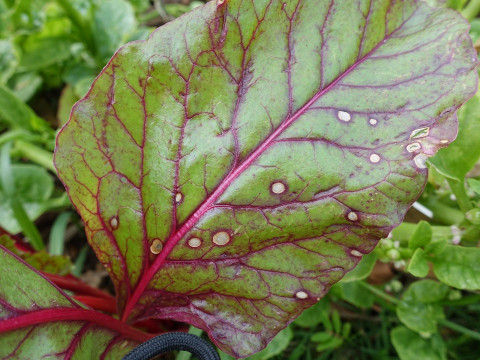
Bacteria or fungi mainly cause leaf spots on trees, shrubs, and some vegetables, such as beets, tomatoes, and lettuce.
Brown, yellow, orange-red, tan, or black spots will start to appear on leaves, which can later weaken the plant.
Preventing Leaf Spot
Remove fallen leaves beneath the plants and avoid overcrowding. Additionally, water crops at their roots and keep the leaves dry.
14. Mosaic Virus
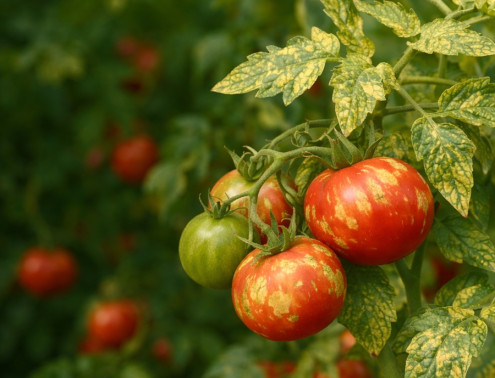
The mosaic virus impacts many plants. It often causes yellow, white, or green marks on leaves.
Smaller leaves may also appear wavy.
Preventing Mosaic Virus
There is no cure for the mosaic virus, so do your best to prevent it. Disinfect your tools and remove any infected plant parts.
15. Potato Scab
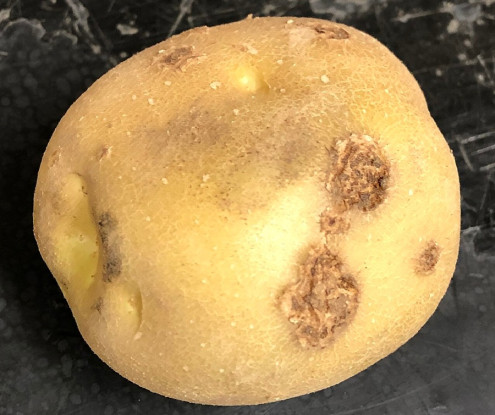
Photo by JasonG1313, Wikimedia Commons, licensed under CC BY-SA 4.0. Image cropped from the original.
Potato growers are very familiar with and annoyed by this one. Its symptoms resemble dark, patchy areas that can appear raised, like warts.
Potato scab disease can affect a small section or completely engulf the potato garden. The organism that causes it can survive indefinitely in slightly alkaline soil.
Preventing Potato Scab
To avoid this, practice regular crop rotation and keep pH levels at 5.2 or lower. Also, make sure the soil is moist, but do not overwater.
16. Powdery Mildew

If the wind blows, powdery mildew will likely spread from an infected plant to another nearby plant.
This disease affects outdoor plants, causing leaves to turn yellow or brown. It also forms a white, powdery substance on the upper leaf surfaces.
Getting Rid of Powdery Mildew
Plant seedlings in a sunny location. Prune and stake your plants regularly. Keep the ground debris-free and add a thick layer of mulch.
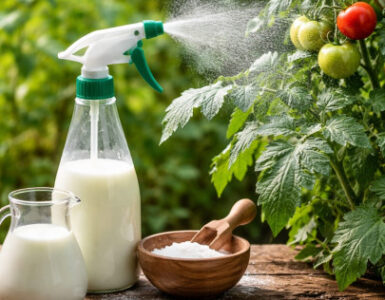
Moreover, you can make a homemade milk spray of 40% milk and 60% water to further discourage the mildew from forming. Or you can make a natural fungicide for powdery mildew by combining 3 tablespoons of neem oil with 1 gallon of water.
You can also try JMS Stylet Oil and BANISH. They are affordable organic fungicides for powdery mildew.
17. Rusts
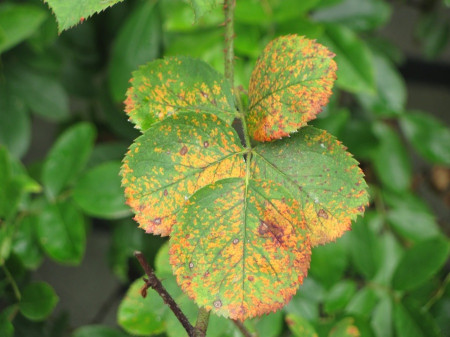
There are over 5,000 different species of rust disease on plants, and they can attack almost anything, from crops to lawns [4].
Rusts appear as yellow or rusty-brown spots on leaves. They become covered in rust-colored pustules, eventually causing discoloration and leaf drop.
Treating Rust Plant Disease
Watering early in the morning gives the plants time to dry off during the day. Also, all debris between the plants must be cleared away.
Additionally, Bonide Sulfur Fungicide is a product that organic farmers use to control fungal diseases like this one. It provides an extra layer of protection against plant rust.
Following the baking soda recipe above, you can also make a cheap, organic fungicide.
See also: tomato plant diseases (with pictures) and natural treatments.
Takeaway
The variety of plant problems is mind-boggling, especially since some cannot be stopped once they take hold.
However, healthy habits and natural plant disease control methods are always available to address these issues.



Add comment