

 Andre Campbell
Many issues can affect tomato plants. This list includes several common tomato plant diseases and disorders, plus natural treatments.
Check the symptoms carefully, since some plant diseases may look similar.
If you’ve had tomato problems, pin or bookmark this article for future reference. Use this guide to identify and treat these 25 tomato diseases and disorders.
1. Leaf Curl
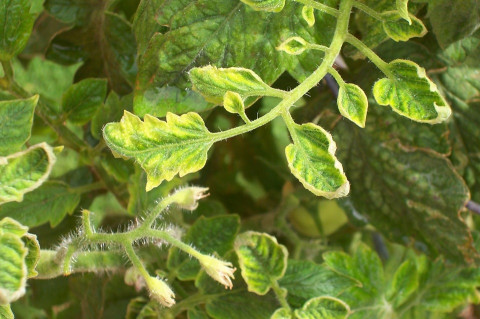
Mature plants will have their leaves curling from the outside to the center.
Environmental stress is the most common cause of tomato leaf curl. Stressors include high temperatures, too much or too little water, over-pruning, or root damage.
Thankfully, it doesn’t affect the fruit’s taste. You can avoid it by making sure your soil drains well.
Additionally, avoid the temptation to over-prune. Give adequate water and position tomato plants in full sun.
Curling tomato leaves may also result from a viral infection transmitted through whiteflies. For this reason, try to eliminate whiteflies from your garden.
2. Septoria Leaf Spot

A particular fungus causes Septoria leaf spot. It is characterized by circular spots that turn brown with gray centers before drying.
A severe infection will cause serious losses. Over time, the leaves will turn yellow, eventually dry, and fall off. Leaf decline will also weaken the plant, slowing its growth.
Removing infected plant parts is vital. Also, practice crop rotation and reduce overhead watering.
For fungicides, consider using an organic treatment such as Cueva or MilStop. These can help stop the fungus from spreading.
3. Leaf Mold
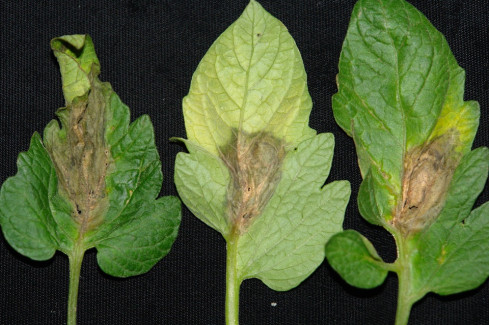
Leaf mold appears as yellow spots on the upper leaf surface. Underneath these spots are purple or olive-green mold patches.
Infected leaves will turn yellow and fall off. Wind can spread the mold, and high humidity and temperatures encourage mold growth.
Infections can be severe in greenhouses, and the fungus can also affect blossoms, fruits, and stems.
Consider rotating crops with other vegetables. Other home remedies for tomato fungus are staking and pruning plants. These actions improve air circulation and help keep the leaves dry.
Arber is also a tremendous organic fungicide. It prevents and cures leaf mold fungus on tomatoes and other leaf diseases.
4. Anthracnose
Anthracnose of tomato fruit is easy to spot. You will find dark, sunken, mushy spots. If you cut open the fruit, the area under the spot will look rotten.
It spreads by overhead watering, which splashes the fungus from infected soil or other plants onto your tomato plants.
You can prevent it by watering the roots with a drip irrigation system. Also, harvest early since it does not affect tomatoes during early ripening.
Additionally, plant your garden in a sunny area and keep it weed-free. Stake the plants to improve air circulation.
Moreover, Arber is a tomato disease control spray. It prevents and treats anthracnose.
5. Fusarium Wilt
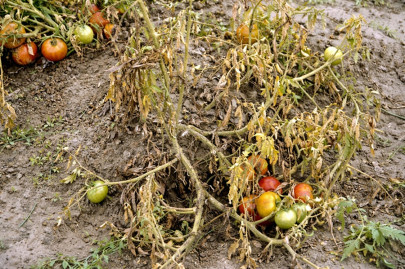
With the Fusarium wilt disease of tomatoes, your plants will start to wilt and turn yellow.
It might initially affect only half of the plant. However, it will quickly spread to the entire plant and render it unproductive.
Crop rotation is the best prevention method. You can also use a natural tomato wilt disease treatment, such as LALSTOP K61 WP.
6. Verticillium Wilt
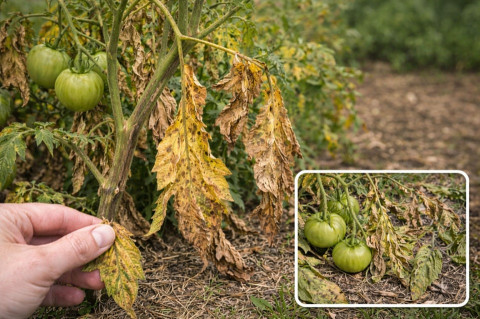
Verticillium wilt attacks the roots, preventing the flow of nutrients and water to the leaves.
Older leaves on plants infected with the disease will turn yellow at the leaf margins before turning brown. These tomato fungi develop rapidly in cool weather.
However, it isn’t easy to deal with. The most effective options are crop rotation, removing infected crops, and keeping the garden weed-free.
7. Early Blight
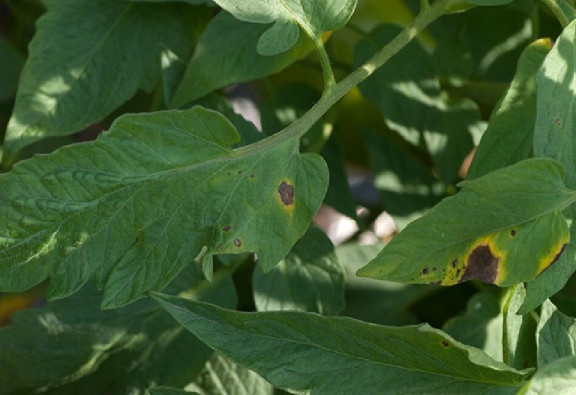
Early blight of tomatoes is characterized by circular to angulated dark brown spots on the leaves. To prevent it, avoid wetting the leaves. Warm, wet weather increases the risk of infection and speeds its spread.
A fungus causes this tomato leaf problem. Therefore, if you’ve had similar issues with your tomatoes or plants like potatoes or peppers, you can have them again.
Crop rotation, pruning, cueva, and drip irrigation can help with this disease.
You can also make a homemade tomato blight spray. Combine 1 teaspoon of baking soda with liquid soap and 1 quart of warm water. Spray the solution on the affected plants.
8. Late Blight
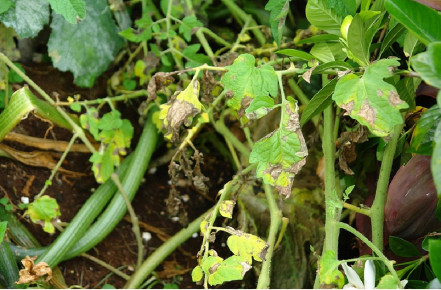
Photo “Tomato late blight foliar lesions” by Forest & Kim Starr, licensed under CC BY 3.0. Source: Wikimedia Commons.
Late blight on tomatoes causes dark, water-soaked lesions on leaves. Over time, these lesions turn powdery white, which is usually one of the first signs.
Additionally, fruit lesions are large, greenish-brown, greasy patches. They appear during cool, wet weather and can affect any part of the plant.
Using drip irrigation on crops can help. Also, try crop rotation.
If late tomato blight is widespread, use an organic fungicide such as Cueva or Bonide. These are among the best treatments for the problem.
9. Mosaic Virus
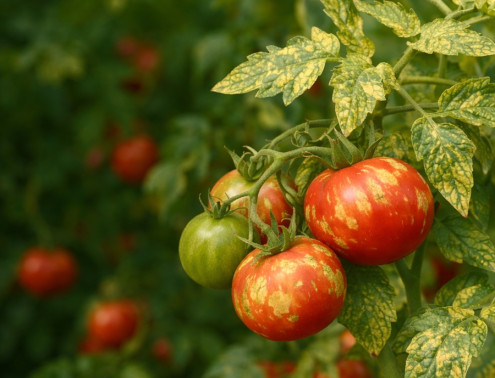
With the tomato mosaic virus, you will notice dappled leaves with yellowing, and new growth will be twisted or malformed. Fruits may also appear unevenly ripe.
Insects, such as aphids, can spread it. Unfortunately, there is no cure available.
To effectively control the spread, destroy plants as soon as the tomato mosaic virus appears. Also, wash your hands thoroughly after touching an infected plant and sterilize any equipment.
10. Blossom Drop
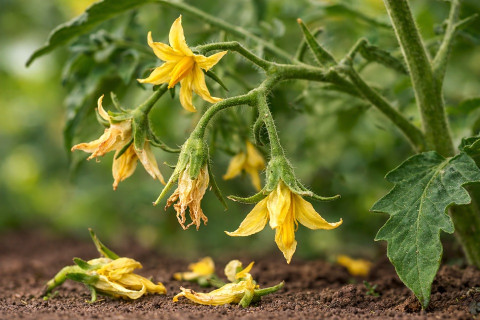
Blossom drop is self-explanatory: blossoms grow on your plant but drop off before maturing.
It can be caused by temperature changes, insufficient water, insect damage, low nitrogen levels, or a lack of pollination.
You can’t change the weather, but you can have your soil tested and water it properly. Also, plant plants that attract pollinators to your garden and avoid using too much or too little nitrogen fertilizer.
11. Blossom End Rot
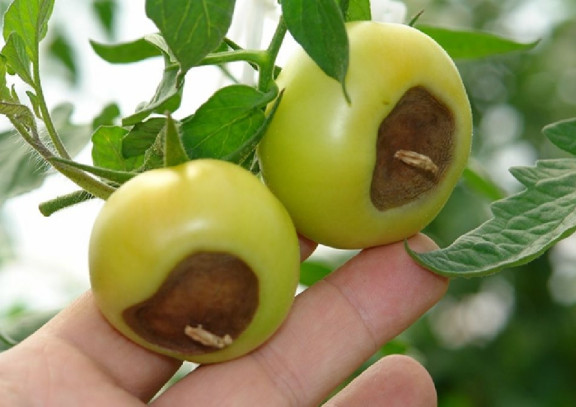
Your plant will look healthy, but the fruits will have a dark patch at the end that widens and deepens over time. This patch indicates a calcium deficiency in your plants.
You can get a soil test kit at your local garden store. If calcium is low, one method is to add crushed eggshells to your compost.
Check with your local organic gardening center for advice. Also, water evenly and use organic fertilizer or compost regularly during the growing season.
Read more about how to stop blossom-end rot naturally.
12. Damping-Off
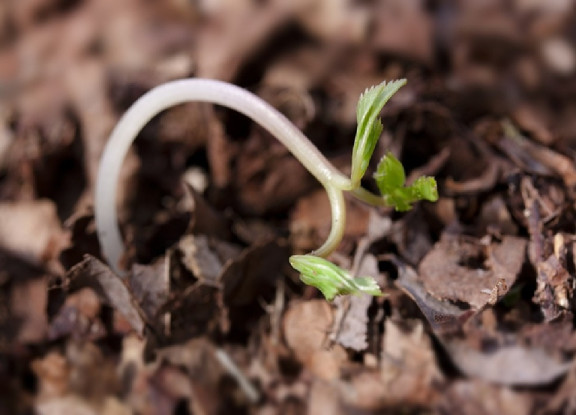
Damping-off is a soil-borne fungal disease that weakens or kills seeds and seedlings.
The stem base generally looks cut off or pinched. Seedlings will also wilt and collapse soon after emerging from the soil.
To help prevent it, plant seeds when soil temperatures are ideal and pre-soak them to speed up germination.
If you’re using a potting mix, use sterile, heat-treated potting soil. Also, ensure your soil dries out between waterings, and avoid starting seeds in soil rich in nitrogen.
13. Sunscald
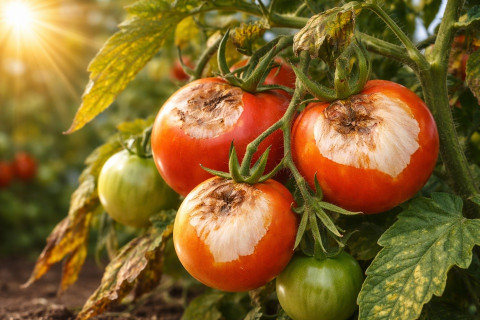
Plants affected by sunscald will look healthy, and fruit will develop normally.
However, yellow or white patches appear as the fruit ripens, giving it an unpleasant look. Later, mold may grow in the white spots, causing rot.
Exposure to direct sunlight during hot weather can cause sunscald.
The best thing to do is to avoid over-pruning. Also, consider using a cage rather than stakes, as it can serve as a structure for applying shade cloth or other protective covers.
14. Bacterial Speck
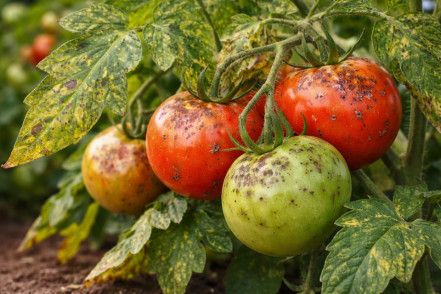
Bacterial specks can be found throughout the plant. Affected areas will have small black or brown necrotic spots surrounded by a yellow border.
The disease has no cure; however, drip systems are an effective way to prevent many tomato plant diseases.
An organic copper fungicide, such as Cueva, may also be applied at the first sign of symptoms.
15. Bacterial Spot
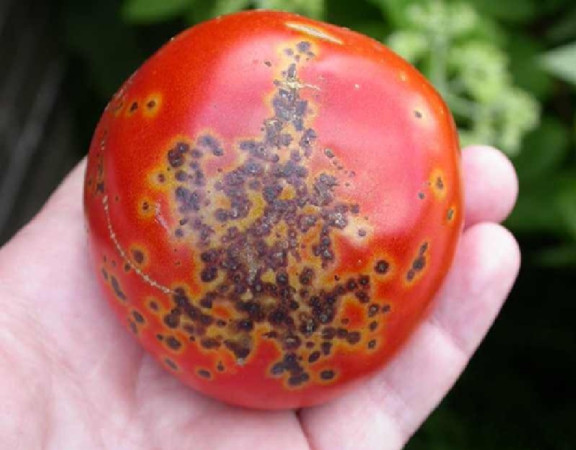
Bacterial spots appear as dark, water-soaked spots that eventually turn black and drop out, leaving holes in the leaves. Black specks also become scab-like spots on the fruit.
Good sanitation, crop rotation, and careful transplanting can help prevent infection. Organic treatments such as Regalia and Procidic can also provide some control.
16. Bacterial Canker
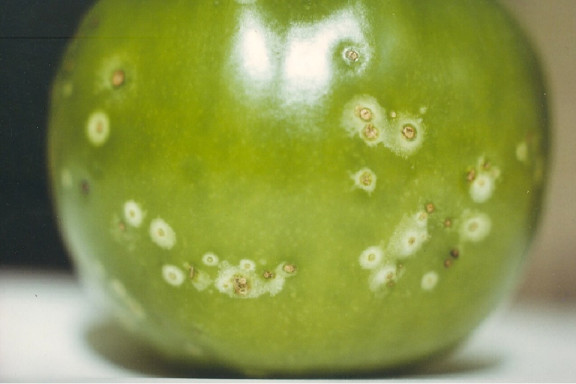
Bacterial canker is easily detected by leaves that wilt and die, drying while still attached to the stem.
The leaves and stems may also have dark patches with sunken veins. Additionally, the fruits will have yellow dots as they ripen.
Prevention involves crop rotation and keeping the garden weed-free. Also, remove infected plants immediately and do not compost them, as this can spread the infection.
17. Spotted Wilt Virus
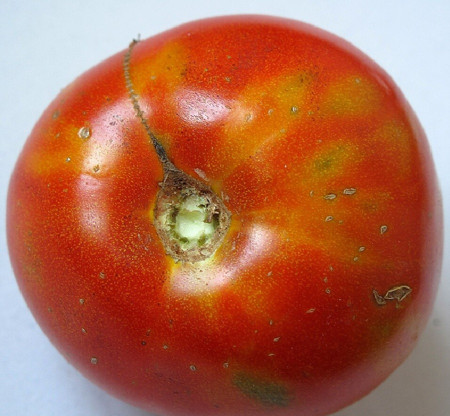
Leaves will show yellow speckling, and growing tips may die. Besides, the fruits may look malformed, with green, red, and yellow spots and blotches.
Thrips cause the tomato spotted wilt virus. To get rid of thrips, check new plants carefully and practice reasonable pest control.
Eliminating infected plants is also effective in controlling the spotted wilt virus.
18. Fruit Crack
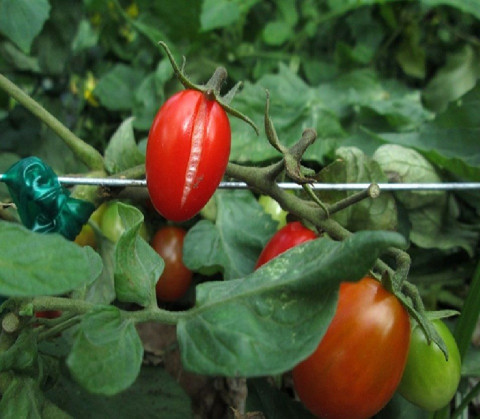
A fruit crack is a crack that appears in the fruit.
It is caused by rapid changes in moisture levels, such as heavy rains or excessive watering after a dry spell. The tomatoes will take up too much water and eventually crack.
The best solution is to keep up with watering, especially during droughts, so the plants aren’t shocked by rainwater. However, this is generally not too much to worry about.
The fruits are still edible if you cut off the cracked areas.
19. Catfacing

Catfacing results in deformed-looking fruits.
The exact cause is unknown; however, the condition mainly occurs in cool weather. Pruning and high nitrogen levels can also lead to the disorder.
To help prevent this condition, monitor temperature levels. Avoid excessive pruning and cut back on high-nitrogen fertilizers.
20. Powdery Mildew

White spots on tomato leaves represent powdery mildew. It can also be characterized by yellow spots covered with gray powder.
The leaves will die, but typically stay attached to the stem. Humidity, coupled with dry conditions, makes it worse.
However, some sprays can naturally treat powdery mildew. Other organic options include Arber or BANISH.
21. Pith Necrosis

Pith necrosis is caused by the bacterium Pseudomonas corrugata [1].
It might not always be visible externally. However, it causes the pith of the stem to turn brown and eventually die, leaving hollow spaces that can collapse.
Pith necrosis is common in greenhouses but may also be seen in field-grown tomatoes.
The best treatment is to avoid humidity and plant crops during cool, wet weather. Excessive nitrogen can also make it worse, so employ balanced fertilization.
Plants can recover if conditions improve.
22. Buckeye Rot

Buckeye rot of tomatoes is caused by a fungus that leaves a brown or green spot resembling a buckeye. It can also affect relatives like peppers and eggplants.
To help prevent infection, avoid soil contact with the fruit, avoid overwatering, and ensure your soil drains well. Also, rotate crops, consider raised beds, or try container gardening.
23. Southern Blight
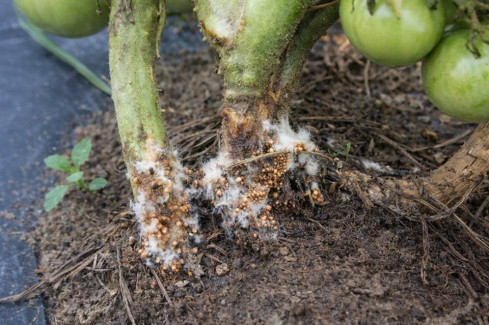
Southern blight is seen as a white fungus growing near the soil line.
Plant leaves will also show signs of yellowing and wilting. Besides, fruits will look water-soaked and start to rot.
To prevent or stop this disease, maintain good crop rotation and remove infected plant debris.
A high-quality, cold-pressed neem oil treatment, such as Rango, can also help control it.
24. Root-knot Nematodes
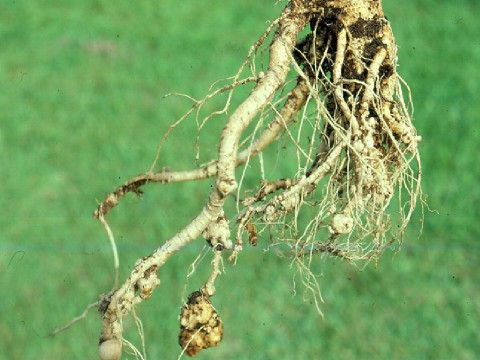
Root-knot nematodes are microscopic, worm-like organisms that live in the soil. They attack plant roots.
You will know there is a problem when plants start showing signs of wilting, yellowing, and stunting. Additionally, you will notice galls or knots on the roots.
Either relocate the garden to an area free of harmful nematodes or add beneficial nematodes to reduce their presence. You can also try home remedies to get rid of root-knot nematodes.
25. Gray Leaf Spot
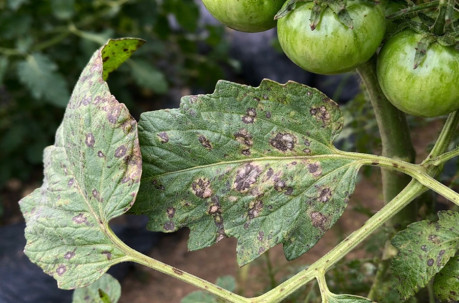
Gray leaf spot in tomatoes is caused by the fungus Stemphylium solani [2].
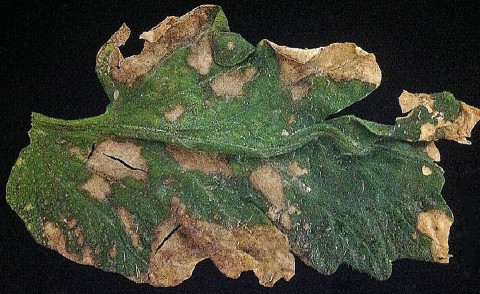
You’ll see small brownish-dark specks. These later grow into larger necrotic areas that crack open, leaving a shot-hole type appearance. In addition, a grayish-brown color will appear as the spots get larger.
Spots may also have a yellow halo. Severe infections can cause leaf drop, yellowing, and defoliation.
The fungus can survive on weeds in the same family, so keep up on weeding. Additionally, CEASE can help suppress gray leaf spots and other tomato leaf ailments.
Takeaway
When dealing with tomato plant diseases, please note that not all color changes are due to disease. You have to scrutinize patterns and color combinations.
For example, yellowing leaves may be caused by a magnesium deficiency. In this case, the leaves would become yellow and wilt before falling. A magnesium deficiency can be corrected by applying Epsom salt to your plants.
Advice from your local organic gardening center can also be invaluable. Good sanitation of your tools and hands can help prevent the spread of disease, as can crop rotation.
Lastly, be sure not to compost infected plants or plant parts, as you do not want to spread anything further.


 Sasha Campbell


Wonderful article. Thank you.