

 Sasha Campbell
Sheep sorrel is a small wild plant that is easy to walk past without noticing. Yet its bright green leaves, sour flavor, and ability to grow in poor soil make it an interesting edible weed.
Its scientific name is Rumex acetosella. It belongs to the buckwheat family. You may also hear it called red sorrel, field sorrel, or sour weed.
Sheep sorrel is native to Europe and parts of Asia. It has also spread across much of North America. You may find it in fields, pastures, lawns, roadsides, and other disturbed places.
The young leaves are edible and have a sharp, lemon-like flavor. The plant can also support certain insects and birds. However, it needs careful control because its roots and seeds allow it to spread quickly.
How to Identify Sheep Sorrel
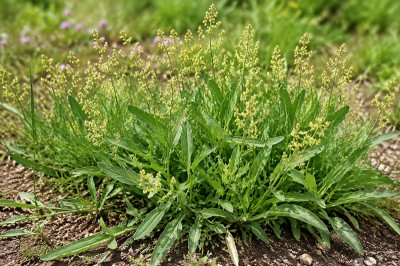
The leaves are one of the easiest ways to recognize sheep sorrel. They are small, green, and shaped somewhat like an arrow.
Look closely at the base of a mature leaf. You should see two pointed lobes that face outward. These lobes give the leaf its clear arrowhead shape.
The leaves usually have smooth edges. They are often between 1 and 3 inches long.
Young plants produce a group of leaves close to the ground. As the plant grows, it sends up thin flower stems. These stems may have reddish ridges and can reach about 4 to 18 inches tall.
Female plants usually have reddish flowers. Male plants tend to have yellowish-green flowers. The flowers are tiny and grow in loose clusters near the top of the stems. After flowering, female plants can form reddish-brown fruits and seeds.
These identification features are described by the North Carolina Extension Plant Toolbox [1].
Do Not Depend on One Feature
Do not identify sheep sorrel by its arrow-shaped leaves alone.
Look at the whole plant. Check the leaf shape, smooth leaf edges, outward-pointing lobes, thin flower stems, flower color, and growth pattern.
Several plants may have leaves that look similar from a distance. Never taste a wild plant unless you are completely sure of its identity.
If you are unsure, ask an experienced local forager, botanist, or extension worker for help.
What Does Sheep Sorrel Taste Like?
Sheep sorrel has a tart, lemon-like flavor. Some people describe it as fresh and pleasantly sour.
The sharp taste comes partly from oxalic acid. This substance also occurs naturally in foods such as spinach, beet greens, and Swiss chard.
Because sheep sorrel has such a strong taste, you usually do not need much of it. A few young leaves may be enough to add a sour flavor to a dish.
Why Should Sheep Sorrel Be Eaten in Small Amounts?
Sheep sorrel has been gathered as a wild green for many years. However, it is better used as an occasional flavoring than as a main vegetable.
The plant contains oxalic acid. Eating very large amounts of plants high in oxalates may be harmful, especially for people with certain health conditions.
North Carolina Extension advises eating sheep sorrel with caution because large amounts of oxalic acid may harm the kidneys [1].
People with kidney disease, a history of certain kidney stones, or instructions to follow a low-oxalate diet should speak with a healthcare professional before eating sheep sorrel.
Is Sheep Sorrel a Perennial?
Yes. Sheep sorrel is a perennial plant. This means an established plant can return year after year.
It does not depend only on seeds to survive. Underground, it develops shallow, spreading roots. New shoots can grow from these underground parts.
Even a small piece left in the soil may produce new growth. This is one reason sheep sorrel can be hard to remove after a large patch becomes established.
Where Does Sheep Sorrel Grow?
Sheep sorrel is a tough plant. It often grows in places where other plants struggle.
You may find it in:
- Lawns
- Fields
- Pastures
- Meadows
- Roadsides
- Sand dunes
- Waste areas
- Disturbed soil
It is most common in sunny, open places. However, it can also handle some partial shade.
Sheep sorrel is well known for growing in dry, sandy, acidic soil. It may also grow in loam and clay soil, especially where the ground has been disturbed.
Penn State Extension notes that the plant grows especially well in sandy, acidic soil with a pH below 6 [2].
Does Sheep Sorrel Mean the Soil Is Acidic?
A large patch of sheep sorrel may provide a clue about your soil.
The plant often grows well where the soil has a low pH. In other words, it tends to thrive in acidic or “sour” soil. It can also survive in soil with low fertility.
However, sheep sorrel cannot tell you the exact pH of your garden. Its presence does not prove that the soil is acidic.
If sheep sorrel keeps appearing and you are worried about your soil, get a soil test. The results will tell you whether the soil needs lime, fertilizer, or another change.
Do not add lime only because you see sheep sorrel. Adding too much lime can cause other soil problems.
How Sheep Sorrel Spreads
Sheep sorrel spreads in two main ways.
First, it produces seeds. If the flower stems remain on the plant, the seeds can fall near the parent plant. Some may also move to other areas.
Second, the plant spreads through its shallow underground roots. New shoots may grow along these roots and make the patch wider.
Digging carelessly can cut the roots into pieces. Some of those pieces may grow into new plants. The Royal Horticultural Society warns that moving soil containing root pieces may spread sheep sorrel around a garden [3].
Cutting off flower stems before seeds mature can slow its spread. However, this will not stop the underground roots.
Does Sheep Sorrel Have Garden Benefits?
Sheep sorrel is often called a weed, but its value depends on where it grows.
In a vegetable bed, it can compete with crops for water, nutrients, light, and space. When it’s in a wild area or meadow, it may provide food for wildlife.
In the UK, records show that more than 50 insect species feed on sheep sorrel. These include beetles, flies, true bugs, butterflies, and moths [3].
The insects that use the plant will vary by country and region.
Sheep Sorrel Supports Butterflies
Sheep sorrel is a food plant for the caterpillars of some copper butterflies.
In the UK, small copper caterpillars feed on its leaves. In North America, American copper caterpillars may also use the plant.
This shows that a plant people call a weed may still have a place in the local food web.
However, gardeners should consider their location before allowing it to spread. A plant that is useful in one area may be unwanted or invasive in another.
Its Seeds May Feed Birds
Sheep sorrel may also provide food for birds.
The Royal Horticultural Society reports that ground-feeding birds, including thrushes and chaffinches, eat its seeds in the UK [3].
Different bird species may eat the seeds in other regions.
If you want to stop sheep sorrel from spreading, do not leave the seed stalks for birds. Remove the flower stalks before the seeds mature.
Can Sheep Sorrel Grow in a Wild Garden?
Sheep sorrel may suit certain wildflower areas, especially where it already grows naturally.
Its green leaves and reddish flower stalks can add color and texture to a meadow. It is well suited to open areas with dry, sandy, or acidic soil.
However, sheep sorrel is not native to North America, and it can spread quickly. Check local invasive-plant lists and gardening advice before adding it to your property.
It may be better to grow a native plant that offers similar benefits to local wildlife.
How to Grow Sheep Sorrel
Only grow sheep sorrel if it is suitable for your area and you can control its spread.
Choose a sunny location away from vegetable beds. The plant grows best in acidic, well-drained soil, but it can survive in several soil types.
A controlled patch is safer than allowing it to spread freely. Watch the edges of the patch for new shoots.
Remove unwanted plants while they are still small. Once the underground roots spread, removal becomes harder.
Growing Sheep Sorrel in a Container
You can grow sheep sorrel in a large container if you want a small supply of leaves.
A container can help keep the underground roots from spreading. However, roots may escape through drainage holes. Check beneath the pot from time to time and remove any roots or shoots you find.
A container will not stop the plant from making seeds. Cut off the flower stalks before the seeds mature. Also, check around the pot for young plants that may have grown from dropped seeds.
Do not place sheep sorrel roots or mature seed heads in a home compost pile. They may survive and spread when you use the compost.
Growing Sheep Sorrel From Seed
Sheep sorrel can be grown from seed.
Sow the seeds in well-drained soil. Keep the soil lightly moist while the young plants become established. Place the container or planting area where it will receive plenty of sun.
Sheep sorrel may produce many seeds once it begins flowering. Remove the flowers early if you do not want more plants.
Watering Sheep Sorrel
Young sheep sorrel plants need regular moisture while their roots become established.
Older plants can handle fairly dry soil. They usually do not need heavy watering.
Allow extra water to drain away. Constantly soggy soil is not necessary for healthy growth.
Container-grown plants may need water more often because soil in pots can dry out quickly.
Does it Need Fertilizer?
Sheep sorrel can survive in soil with few nutrients. Heavy feeding is usually unnecessary.
Its presence in a lawn may mean the desired grass is not growing strongly. Acidic soil, dry ground, poor fertility, or thin grass may give sheep sorrel room to spread.
If you want to improve a lawn or vegetable garden, focus on the needs of the plants you wish to grow. Test the soil before adding lime or fertilizer.
How to Harvest Sheep Sorrel
Choose fresh, young leaves for eating. Young leaves often have a softer texture and a pleasant sour flavor.
Use clean scissors to clip a few leaves from each plant. Avoid removing every leaf, especially from a wild patch.
Wash the leaves well under clean running water. However, washing will not remove every possible chemical or pollutant. This is why it is important to harvest only from clean, untreated places.
How to Use Sheep Sorrel in the Kitchen
Sheep sorrel’s lemony flavor makes it useful in small amounts.
You can:
- Add a few young leaves to a salad.
- Chop the leaves and sprinkle them over cooked food.
- Add a small amount to soups or sauces.
- Use the leaves as a sour garnish.
- Mix a few leaves with milder greens.
Start with a very small amount. The flavor can quickly become too sharp if you add too much.
Can You Eat Sheep Sorrel Raw?
Young sheep sorrel leaves can be eaten raw or cooked. However, moderation is important in either form.
Cooking may lower some of the oxalates, but the leaves should still be eaten in small amounts.
Think of sheep sorrel as an occasional flavoring rather than a green to eat by the bowlful.
Be Careful When Foraging
Never eat a wild plant based only on one photograph or a short description online.
Be completely sure you have correctly identified sheep sorrel. Check the leaves, stems, flowers, size, and growth pattern.
Do not collect it from:
- Busy roadsides
- Polluted ground
- Pet toilet areas
- Industrial sites
- Treated lawns
- Places sprayed with pesticides or weedkillers
- Land affected by dirty floodwater
Get permission before gathering plants from private land. Follow local foraging laws, and do not collect plants from protected areas without approval.
Sheep Sorrel Can Become a Problem
Sheep sorrel’s ability to survive difficult conditions is impressive, but it can also make the plant troublesome.
Its underground roots allow a small patch to become wider. Seeds give it another way to reach new areas.
Once it becomes established among vegetables or flowers, it may compete with them. Removing the whole root system can take time and patience.
If you decide to keep sheep sorrel, remove unwanted flower stalks and watch for spreading roots. Do not let it move into areas where it could crowd garden plants.
Takeaway
Sheep sorrel shows why gardeners should look at weeds from more than one angle.
It is an edible wild green with a sharp, lemon-like taste. It may provide food for certain insects and birds. Its presence can also offer a clue that the soil is dry, low in nutrients, or acidic.
At the same time, sheep sorrel can spread and become difficult to control.
Harvest only correctly identified plants from clean places. Eat the young leaves in small amounts, and manage the plant carefully if you allow it to remain in your garden.




Add comment