

 Sasha Campbell
Common thistle may look like a plant you should avoid. Its sharp spines can make it difficult to handle. It often grows in fields, pastures, roadsides, and other open places. However, this prickly plant offers more than many people realize.
This article covers Cirsium vulgare. It is also called bull thistle, spear thistle, or common thistle. Common names can vary from place to place, so always check the scientific name.
Common thistle belongs to the Asteraceae family. This is also known as the daisy family. Dandelions, sunflowers, and lettuce belong to this plant family too.
Certain young parts of common thistle have been used as food. Its flowers provide nectar for insects, while its seeds may feed birds.
Still, common thistle needs careful control. It spreads by seed and is considered invasive or a noxious weed in some places.
What Is Common Thistle?
Common thistle is usually a biennial plant. This means its normal life cycle lasts for about two years.
During its first year, the plant stays low to the ground. It forms a circle of leaves called a rosette. It also develops a fleshy taproot. A taproot is one main root that grows down into the soil.
During its second year, the plant sends up a tall, flowering stalk. It produces purple or reddish-purple flowers, makes seeds, and then usually dies.
A mature plant commonly grows about 2 to 5 feet tall [1].
How to Identify Common Thistle
Correct identification is very important before eating any wild plant.
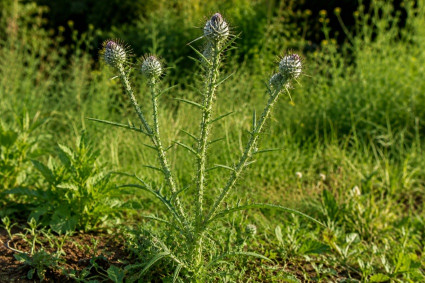
Common thistle has deeply cut green leaves with sharp spines. The upper side of each leaf feels rough. The underside often has pale, woolly hairs.
The flowering stems are also prickly. The bases of the leaves continue down the stems. This creates raised, spiny edges called wings.
The flowers are usually reddish-purple or purple. They sit above small, pointed green parts that are also very prickly.
These features can help you identify the plant:
- A low circle of leaves during the first year
- Rough upper leaf surfaces
- Pale or woolly leaf undersides
- Deeply cut leaves with sharp spines
- Spiny wings running down the stems
- Purple flower heads
- One main taproot
Do not identify common thistle by its flowers alone. Several thistle species have purple flowers.
Where Does Common Thistle Grow?
Common thistle likes sunny, open places.
You may find it growing in pastures, meadows, fields, roadsides, ditches, forest openings, and other disturbed areas. Disturbed ground is soil that has been dug, cleared, trampled, or left bare.
The plant can grow in several types of soil. It often appears where other plants have been removed because its seedlings have more light and space.
Common thistle is native to Europe, parts of Asia, the Arabian Peninsula, and northwestern Africa. It has been introduced to North America and many other regions [2].
What Parts of Common Thistle Are Edible?
Young stems and roots of common thistle have been used as food.
The key word is young. Older plants become tough, stringy, and more heavily covered with spines.
The Montana Field Guide reports that the young stems and roots of bull thistle are edible. It also advises eating thistles only in small amounts [3].
Always identify the exact plant before eating it. Do not assume that every plant called a “thistle” can be prepared in the same way.
Common Thistle Stems
The young flower stalk is one of the more useful edible parts.
Harvest it while it is still tender and before the flower buds open. Older stalks can become woody and difficult to chew.
Wear thick gloves while handling the plant. Carefully remove the leaves, spines, and tough outer skin. The tender inside of the stalk can then be cooked.
Treat it like a wild vegetable stalk. You can boil, steam, or lightly fry the peeled pieces.
Check the stalk carefully before cooking. Even one small spine can cause pain in the mouth or throat.
Common Thistle Roots
The fleshy taproot is another edible part.
Roots are usually easiest to harvest from young plants in the rosette stage. The roots may become tougher and more stringy as the plant gets older.
Young common thistle roots have been used as food. Beginners should cook the roots rather than eat them raw. Cooking softens the roots and makes them easier to prepare.
Wash the root well, peel it, and remove any damaged areas. You can then boil, roast, or add it to soups and stews.
Try only a small amount the first time. Wild plants can affect people differently.
Always get permission before digging up plants on land you do not own. Removing roots may be against the rules in parks, protected places, and other public areas.
Can You Eat Common Thistle Leaves?
Some foraging guides discuss eating young thistle leaves or their thick middle ribs. However, the sharp spines make the leaves difficult and risky to prepare.
The sources used in this article clearly confirm young stems and roots as edible. Beginners may therefore prefer to avoid the leaves and use the better-known edible parts.
What Does Common Thistle Taste Like?
The flavor depends on the plant’s age and the part being eaten.
Young, peeled stems may have a mild taste similar to other green vegetables. The roots often have a more earthy flavor.
The plant becomes tougher and less pleasant as it gets older. This is why harvesting young growth is important.
Cooking methods and growing conditions can also change the flavor.
What Do We Know About Its Nutrients?
Thistles have a long history as wild foods. However, detailed nutrient information for Cirsium vulgare is limited.
It is best not to claim that common thistle contains exact amounts of vitamins or minerals unless those amounts come from tests on this exact species.
Common thistle does not need to be called a “superfood” to be useful. Its value comes from its young edible parts and the food its flowers and seeds may provide for wildlife.
Common Thistle Benefits for Pollinators
One of the main wildlife benefits of common thistle is its flowers.
The purple flower heads provide nectar for bees, butterflies, hoverflies, and other insects. A flowering thistle may become very busy during the warmer months.
However, gardeners must balance this benefit against the plant’s ability to spread.
If common thistle is invasive where you live, allowing it to make seeds may cause problems for nearby gardens, farms, and natural areas.
Common Thistle Benefits for Birds
Common thistle can continue to support wildlife after flowering.
Some birds eat thistle seeds. Goldfinches are well known for feeding on the seeds of different thistle species. Some birds may also use the soft thistle down as nesting material.
Although birds may eat the seeds, do not allow common thistle to release them where the plant is invasive. Grow a native thistle or another native flower for birds instead.
Native thistles can provide nectar, pollen, seeds, and shelter without adding another non-native plant to the landscape.
Do not collect or remove native thistles until you know exactly which species you have. Some native thistles are uncommon or protected.
Common Thistle Has a Fleshy Taproot
During its first year, common thistle develops a fleshy taproot.
This main root helps the plant take in water and hold itself firmly in the ground. A well-established rosette can be difficult to pull, especially when the soil is hard and dry.
Removing young plants is usually easier than waiting until they grow tall.
If you want to remove the plant, dig it out or cut through the taproot below the crown. The crown is the place where the leaves meet the root.
Cutting only the leaves may allow the plant to grow again. Remove or cut the plant before it flowers and makes seeds.
What Common Thistle Can Tell You About Your Garden
A thistle growing in your garden does not automatically mean that your soil is poor.
Common thistle often grows where soil or plant cover has been disturbed. Bare soil gives the seedlings light, space, and less competition from other plants.
If many thistles suddenly appear, look at what has happened in that area.
Digging, building work, clearing plants, heavy grazing, or leaving the ground bare may have created a good place for the seeds to grow.
Covering bare ground with mulch or suitable plants can make it harder for new thistle seedlings to become established.
Does Common Thistle Improve Soil?
You may see claims that thistles break up hard soil or bring minerals closer to the surface. These claims should be treated carefully.
Common thistle does produce a taproot. However, this does not mean that you should plant it as a soil-improving crop.
If improving your soil is the goal, compost, mulch, and suitable cover crops are easier to manage. They also give more dependable results.
Should You Grow Common Thistle?
In many places, planting common thistle on purpose is not a good idea.
Some regions list it as an invasive plant or a noxious weed. This means landowners may be required to control it.
Common thistle can compete with useful plants and become a problem in pastures, fields, and disturbed areas.
Check your local weed rules before planting, moving, or spreading it.
If common thistle already grows on your property, you may choose to harvest suitable young parts instead of encouraging more plants.
How to Keep Common Thistle Under Control
The easiest time to control common thistle is usually during the rosette stage. At this point, it has not yet produced flowers or seeds.
Wear thick gardening gloves. Dig out the plant or cut through the taproot below the crown. The crown is the place where the leaves meet the root.
Cutting only the leaves may not kill the plant. New growth may appear if the growing point is left behind.
If the plant has flower heads, cut them off before the seeds mature. Place the heads in a sealed bag and follow local advice for disposal.
Do not leave mature flower heads on the ground or place them in an ordinary compost pile.
Digging, pulling, or cutting the plant works best before it produces flowers and seeds [4].
How to Harvest Common Thistle Safely
Choose young, healthy plants from clean areas.
Avoid plants growing beside busy roads, near industrial sites, or in places that may have been sprayed with pesticides or weed killers.
Do not harvest from soil that may contain harmful chemicals or animal waste.
Use thick gloves, garden scissors, and a sharp knife. Eye protection may also be helpful when working close to large, spiny plants.
Remove every spine and all tough outer material before preparing the edible parts. Check the plant again before cooking.
Wash your tools, gloves, and harvested plant parts when you finish.
Common Thistle Look-Alikes
Many thistle species look similar.
Common thistle may be confused with Canada thistle, musk thistle, plumeless thistle, and several native thistles.
This matters because different thistles grow in different ways. For example, common thistle normally has one taproot and spreads mainly by seed. Canada thistle is a perennial plant that can spread through creeping underground roots.
Native thistles may also be useful plants that should not be removed just because they look like an invasive species.
Learn the main features of Cirsium vulgare. Look for rough leaf tops, pale and woolly leaf undersides, sharp spines, winged stems, and purple flower heads.
Use a reliable guide that covers plants in your area. Pictures from a general internet search are not enough for safe identification.
Common Thistle in an Edible Weed Garden
Common thistle is an interesting edible weed, but most gardeners should not spread it throughout their garden beds.
If it appears naturally, you can learn to identify it and harvest suitable young portions. You can then remove the plant before it releases seeds.
This approach allows you to explore common thistle as a wild food without allowing it to take over the garden.
If local rules require the plant to be controlled, follow those rules.
Safety First
Only eat common thistle when you are completely sure that you have identified Cirsium vulgare correctly.
Wear thick gloves because its leaves and stems have sharp spines. Remove every spine before cooking or eating any part of the plant.
Cook the plant and try only a small amount the first time. Stop eating it if you notice an unwanted reaction. People who are sensitive to plants in the daisy family should be especially careful.
Never harvest from roadsides, polluted soil, sprayed areas, or places where you are unsure about contamination.
Get permission before collecting plants from private property. Check local laws before harvesting on public land or in protected areas.
If you are new to wild foods, use a reliable regional identification guide. You can also ask an experienced local forager or plant expert to confirm the plant before you eat it.




Add comment