

 Sasha Campbell
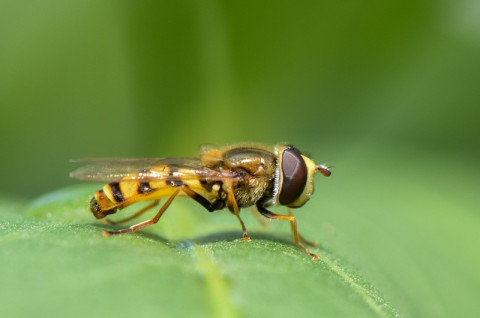
A small insect is hovering over your flowers. With its yellow and black stripes, it may look like a bee or a wasp.
Take a closer look. It could be a hoverfly, one of the most helpful visitors to your garden.
Hoverflies are also called flower flies. Adults visit flowers for food. The young of many hoverfly species eat aphids, which are tiny insects that feed on plants.
Here is how to spot hoverflies, why they matter, and how to welcome them into your garden [1].
What Is a Hoverfly?
A hoverfly is a fly that can pause in midair near a flower. Many have stripes that make them look like bees or wasps, but hoverflies do not sting. Their colors and shapes vary, so not every hoverfly will look alike [1].
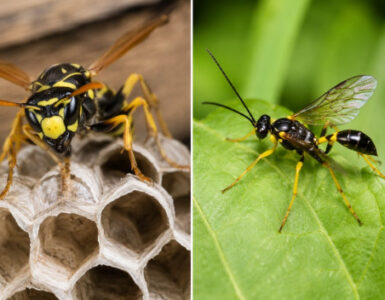
Hoverflies have one pair of wings. Bees and wasps have two pairs. That can help you tell them apart if the insect is sitting still and you can see its wings clearly. Hoverflies also have large eyes and often move quickly between flowers.
A hoverfly begins life as an egg. It then becomes a larva, changes into a pupa, and finally becomes an adult. The larva looks very different from the adult fly.
The young of aphid-eating species may look like small, soft worms with no legs. If you see one among a group of aphids, watch it before you remove it. It may be eating them [1, 2].
How to Spot Hoverfly Larvae Near Aphids
Look under young leaves and around new shoots. Aphids often gather in these spots. A hoverfly larva may be among them, moving across the plant as it looks for food.
You may also see tiny hoverfly eggs near a group of aphids. They can look like small grains of rice. It can be hard to tell insect eggs apart, so watch what happens rather than trying to identify them by shape alone.
Checking your plants often helps you see whether helpful insects are already there.
Hoverfly Benefits for Your Garden
They Help Control Aphids
Aphids often gather on young leaves, stems, and flower buds. Large groups can cause new growth to curl or grow poorly.
The larvae of many hoverfly species eat aphids. An adult of an aphid-eating species may lay eggs near a group of aphids, so the young have food when they hatch [1, 3].
These larvae can help keep aphid numbers down. You may miss them at first because they are small and can blend in with the plant. Look closely before you wipe aphids off a leaf or reach for a spray.
Not all hoverfly larvae eat aphids. Some eat other small insects, while others have different food sources.
Still, aphid-eating hoverflies can be valuable visitors when these pests appear in your garden.
They Help Pollinate Flowers
Adult hoverflies visit flowers to eat nectar and pollen. As they move between blooms, they may carry pollen from one flower to another. This makes them helpful pollinators [4].
Bees may be the flower visitors you notice most, but they are not the only ones. Hoverflies can be part of the mix of insects that visit your garden. They feed themselves as they move among the blooms.
How to Attract Hoverflies to Your Garden
Grow a Mix of Flowers
Adult hoverflies need flowers for food. Plant several kinds so they have more choices.
Small, open flowers can give them easy access to nectar and pollen. White flowers and groups of small blooms are often good options.
Try sweet alyssum near a vegetable bed. You can also let some dill or cilantro plants flower instead of pulling them all when they start to bloom. If you have little space, try a few pots near your garden [5, 6].
Choose plants that grow well in your area. A flower that thrives in your garden is more useful than one that struggles to grow.
Keep Something in Bloom
Flowers that bloom for just a short time offer food for just a short time. Choose plants that flower at different times, so adult hoverflies can find food through more of the growing season.
Check your garden every few weeks. If all the flowers fade at once, add a plant that blooms during that gap.
Start small, then add more flowers as you learn what grows well in your yard.
Go Easy on Sprays
A spray used to kill aphids may also harm the insects that eat them.
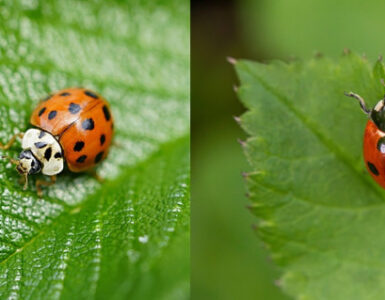
Before you spray, check for hoverfly larvae, lady beetles, and other helpful insects. If the plant looks healthy and has only a few aphids, you can watch it and check again in a few days [3, 7].
If the aphids are causing damage, you may be able to wash many off a sturdy plant with water. Aim carefully if helpful insects are on the leaves. Then keep an eye on the plant to see whether the aphids return.
Leave Some Protected Places
Flowers, shrubs, and other plants give helpful insects more places to rest.
Some hoverflies also use protected spots, such as leaf piles or brush, during part of their life cycle. You can leave a small area of plant cover where it will not get in your way.
Hoverflies are less active when it is windy. A hedge, fence, or group of plants can help make a calmer place around your flowers.
Even a small, sheltered garden can welcome them.
Are Hoverflies Good to Have Around?
Yes. Adult hoverflies visit and help pollinate flowers. The young of many species eat aphids.
They will not remove every pest, but they can be part of a healthy garden where helpful insects do some of the work.
Start with a few flowers that grow well in your area. Let some herbs bloom, check aphid-covered plants for helpful larvae, and use sprays with care.
The next time you see a hoverfly pause over a flower, you will know why it deserves a place in your garden.




[…] Adult hoverflies visit flowers. Their young can eat woolly aphids on parts of a plant above ground. […]
[…] are easy-to-grow flowers that bloom for months. Their colorful flowers attract bees, butterflies, hoverflies, and other useful […]
[…] beetles, lacewing larvae, hoverfly larvae, and tiny wasps that lay eggs in aphids can help keep their numbers down. Look for these helpful […]
[…] beetles, lacewing larvae, and hoverfly larvae eat aphids. Tiny parasitic wasps can help, […]
[…] beetles, lacewing larvae, and hoverfly larvae all feed on aphids. Look for these helpful insects before you spray your […]