

 Sasha Campbell
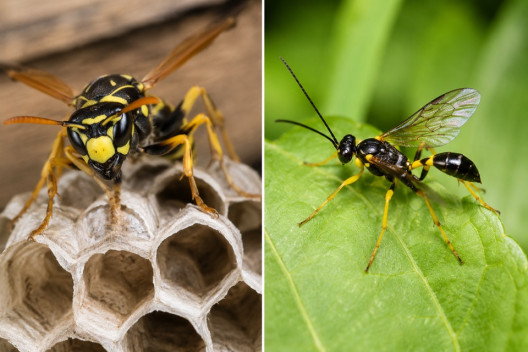
Wasps are some of the most misunderstood insects in the world.
Many people see a wasp and think of a painful sting. However, not all wasps are aggressive. In fact, many types of wasps are helpful to gardens, farms, and the environment.
Some wasps hunt insects that damage plants. Others help pollinate flowers. Some are tiny and rarely noticed by people.
Of course, some wasps can be defensive and dangerous when their nests are disturbed.
Important: A wasp is not automatically aggressive because of its species. Many wasps only become defensive when they or their nest are threatened.
Learning about the different types of wasps can help you understand which ones are helpful and which ones should be treated with caution.
What Is a Wasp?
A wasp is an insect in the order Hymenoptera. This is the same large insect group that includes bees and ants [1].
Wasps usually have:
- Six legs
- Two pairs of wings
- A narrow waist
- Antennae
- Chewing mouthparts
- A stinger in many female wasps
Wasps come in many shapes, colors, and sizes.
Some are yellow and black. Others are brown, red, blue, green, or almost completely black.
Some wasps live in large colonies. Others live alone.
Wasps Are Not Bees
Wasps and bees can look similar, but they are different insects.
Most bees have rounder, hairier bodies. Wasps usually have smooth, shiny bodies.
Wasps also have a narrower waist. Another big difference is food.
Many bees feed mainly on nectar and pollen. Wasps often eat insects, spiders, or other small animals. Adult wasps may also feed on nectar.
Some are important predators. Others are called parasitoids because they lay their eggs in or on other insects.
Now, let us look at some of the most common types of wasps.
Beneficial Wasps
Many wasps are extremely useful. They help control garden pests, pollinate flowers, and support healthy ecosystems.
1. Paper Wasps: Helpful but Defensive
Paper wasps are common in many parts of the world. They often have brown, black, red, or yellow markings.
Their nests are made from chewed wood fibers mixed with saliva. Their open paper nests often look like small umbrellas or upside-down combs.
Paper wasps often build nests under eaves, porches, roofs, decks, and sheltered areas.
Why Paper Wasps Are Helpful
Paper wasps hunt caterpillars and other insects.
They may carry these insects back to their nests to feed their young. This can help reduce the number of plant-eating pests in a garden.
Are Paper Wasps Defensive?
Paper wasps can sting if they feel threatened. However, they are usually less defensive than yellow jackets.
It is best to avoid touching or disturbing their nest.
2. Mud Daubers
Mud daubers are solitary wasps. This means they do not live in large colonies.
They build their nests from mud. The nests may look like small tubes or clumps of mud attached to walls, buildings, or sheltered areas.
What Do Mud Daubers Eat?
Many mud daubers hunt spiders [2].
A female wasp may catch several spiders and place them inside a nest chamber.
She then lays an egg nearby. When the young wasp hatches, it has food waiting for it.
Are Mud Daubers Dangerous?
Mud daubers are generally calm. They rarely bother people.
They are often helpful to have around because they help control spiders.
3. Potter Wasps
Potter wasps are named after their small, pot-shaped nests. They use mud to create these tiny nests.
Some species build one nest at a time. Others may create many small mud structures.
What Do Potter Wasps Hunt?
Potter wasps often hunt caterpillars and other small insects.
They place the prey inside the nest for their young to eat. This makes them helpful natural pest controllers.
4. Cicada Killers
Cicada killers are large wasps.
They can look frightening because of their size. However, they are usually solitary and are not interested in attacking people.
Why Are They Called Cicada Killers?
Female cicada killers hunt cicadas. They paralyze a cicada with their sting and carry it back to an underground nest.
The cicada becomes food for the wasp’s young.
Males may fly close to people or act bold, but they cannot sting.
Do Cicada Killers Sting People?
Female cicada killers can sting, but they are usually not aggressive toward people. Males cannot sting.
These wasps may become noticeable during periods when cicadas are common.
5. Ichneumon Wasps
Ichneumon wasps are one of the largest groups of wasps.
Many species are long and thin.
Some females have a very long, thin ovipositor. It may look like a long stinger, but it is used to lay eggs. An ovipositor is a body part used to lay eggs.
Why Are Ichneumon Wasps Beneficial?
Ichneumon wasps help control other insects.
They often lay their eggs in or on insect larvae. The young wasp then grows by feeding on the insect. The insect is called the host.
This may sound unpleasant, but it is an important part of nature.
Ichneumon wasps can help control caterpillars, beetle larvae, moth larvae, and other insect pests.
6. Braconid Wasps
Braconid wasps are usually small. Many are less than an inch long.
They are important natural enemies of garden pests.
Many braconid wasps lay their eggs in or on caterpillars and other insects. The young wasps then develop by using the host as food.
Braconid Wasps Help Gardens
Braconid wasps can attack caterpillars that feed on vegetable plants. This makes them valuable insects for organic gardeners.
If you see small wasps around your garden, they may be helping protect your plants.
7. Trichogramma Wasps
Trichogramma wasps are tiny. Some are so small that you may not notice them.
These wasps attack the eggs of moths and butterflies. They lay their eggs inside the eggs of other insects.
The young wasp develops inside the pest egg.
Why Are They Important?
Trichogramma wasps can help stop pest eggs from hatching. This makes them useful in natural pest control.
They are sometimes used in biological pest control programs.
8. Cuckoo Wasps
Cuckoo wasps are often brightly colored. Some have shiny blue, green, red, or gold bodies.
They are sometimes called jewel wasps because of their beautiful colors.
Why Are They Called Cuckoo Wasps?
Many cuckoo wasps lay their eggs in the nests of other wasps or bees [3]. The young cuckoo wasp may eat the food meant for the host’s young.
Despite this behavior, these wasps are part of a healthy ecosystem.
Many cuckoo wasps are not aggressive toward people.
9. Scoliid Wasps
Scoliid wasps are often large and dark. Some have colorful markings on their bodies.
They are important predators of beetle larvae.
How Do Scoliid Wasps Help?
Female scoliid wasps search in the soil for beetle grubs.
A female finds a beetle grub in the soil and uses it as food for her young. This can help reduce harmful beetle populations in the soil.
10. Fig Wasps
Fig wasps are tiny insects. They have a very special relationship with fig trees.
Many fig species have a special relationship with fig wasps. The wasps pollinate the flowers inside the fig.
Some types of figs depend on these wasps for pollination and seed production.
A Special Natural Partnership
The fig tree provides a place for the wasp to lay eggs.
The wasp helps pollinate the tree. This is an amazing example of how different species can depend on one another.
Defensive Wasps
Not all wasps are aggressive. However, some social wasps can become very defensive when people get close to their nests.
These wasps should be treated with caution.
11. Yellow Jackets
Yellow jackets are among the wasps most feared by people. They usually have bright yellow and black markings.
Some species build nests underground. Others build nests in wall spaces, attics, trees, or other sheltered places.
Why Do Yellow Jackets Defend Their Nests?
Yellow jackets are social wasps.
They live in colonies with many workers. Workers protect the nest.
If someone gets too close, the wasps may defend it.
Yellow Jackets Can Sting More Than Once
Unlike honey bees, yellow jackets do not usually lose their stinger after stinging. This means one wasp can sting more than once.
Yellow jackets may also become more noticeable around food and drinks during late summer and fall.
12. Bald-Faced Hornets
Despite their name, bald-faced hornets are actually a type of yellow jacket.
They have black bodies with pale white markings on their faces.
They build large paper nests. These nests may hang from trees, buildings, utility structures, and shrubs.
Why Should You Be Careful?
Bald-faced hornets can be very defensive when their nest is threatened. They may chase people or animals that come too close to the nest.
It is best to keep your distance from an active nest.
13. European Hornets
European hornets are large social wasps. They usually have brown bodies with yellow markings.
They may build nests in hollow trees, wall spaces, attics, and other protected areas.
Are European Hornets Aggressive?
European hornets can defend their nests. However, they are not always aggressive toward people when away from the nest.
They also hunt other insects, so they provide some natural pest control.
14. Great Golden Digger Wasps
Great golden digger wasps are large, solitary wasps with black bodies and bright orange-red legs.
They may look frightening because of their size. However, they usually do not bother people.
What Do Great Golden Digger Wasps Do?
Female great golden digger wasps dig tunnels in the soil. They hunt insects such as grasshoppers and crickets.
The female paralyzes her prey and carries it back to her underground nest. She then lays an egg near the food.
When the young wasp hatches, it has food ready to eat.
Are Great Golden Digger Wasps Dangerous?
These wasps are generally not aggressive toward people. Like other wasps, they can sting if they are grabbed or seriously threatened.
It is best to watch them from a safe distance and leave them alone.
15. Red Wasps: A Common Name for Several Wasps
“Red wasp” is a common name, not one specific species. Different people may use this name for different reddish wasps.
They may have reddish-brown bodies.
Like other social wasps, they can become defensive around their nests. Their behavior depends on the species.
Why Do Wasps Sting?
Wasps usually do not sting people for no reason.
A wasp may sting when it:
- Feels trapped
- Is stepped on
- Is grabbed
- Is swatted
- Feels its nest is threatened
Some social wasps may release chemicals that alert other wasps to danger. This can cause more wasps to become defensive.
How to Avoid Wasp Stings
You can reduce your risk by following a few simple rules.
Do Not Disturb Nests. Never poke, kick, or shake a wasp nest.
Watch Sweet Drinks. Wasps may be attracted to sugary drinks and food. Keep drinks covered when eating outdoors.
Move Away Slowly. If a wasp flies near you, try to stay calm. Try not to swat at a wasp. Move away calmly instead.
Be Careful in the Garden. Check areas around sheds, bushes, roof edges, and other sheltered locations. Wasps may build nests where people do not expect them.
How to Tell Helpful Wasps From Defensive Wasps
It is not always easy to identify a wasp by appearance alone. However, behavior can provide clues.
Solitary Wasps
Solitary wasps usually live alone. They often do not defend a large colony.
This is only a general rule. A solitary wasp can still sting if it is handled or threatened, and some social wasps are calm when they are away from their nest.
Many mud daubers, cicada killers, and hunting wasps are solitary.
Social Wasps
Social wasps live in colonies. They may have hundreds or even thousands of workers.
These wasps are more likely to defend their nests. Yellow jackets and hornets are examples.
Should You Kill Wasps in Your Garden?
Not always. If a wasp is flying around flowers, it may be helping your garden.
Some wasps eat caterpillars and other pests. Others pollinate flowers.
However, a nest located near a door, walkway, or area used by children may create a safety concern.
Never try to remove a large or active wasp nest yourself. Professional help may be the safest option.
Frequently Asked Questions About Wasps
What Is the Most Beneficial Wasp?
Many wasps are beneficial.
Braconid wasps, ichneumon wasps, mud daubers, and tiny parasitoid wasps are especially useful for controlling insect pests.
Which Wasps Are Most Defensive?
Yellow jackets and some hornets are known for strongly defending their nests. However, wasp behavior can vary by species and situation.
Are All Wasps Dangerous?
No. Most wasps do not spend their time attacking people. Many are solitary and rarely interact with humans.
Do Wasps Help Plants?
Yes. Some wasps pollinate flowers.
Others protect plants by eating insects that damage them.
Are Wasps Good for the Garden?
Yes. Wasps can be excellent natural pest controllers.
Before removing a wasp from your garden, consider whether it may be helping your plants.
Takeaway
There are many different types of wasps in the world. Some are tiny and difficult to see. Others are large and easy to recognize.
Some live alone, while others live in large colonies.
Beneficial wasps such as mud daubers, braconid wasps, ichneumon wasps, and cicada killers help control pests and support nature.
Defensive wasps, such as yellow jackets and some hornets, may protect their nests and should be treated with caution.
The most important thing to remember is that not every wasp is a threat. Many wasps are valuable members of the ecosystem.
By learning to recognize different types of wasps, you can better understand which ones are helpful garden allies and which ones deserve plenty of space.




[…] such as robins, chickens, and sparrows eat on locusts and their larvae. Frogs, lizards, and parasitic wasps can also help keep the population in […]
[…] small flowers that provide nectar for beneficial wasps. Let herbs such as dill, fennel, and cilantro bloom so the wasps can visit their […]