

 Sasha Campbell
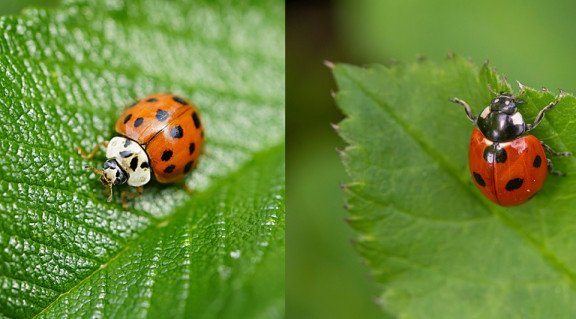
At first, Asian lady beetles (Harmonia axyridis) and ladybugs (ladybird beetles) can look the same. They are both small, rounded insects with spots. You may see them in your garden or even inside your house.
Because they look so much alike, many people think they are exactly the same. However, the Asian lady beetle is a different species from many of the native ladybugs found in North America.
Knowing the difference can be helpful.
Ladybugs are welcome in most gardens because they eat pests like aphids. Asian lady beetles also eat pests, but they often become a problem when they get inside homes.
Ladybug vs. Asian Lady Beetle: How to Tell the Difference
In this detailed guide, you’ll learn 8 easy ways to tell Asian lady beetles apart from ladybugs. You’ll also get practical tips on what to do once you identify them.
Quick Comparison
Asian Lady Beetle
- Usually has an M-shaped mark behind the head.
- Commonly enters homes in fall.
- More likely to bite.
- Produces a stronger odor when disturbed.
- Can become a household nuisance.
Ladybug
- Usually lacks the M-shaped mark.
- Rarely invades homes.
- Unlikely to bite.
- Generally considered less of a nuisance indoors.
- Excellent garden helper.
1. Color Variations: Not All “Ladybugs” Are Red
One of the easiest differences to notice is color, although it can sometimes be confusing.
Many ladybug species are bright red with black spots. Some species are also black, yellow, pink, and orange [1].
Within each species, the color and spot pattern usually stay the same. This makes them easier to recognize.
Asian lady beetles, however, show a wide range of colors. They can be:
- Light yellow-orange
- Deep orange
- Bright red
- Even dark or almost brownish tones
This variation is one of the main reasons people confuse them with ladybugs. You might see several Asian lady beetles that look slightly different from one another, even within the same group [2].
If you see a group of these insects and they all look a little different, they may be Asian lady beetles.
2. The “M” or “W” Mark Behind the Head
This is often the easiest way to tell them apart.
The Asian lady beetle’s white pronotum usually features a distinctive black “M”- or “W”-shaped marking, depending on the angle [3].
While some other lady beetle species may have dark markings behind the head, the bold M-shaped pattern is one of the most reliable ways to identify an Asian lady beetle.
Additionally, Asian lady beetles typically have a pale or white area behind the head with the black M-shaped marking. Many common ladybug species lack this distinctive white background.
3. Spot Patterns Can Be Misleading
Many people assume the number of spots is the easiest way to identify these insects, but this is actually one of the least reliable methods.
Many ladybug species have a fixed number of spots. For example, the classic seven-spotted ladybug is well-known and easy to recognize.
Asian lady beetles, however, are much more variable:
- Some have no spots at all.
- Some have a few spots.
- Others have many spots.
This inconsistency makes spot counting unreliable for identification. In fact, relying on spots alone is one of the most common mistakes homeowners make when trying to identify these insects.
4. Behavior: Gentle Garden Helpers vs. Defensive Invaders
Behavior is another important clue.
Ladybugs are generally calm, slow-moving insects. They help gardeners by eating aphids, mites, and other tiny insects that damage plants.
Asian lady beetles are generally more defensive than most native ladybug species and are more likely to bite when disturbed. However, the bite is usually mild and not dangerous.
The bigger issue is not the bite itself, but the sheer annoyance of having large groups of them inside your home.
5. Indoor Invasions: A Major Warning Sign
If you find these insects inside your home, especially in large numbers, you are very likely dealing with Asian lady beetles.
Unlike ladybugs, Asian lady beetles commonly invade houses during the fall. They are attracted to warmth and light-colored buildings and will squeeze through small cracks and openings to get inside.
Once indoors, they may gather in large clusters on windows, walls, and ceilings.
Most ladybugs do not gather in large groups inside homes. If dozens of ladybug-like insects suddenly appear inside your house, they are very likely Asian lady beetles.
6. Smell and Defensive Fluids
Another way to tell them apart is by their defensive behavior.
When disturbed, Asian lady beetles release a yellowish fluid from their joints. This fluid has a strong, unpleasant odor and can stain walls, curtains, and fabrics.
Ladybugs can also release a yellow defensive fluid, but it is usually less noticeable and less likely to leave a strong smell.
This difference becomes especially noticeable when large groups are disturbed indoors at once.
7. Garden Role: Helpful Ally vs. Mixed Impact
Both are helpful in the garden, but Asian lady beetles become a problem when they move into homes.
Ladybugs are among the best natural pest controllers in the garden. They feed primarily on aphids and other destructive insects that damage plants. For this reason, gardeners often try to attract and protect them.
Asian lady beetles also eat aphids and other soft-bodied pests. However, their tendency to gather in large numbers inside homes makes them unpopular with many homeowners.
For a deeper look at the positive role of ladybugs in your garden, see: [Benefits of Ladybugs in the Garden].
8. Body Shape and Appearance Differences
On closer inspection, subtle physical differences can also help.
Ladybugs tend to have:
- A rounder, more dome-like appearance.
- More consistent coloration and markings within a species.
Asian lady beetles often appear:
- Slightly more oval-shaped.
- Greater variation in coloration and spot patterns.
Note: Body shape can vary among species, so these characteristics are best used alongside other identification features.
Why People Confuse Them So Often
People often confuse these two insects because they look very similar.
Asian lady beetles were introduced in many regions to control pests such as aphids [4]. Over time, they spread widely and began appearing in homes and gardens alongside native ladybug species.
This is why many “ladybug infestations” reported indoors are actually Asian lady beetle invasions.
What to Do After You Identify Them
Once you correctly identify the insect, the next step depends on which one you have:
- If it’s a native ladybug: leave it alone or encourage it in your garden.
- If it’s an Asian lady beetle indoors: take steps to remove and prevent it.
If you’re dealing with an indoor issue, this guide can help: [How to Get Rid of Asian Lady Beetles]
Prevention often includes sealing entry points and using natural repellents. You can also reduce outdoor attractants near your home.
Should You Leave Asian Lady Beetles Alone Outdoors?
Yes. Although Asian lady beetles can become a nuisance inside homes, they help control aphids and other garden pests outdoors.
If you find them in your garden, they are usually best left alone. The main problem begins when they move indoors during cooler weather.
FAQ
Are Asian lady beetles harmful?
They are not dangerous to humans, but they can bite and become a nuisance when they enter homes in large numbers.
In some people, large numbers of Asian lady beetles indoors may also trigger mild allergic reactions [5].
Do ladybugs bite people?
Ladybugs can occasionally bite, but this is uncommon. Asian lady beetles are much more likely to nip humans when disturbed.
Why are so many “ladybugs” in my house?
Most likely, they are Asian lady beetles seeking warmth and shelter during the colder months.
Are Asian lady beetles and ladybugs the same thing?
No. Asian lady beetles are a species of lady beetle that was introduced from Asia to help control crop pests.
Although they belong to the same beetle family as ladybugs, they differ in appearance, behavior, and their tendency to invade homes.
Can Asian lady beetles damage my home?
They don’t cause structural damage, but their odor and staining can be unpleasant.
Which is better for the garden, Asian lady beetles or ladybugs?
Both help control aphids and other garden pests. However, many gardeners prefer ladybugs because they are less likely to invade homes.
Takeaway
Asian lady beetles and ladybugs may look almost the same, but there are several easy ways to tell them apart.
Look for the M-shaped mark behind the head, notice whether they gather inside your home, and watch how they behave. Once you know these signs, it becomes much easier to identify them.
Remember, both insects help control garden pests, but Asian lady beetles are much more likely to become unwanted guests inside your home.




Add comment