

 Sasha Campbell
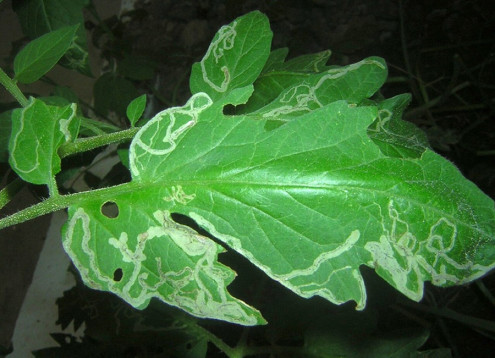
It can be upsetting to find leaf miner damage on your plants. Instead of healthy green leaves, you may see pale, winding trails or large blotchy patches.
Leaf miner larvae cause these marks by feeding between the top and bottom layers of a leaf. They can attack tomatoes, basil, peppers, Swiss chard, spinach, citrus, and many other plants.
A few damaged leaves may not harm a healthy plant. However, you may need to act if the damage is spreading. Leaf miners can be more serious on seedlings, young trees, and plants grown for their leaves.
What Are Leaf Miners?
Leaf miners are the young larvae of certain flies, moths, beetles, and sawflies. They feed inside leaves, where many sprays cannot reach them [1].
Some adult leaf miners lay their eggs on the surface of leaves. Certain leaf miner flies place their eggs inside the leaf. After the eggs hatch, the larvae begin feeding. Their feeding creates winding tunnels or blotchy patches called mines.
Some larvae complete their growth inside the leaf. Others drop to the ground and enter a resting stage called the pupa stage. Later, they emerge from the soil as adults.
Their life cycles are not all the same. Therefore, a method that controls one leaf miner species may not work as well against another.
How to Get Rid of Leaf Miners Naturally
Below are natural and organic ways to reduce leaf miner damage.
1. Encourage Beneficial Insects
Leaf miners have many natural enemies. Parasitic wasps are among the most helpful.
Tiny wasps from groups such as Diglyphus attack leaf miner larvae. They do not sting people. These helpful wasps can greatly reduce leaf miner numbers, especially in greenhouses [2].
You can attract helpful insects by growing small flowers near the garden. Sweet alyssum, dill, cilantro, and yarrow may provide food for them.
Avoid using broad insecticides. These products may kill the helpful insects that naturally control leaf miners.
2. Check New Plants Before Planting
Leaf miners can enter your garden on young plants from a nursery.
Check both sides of each leaf before buying or planting seedlings. Look for pale tunnels, blotchy patches, or small feeding marks.
If possible, keep new plants apart from your garden and watch them for one to two weeks. Remove any mined leaves before placing the plants near your crops.
Do not buy plants with heavy leaf miner damage.
3. Apply Neem Carefully
Some neem products may discourage adult leaf miners from feeding or laying eggs. They may also affect very young larvae before the larvae move deep inside the leaves.
However, neem usually has little effect on larvae already protected inside a leaf.
Choose a neem product labeled for the plant you want to treat. Follow the mixing and safety directions on the label. Different neem products have different strengths, so don’t use the same mixing rate for every product.
Test the spray on one or two leaves first. Wait at least 24 hours to check for damage. Do not spray flowers or apply neem when bees are active.
Neem can also help control certain garden insect pests. Some neem products are labeled for certain plant diseases as well.
4. Use Row Covers
Fine-mesh row covers can stop adult leaf miners from reaching your plants and laying eggs. Place the cover over the crop soon after planting. Seal the edges with soil, boards, or landscape pins.
Row covers work best in garden beds that did not have a leaf miner problem during the past year. If pupae are already in the soil, adults may emerge under the cover and become trapped with your plants [3].
You can buy row covers or make them from fine insect netting.
Remove or open the cover when crops that need insect pollination begin to flower. You can leave it in place on leafy crops that do not need pollinators.
Check the temperature under the cover on hot days. Some covers can trap heat.
5. Turn the Soil After Harvest
Some leaf miner flies drop to the soil and become pupae. Lightly turning the top layer of soil after harvest may expose or destroy some of them.
Remove old crop remains first. Then lightly turn the soil around plants that had a leaf miner problem.
This method will not control every species. Some leaf miners stay inside leaves or other plant parts during the pupa stage.
6. Rotate Susceptible Crops
Avoid growing the same leafy crops in the same bed every year. Move spinach, Swiss chard, beets, and similar plants to another part of the garden.
Crop rotation may make it harder for newly emerged adults to find suitable plants. It works best when the new planting area is far from the old one.
Do not place a row cover over a new crop if leaf miner pupae may still be in the soil below it.
7. Hang Sticky Traps
Sticky traps can help you spot adult leaf miner flies. They may also catch some adults before they lay eggs.
Yellow is the color most often used to monitor adult leaf miner flies. Hang the traps just above the tops of the plants. Raise them as the plants grow.
Sticky traps are most useful in greenhouses and around indoor plants. They may also help you watch for leaf miners in an outdoor garden.
Sticky traps will not control an infestation by themselves. Use them to learn when adult flies are active so you can check your plants more often.
8. Remove Infested Leaves
Check your plants often. Look for fresh tunnels or blotchy mines.
Remove badly damaged leaves before the larvae finish growing. Place the leaves in a sealed bag and put them in the trash.
Do not leave infested leaves beside the plants. Larvae may continue growing and later become adults.
Avoid removing too many leaves at once. Plants need healthy leaves to make food and continue growing.
9. Use Spinosad When Needed
Spinosad is made from substances produced by a soil bacterium. It can help control some leaf miner species when applied at the right time.
It is usually more effective against young larvae than older larvae deep inside leaves.
Not every spinosad product is approved for organic gardening. Choose a product labeled for your crop and the pest you are treating. Follow all label directions, including the mixing rate and the waiting time before harvest.
Spinosad products may harm bees when the spray is wet. Do not apply them to open flowers or while bees are visiting the plants.
Utah State University lists spinosad as one option for controlling certain vegetable leaf miners [4].
10. Clean Up After Harvest
Remove old leaves, stems, and other crop remains after harvesting. Some leaf miners may continue growing inside this material.
Place badly infested plant material in a sealed bag and put it in the trash. Do not leave it beside the garden.
Clean up weeds and fallen leaves around crops that had a leaf miner problem. This may reduce the number of pests that survive until the next growing season.
11. Use Reflective Mulch
Silver or reflective mulch may make it harder for some adult leaf miners to find plants.
This method has been tested against allium leaf miner, a pest of onions, garlic, leeks, and related crops. Research shows that reflective mulch can reduce damage. However, it may not provide enough protection when used alone [5].
Place the mulch around plants early, before adult leaf miners begin laying eggs. Use it with row covers, regular plant checks, and other control methods.
Reflective mulch may also discourage aphids, whiteflies, and certain other flying pests.
12. Keep Plants Healthy
Healthy plants can often handle a small amount of leaf miner damage.
Give each plant the right amount of sunlight and water. Improve the soil with finished compost before planting. Space plants properly so air can move between them.
Avoid giving plants too much fertilizer. Too much fertilizer can cause fast, soft growth that may attract some pests.
Healthy plant care will not kill leaf miners. However, it can help plants continue growing after light damage.
13. Remove Host Weeds
Some weeds can provide food and shelter for leaf miners. These include lamb’s quarters, pigweed, chickweed, and nightshade.
Remove known host weeds from vegetable beds and nearby garden borders. Pay special attention to weeds growing close to spinach, Swiss chard, beets, and other leafy crops.
You do not need to clear every wild plant from your property. Focus on weeds near crops and plants showing fresh leaf mines.
14. Avoid Pruning Citrus Too Often
Citrus leaf miners prefer soft, new leaves. Heavy pruning can cause a citrus tree to produce more of this tender growth.
Do not remove a citrus leaf only because it has a few mines. The healthy parts of the leaf can still make food for the tree.
You can remove fast-growing water sprouts and shoots growing below the graft. These shoots often produce tender leaves that attract citrus leaf miners.
University of California experts recommend avoiding unnecessary pruning when citrus leaf miners are active [6].
15. Squish the Larvae
If only a few leaves have mines, you may be able to crush the larvae without removing the whole leaf.
Find the end of a fresh tunnel. The larva is often near the widest or newest part of the mine. Gently press that spot between your fingers.
This simple method works well when the infestation is small. It also allows the plant to keep most of the damaged leaf.
16. Adjust Your Planting Time
Some leaf miner species are active during certain times of the year. Planting earlier or later may help young crops avoid the busiest period of adult activity.
The right timing depends on the pest and where you live. Check with your local Extension office or agricultural service to learn when common leaf miners are active in your area.
Sticky traps can also help you see when adult flies first appear.
Signs of a Leaf Miner Infestation
You may have leaf miners if you notice:
- White, pale green, or brown trails on leaves
- Winding tunnels that grow wider at one end
- Large blotchy patches inside leaves
- Tiny feeding or egg-laying marks on some plants
- Leaves that curl, dry out, or drop early
- Poor growth during a heavy infestation
The shape of the mine may help identify the pest. Some leaf miners create narrow, winding trails. Others make large, round, or uneven blotches.
What Damage Do Leaf Miners Cause?
Leaf miner damage often appears as pale tunnels or blotchy patches. These marks show where larvae have eaten tissue inside the leaves.
A few mines usually change only the way the leaves look. They may not harm the plant’s growth. Healthy, mature plants can often continue growing without treatment.
The damage is more serious on seedlings and leafy vegetables. Spinach, lettuce, basil, and Swiss chard may become less appealing when many leaves are damaged. Heavy damage may also reduce the usable harvest.
Other host plants include beets, tomatoes, peppers, peas, beans, cucumbers, celery, onions, potatoes, and citrus. Different leaf miner species prefer different plants.
Citrus leaf miner mainly attacks soft, new citrus leaves. Heavy or repeated attacks may twist the leaves and slow the growth of young citrus trees. Mature citrus trees can usually handle the damage.
Takeaway
You do not always need to treat a plant because it has a few leaf miner trails. Begin by checking the plant, crushing larvae, or removing badly damaged leaves.
Row covers, crop rotation, garden cleanup, weed control, and beneficial insects can help prevent future problems. If you use neem, spinosad, or another pesticide, choose a product labeled for your crop and follow every direction.
Early action is most helpful. Once leaf miner larvae are deep inside leaves, they are protected from many sprays.




How often do you apply Neem Oil to tomatoes to get rid of active Leaf Miners?
Apply once a week until it clears up.