

 Sasha Campbell
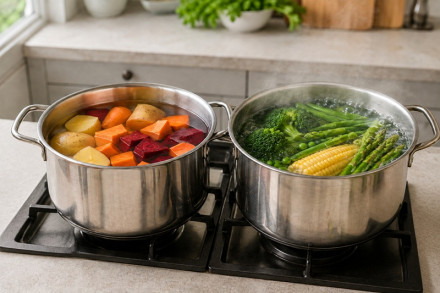
Boiling vegetables may seem simple, but the temperature of the water can change the final result.
Some vegetables cook well when placed in cold water before you turn on the heat. Others are better when added to water that is already boiling.
A useful guide is to start large, dense vegetables in cold water. Add small or tender vegetables to boiling water. However, the size of the pieces and the recipe also matter.
Water temperature can help vegetables cook evenly and keep a pleasant color, flavor, shape, and texture.
Why Water Temperature Matters
Vegetables do not all cook at the same speed. Dense vegetables, such as potatoes and large carrot pieces, need time for heat to reach their centers.
If you drop large pieces into boiling water, the outside may become soft before the middle is ready.
Starting large, dense vegetables in cold water lets the water and the food warm up together. Heat slowly moves through each piece. This helps the inside and outside cook at a similar rate.
Tender vegetables cook quickly and do not need a long warm-up. Boiling water starts cooking them at once, helping them become tender without turning too soft.
Short cooking may also help green vegetables hold their bright color.
Vegetables That May Benefit From a Cold-Water Start
Large pieces of firm vegetables may cook more evenly when started in cold water. Cover them with cold water, bring it to a boil, and then cook at a gentle simmer. Small cubes and thin slices may be added to boiling water instead.
Potatoes
Start potatoes in cold water, especially when boiling whole potatoes or large chunks. This gives the center enough time to cook before the outside falls apart.
Purdue University Extension also recommends starting boiled potatoes in cold water for more even cooking [1].
Cut potatoes into similar-sized pieces. Reduce the heat once the water boils because a hard boil can break them apart.
Simmer until a fork or thin knife enters the center easily.
Carrots
Large carrot pieces may be started in cold water. Thin slices and small cubes can go into boiling water because heat reaches their centers quickly.
Beets
Whole beets can be covered with cold water and brought to a boil, or added to boiling water.
Cook them until tender. Leave part of the stem and root attached to reduce color loss.
Once cool enough to handle, their skins should rub off easily.
Sweet Potatoes, Turnips, Rutabagas, and Parsnips
Large or thick pieces of these firm vegetables may cook more evenly when started in cold water. Small cubes and thin slices can be added to boiling water.
Blanching means boiling vegetables for a short time and then cooling them quickly.
Tested blanching instructions call for adding cut carrots, turnips, parsnips, and rutabagas to boiling water [2]. This shows why the size and cooking method matter.
Yams, Taro, and Cassava
Large pieces of true yam, taro, and cassava may be started in cold water. However, safe preparation is more important than the temperature of the water at the beginning.
Taro must be cooked fully. Raw or undercooked taro contains needle-like crystals that can irritate the mouth and throat [3]. If you boil taro separately, discard the cooking water.
Cassava must also be peeled and prepared correctly.
Only sweet, low-cyanide cassava should be cooked by direct boiling. Bitter cassava needs special processing because boiling alone may not remove enough of its natural toxins [4].
Never eat cassava raw, and always discard its cooking water.
Vegetables to Put Into Boiling Water
Bring the water to a boil before adding small or tender vegetables. Let it return to a gentle boil, then cook the vegetables only until they reach the texture you want.
Broccoli and Cauliflower
Add broccoli and cauliflower florets to boiling water. Because the pieces cook quickly, test them after just a few minutes.
They should be tender enough to bite but not soft or mushy.
Green Beans
Trim green beans, add them to boiling water, and cook until tender but still slightly crisp. This can help them keep a fresh texture and bright color.
Peas
Fresh peas can be added to boiling water and usually cook within a few minutes. Prepare frozen peas according to the package directions. Overcooking can make peas wrinkled, dull, and soft.
Corn
Place fresh corn on the cob in boiling water and cook just until the kernels are hot and tender. Long cooking can make them lose their juicy bite.
Leafy Greens
Spinach, callaloo, Swiss chard, and similar greens can be added to boiling water.
Tender leaves may need only a few minutes. Thicker stems take longer, so separate them and start them first when needed.
For many dishes, steaming or cooking the leaves with a small amount of water may help them keep more flavor and some water-soluble vitamins.
Asparagus, Cabbage, and Brussels Sprouts
Add these vegetables to boiling water and cook them only until tender. Thin asparagus cooks faster than thick stalks.
Avoid overcooking cabbage and Brussels sprouts because they can become very soft and develop a strong smell.
What About Frozen Vegetables?
Most frozen vegetables can be cooked without thawing. However, frozen corn on the cob and leafy greens may cook more evenly when partly thawed first [5].
Frozen vegetables may be made for boiling, steaming, or microwave cooking. Follow the package directions to keep them from becoming too soft.
When the Cold-Water Guide Does Not Apply
The cold-water guide is mainly for boiling whole or thick pieces of dense vegetables. Very small cubes or thin slices can be added to boiling water because heat reaches their centers quickly.
In soup or stew, add ingredients at different times based on how long they need to cook.
When blanching vegetables before freezing, add them to boiling water. Wait for the water to return to a boil before starting the timer.
Follow a tested blanching time for each vegetable. Then remove and cool the vegetables quickly in cold or ice water [2].
The cold-water guide does not apply when roasting, steaming, pressure-cooking, or microwaving vegetables.
Simple Tips for Better Boiled Vegetables
Wash vegetables well and cut them into similar-sized pieces. Use a gentle boil or simmer because hard boiling can break potatoes and damage delicate vegetables.
Use only as much water as you need because some water-soluble vitamins can move into it.
You can use ordinary unsalted vegetable water in soups or sauces. However, discard water used to cook cassava, taro, or any food that needs special preparation for safety.
Check vegetables early. A fork should enter firm vegetables easily, while green vegetables should be tender but hold their shape. Drain them promptly.
Place blanched vegetables in cold or ice water to stop the cooking and protect their color and texture. This is not needed when serving them hot right away.
An Easy Guide to Remember
For everyday cooking, remember these simple tips:
- Start large, dense vegetables, especially potatoes, in cold water.
- Add small or tender vegetables to water that is already boiling.
- Cook most frozen vegetables without thawing, but follow the package directions.
- Think about the size of the pieces and how you plan to use them.
There are exceptions, but these tips give you a good starting point. Cold water allows large, dense vegetables to heat slowly and cook evenly. Boiling water cooks small and tender vegetables quickly, helping them stay bright and firm.
Once you know which vegetables to start in cold or boiling water, it becomes easier to avoid potatoes that fall apart, carrots with hard centers, and greens that turn mushy. A small change in water temperature can help your vegetables look and taste much better.




Add comment