

 Sasha Campbell
Most people think that caterpillars can’t cause too much damage in a garden. After all, they turn into beautiful butterflies or moths—how bad could they be?
Many caterpillars are leaf-eaters that can damage garden crops if their populations get out of control. They can be significant pests of tomatoes, broccoli, cauliflower, basil, lettuce, and cabbage.
Caterpillars are the larval stage of moths and butterflies. The adults lay eggs on or near the plants their young will feed on [1]. Once hatched, the larvae feed heavily on foliage before transforming into adults.
When caterpillar numbers are high, some species can quickly eat large amounts of foliage. Young plants and heavily infested plants may become weak or damaged.
Not Every Caterpillar Needs to Be Killed
Before removing a caterpillar, try to identify it. Some caterpillars become butterflies and moths that are important parts of the garden ecosystem.
A few chewed leaves do not always mean you need to take action. Healthy, established plants can often handle a small amount of feeding.
Control is most useful when pest caterpillars are numerous or are causing serious damage to vegetables, young plants, or other valuable crops.
How to Get Rid of Caterpillars Naturally
Caterpillars are common garden pests, especially during warm seasons when moths and butterflies lay eggs on crops.
Below are some natural and organic methods you can use to control harmful caterpillars.
1. Insecticidal Soap
Insecticidal soap may help control small caterpillars when sprayed directly on them.
The spray must touch the caterpillar to work. Once the product dries, it no longer kills pests.
For the safest results, use a commercial insecticidal soap labeled for the plants and pests you want to treat. Follow the directions on the label.
2. Bacillus thuringiensis
Bacillus thuringiensis var. kurstaki (Btk) is a natural soil bacterium used to control many moth and butterfly caterpillars [2].
Caterpillars must eat treated leaves for Btk to work. It works best when caterpillars are still small. Btk targets certain moth and butterfly caterpillars and has little or no direct effect on bees when used as directed.
However, it can also kill the caterpillars of desirable butterflies and moths. Avoid spraying plants where you want these caterpillars to survive.
If you garden organically, look for a product that is approved for organic production, such as one that is OMRI Listed.
3. Neem Oil
Neem is a plant-based pesticide that can help control some caterpillars.
A neem product labeled for these pests may help control cabbage worms and other plant-eating caterpillars.
Mix the neem product according to the directions on its label. Spray the affected plants thoroughly, paying attention to areas where caterpillars are feeding.
Neem oil disrupts feeding and growth, which can reduce caterpillar populations over time.
4. Remove Badly Infested Leaves
If only a few leaves are covered with caterpillars, eggs, or webbing, remove those leaves from the plant.
Place the infested leaves in a bag and dispose of them away from the garden. Do not leave them on the ground near your plants, as some caterpillars may crawl back onto the crop.
This method works best when you catch the problem early. Avoid removing too many leaves at once, since plants need healthy foliage to grow.
For vegetables such as cabbage, broccoli, and kale, check the undersides of leaves often. Small caterpillars can easily hide there.
5. Try Kaolin Clay for Certain Caterpillar Pests
Kaolin clay is a natural mineral used as a protective coating on some garden and fruit crops.
For certain moth pests, the coating may discourage egg-laying or make it harder for newly hatched larvae to attack treated plants or fruit. However, kaolin clay does not work equally well against all types of caterpillars.
Choose a kaolin clay product labeled for your crop and pest. Mix and apply it according to the label. Rain and new plant growth may necessitate another application.
Kaolin clay leaves a visible, powdery coating on plants and fruit, so wash harvested produce before eating.
6. Create a Habitat Friendly to Birds
Many insect-eating birds feed on caterpillars and other insect larvae, so attracting them can provide some natural pest control in the garden.
If you see small leaf-eating caterpillars on your roses, gooseberry bush, or hibiscus, they may actually be sawfly larvae. They look similar to caterpillars but belong to a different insect group.
Providing native plants, water, nesting areas, and suitable birdhouses can make your garden more attractive to insect-eating birds. In turn, birds help control pests in the area.
Note: This method may not be ideal for apple or other fruit trees, since birds may also eat the fruit.
If you keep chickens, they may also eat caterpillars and other insects. However, chickens can damage vegetables and young plants if allowed to roam freely through the garden.
7. Check Leaves for Eggs
Regularly checking plants can help prevent caterpillar problems before they become serious.
Look at both sides of the leaves for caterpillars and eggs. Remove the eggs of known pest species when you find them.
Pay special attention to cabbage, broccoli, kale, tomatoes, and other plants that often attract caterpillar pests.
Regular inspections make it easier to control caterpillars while they are still small.
8. Use Burlap Bands for Spongy Moth Caterpillars
Burlap bands can help you collect spongy moth caterpillars from trees.
Wrap a wide strip of burlap around the tree trunk at about chest height. Tie the burlap around the middle, then fold the upper half down over the tie.
Spongy moth caterpillars may hide beneath the folded burlap. Check beneath the burlap regularly, preferably each day, and remove any spongy moth caterpillars you find.
Wear gloves when handling the caterpillars, since their hairs may irritate the skin.
Keep in mind that burlap bands may not provide enough control when spongy moth numbers are very high.
9. Cover Your Plants
Row covers can help prevent caterpillar problems by keeping adult moths and butterflies from reaching plants and laying eggs.
Put row covers in place before caterpillars appear. Check the plants first so you do not trap pests underneath the cover.
Secure the edges so insects cannot easily get underneath.
For crops that need insect pollination, remove the cover when flowering begins or provide another way for the flowers to be pollinated.
10. Encourage Beneficial Insects
Not every insect in your garden is a pest. Some insects naturally attack caterpillars. Parasitic wasps, predatory bugs, and other beneficial insects can help keep caterpillar numbers under control.
Growing a variety of flowering plants can provide food and shelter for many helpful insects.
Avoid spraying broad-spectrum insecticides unless they are truly needed. These products may kill helpful insects along with garden pests.
11. Remove Them by Hand
Hand-picking caterpillars is one of the safest and most effective ways to remove them from plants.
Afterward, you can squish them, drop pest caterpillars into a container of soapy water, or dispose of them away from your garden.
For eastern tent caterpillars, remove the webbing when the caterpillars are gathered inside. Place the webbing and caterpillars in a bag and dispose of them.
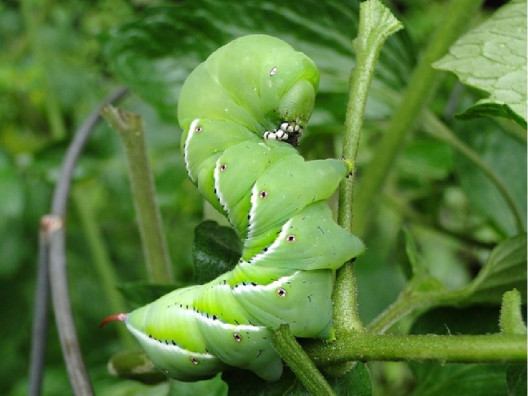
Hand-picking is also an effective method for removing tomato hornworms, spongy moth caterpillars, bagworms, armyworms, and other harmful insect larvae.
Wear gloves when handling hairy caterpillars, including those commonly called higad. The hairs or spines of some species can irritate the skin.
Other Organic Caterpillar Control Methods
- Keep problem weeds under control. Some pest caterpillars use weeds as alternate food plants. Managing these weeds around crops may help reduce problems with certain caterpillar species.
- Reduce outdoor lighting. Reducing unnecessary outdoor lighting at night may also make the area less attractive to some night-flying moths.
- Remove crop plants after harvest. Once a crop is finished producing, remove heavily infested plants rather than leaving them standing. This may help break the life cycle of some caterpillar pests.
- Clean up crop debris. Some caterpillar pests spend part of their life cycle in crop residue or protected areas near the garden. Removing badly infested crop debris after harvest may help reduce some pest problems.
- Learn when local pests appear. Caterpillar species become active at different times of the year. Knowing which pests commonly attack your crops can help you start checking plants before serious damage occurs.
Some commercial products containing Bt, spinosad, azadirachtin, or insecticidal soap can also help control caterpillars.
If you garden organically, check whether the specific product is approved for organic production. Always follow the product label.
Spinosad can harm bees and other pollinators when the spray is wet. Apply it according to the label, avoid spraying open flowers, and apply when pollinators are not active if the label permits.
See also: 15 Homemade Caterpillar Repellent Sprays.
Takeaway
Caterpillars are common garden pests that affect vegetables and leafy crops.
When some pest species become numerous, they can quickly damage leaves and reduce crop quality or yields. Therefore, regularly check your tomatoes, peppers, cabbage, broccoli, kale, and other crops.
If you think you have an issue with caterpillars, follow these natural solutions to help get rid of them.
Early detection and consistent control methods can prevent serious damage and help keep your garden healthy naturally.




I have got 100’s of caterpillars on my plants
Do you know how to get rid of them ?
Good search
I have a serious blood condition called
ET (essential thrombosythemia) this
Condition is very rare BUT it is
believed to be caused by
non organic insecticides in the
air we breath.