

 Sasha Campbell
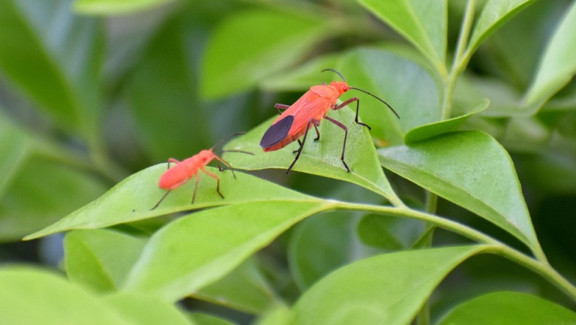
Boxelder bugs can become a nuisance, especially in fall. During this time, they often gather on warm walls, windows, doors, and other sunny surfaces.
Boxelder bugs do not bite people or cause structural damage. However, they can stain walls, curtains, furniture, and clothing. They may also release a bad smell when crushed.
Several natural sprays may help reduce their numbers outdoors. However, most sprays only work when they touch the bugs. They will not stop more bugs from arriving or entering your home.
For the best results, use these sprays while boxelder bugs are gathering outdoors and before they move into cracks around your home.
Spray Options for Boxelder Bugs
Below are some practical spray options you can try.
1. Soap Spray for Boxelder Bugs
A simple water-and-dish-soap solution can kill boxelder bugs when sprayed directly on them.
Mix four tablespoons of plain liquid dish soap with one gallon of water. Do not use dishwasher detergent.
Pour the mixture into a spray bottle or garden sprayer. Shake it gently before spraying it directly on the bugs.
The soap damages the bugs’ protective outer layer. However, it must touch them to work. It will not provide lasting protection after it dries.
Test the spray on a small hidden area first. Some dish soaps may stain siding or damage plant leaves.
Avoid spraying this mixture inside your home. If boxelder bugs are already indoors, collect them with a vacuum or broom instead. According to the University of Minnesota Extension, physical removal is the most practical way to deal with indoor boxelder bugs [1].
2. Commercial Insecticidal Soap
Commercial insecticidal soap is another option. Unlike ordinary dish soap, these products are made and labeled for pest control.
Choose a product that lists boxelder bugs on its label. The label must also allow use on the plant or outdoor surface you want to treat.
Apply the soap directly to the bugs. Insecticidal soap provides little protection after it dries. You may need to spray again when more bugs appear. However, never use it more often than the label allows.
UC Statewide IPM reports that insecticidal soap may reduce boxelder bug populations on tree trunks. However, spraying is often no more effective than vacuuming or washing them away with water [2].
3. Strong Water Spray
A strong stream of water is one of the simplest ways to remove boxelder bugs from walls, tree trunks, fences, and other outdoor surfaces.
Use a garden hose to wash away groups of bugs. Focus on large groups before they move into cracks around your home.
Water will not kill every bug or provide long-lasting control. However, regular spraying may reduce the number gathering near doors and windows.
Take care around delicate plants, loose siding, and painted surfaces. Do not spray water into vents, electrical outlets, or open windows.
4. Horticultural Oil Spray
Some horticultural-oil products may kill boxelder bugs through direct contact. The oil coats the bugs and damages their protective outer layer.
Only use a product if its label lists boxelder bugs. The label must also permit use on the plant or outdoor area you want to treat.
Do not spray horticultural oil on siding, doors, or other building surfaces unless the label allows it.
Dilute and apply the product as directed. Oil sprays may burn plant leaves during very hot weather. Avoid treating dry or stressed plants.
It is also wise to test the spray on a small part of the plant before treating a larger area.
5. Neem Oil Spray
Neem oil is a plant-based pesticide used against many garden pests. Some neem products may also help control boxelder bugs when sprayed directly on them.
Neem products work in different ways. Some coat insects and interfere with feeding. Products containing azadirachtin may also affect the growth of young insects.
Results depend on the product, the pest, and how you apply the spray. Choose a neem product whose label lists boxelder bugs and allows use on the area you plan to treat.
Mix and apply the product exactly as directed. Do not assume that every neem product uses the same amount.
Apply neem during the cooler part of the day. Avoid spraying flowers while bees are visiting. Neem oil may burn sensitive plants or leaves sprayed during hot, sunny weather.
Neem works best as part of a larger plan. It should not be your only method for stopping boxelder bugs from entering your home.
6. Monterey Fruit Tree Spray Plus
Monterey Fruit Tree Spray Plus contains neem oil and pyrethrins. Some versions list boxelder bugs among the pests controlled. Check the label on your container before using it.
This product controls bugs that come into contact with the spray. It is not only a scent-based repellent.
Apply it only to the plants and outdoor areas listed on the label. Do not use this product inside your home.
Pyrethrins come from certain chrysanthemum flowers. However, they are still pesticides. They are highly toxic to honey bees and very harmful to fish and other aquatic animals [3].
Avoid spraying flowers while bees are active. Keep the spray away from ponds, streams, drains, and other bodies of water.
7. Commercial Essential-Oil Sprays
Some commercial pest-control products contain plant oils such as clove, cedarwood, peppermint, rosemary, or thyme oil.
These products may kill or discourage certain insects. However, there is limited proof that homemade essential-oil mixtures will reliably repel boxelder bugs.
Choose a ready-made product that lists boxelder bugs on its label. Also, make sure the label allows use in the area you want to treat. Follow all safety and application directions.
Do not assume that essential oils are harmless because they come from plants. Strong oils may irritate the skin, harm pets, stain surfaces, or burn plant leaves.
Sprays That May Not Work Well
You may see vinegar recommended as a boxelder bug repellent. However, there is little reliable evidence that vinegar keeps these bugs away.
Vinegar can also harm plant leaves, damage some finishes, and leave a strong smell. For these reasons, it is better to use soap, water, or a labeled pest-control product.
Homemade essential-oil sprays also give mixed results. Their smell may fade quickly. The oils may also damage plants or surfaces when mixed too strongly.
Diatomaceous earth is sometimes mixed with water and sprayed around entry points. However, it only begins working after the water dries and leaves a layer of dust.
Not every diatomaceous earth product allows wet application. If you use it, select a pesticide product labeled for that purpose and follow its directions carefully.
Important Spray Safety Tips
Even natural sprays can cause harm when used the wrong way.
- Read the full product label before spraying.
- Keep children and pets away from treated areas until the label says it is safe.
- Avoid breathing spray mist or diatomaceous earth dust.
- Do not spray near ponds, streams, drains, or other water sources.
- Avoid spraying flowers while bees and other pollinators are present.
- Test homemade soap spray on a small surface before treating a large area.
- Never mix two pesticide products unless both labels allow it.
- Do not spray pesticides inside your home unless the label clearly permits indoor use.
Do Natural Sprays Offer Long-Term Protection?
Most natural sprays do not create a lasting barrier against boxelder bugs. Soap, oils, neem, and pyrethrins usually work best when they touch the insects.
More bugs may arrive after the spray dries. You may need to repeat the treatment, but never apply a pesticide more often than its label allows.
Boxelder bugs can also fly several blocks or farther. Spraying one wall or treating one nearby tree may not solve the problem completely.
The best time to act is during late summer and early fall, when the bugs begin gathering outside buildings. Once they enter walls and other hidden spaces, sprays may not reach them.
Takeaway
Natural sprays can help reduce the number of boxelder bugs gathering outside your home. Options include soap spray, insecticidal soap, strong water sprays, horticultural oil, neem products, and labeled pyrethrin products.
However, these treatments usually work only when they touch the bugs. No natural spray can guarantee that boxelder bugs will stay away.
Avoid crushing boxelder bugs that enter your home because they can smell bad and leave stains. Instead, collect them with a vacuum or broom.
If you need more help, this guide explains other ways to control boxelder bugs around your home.




Add comment