

 Sasha Campbell
Common blue violet is a small wild plant that adds color and value to the garden. It often grows in lawns, garden beds, open woods, and partly shaded places.
Many people see violets growing in the grass and think they are weeds. However, common blue violet (Viola sororia) is also an edible wild plant. You can eat its leaves and flowers when you identify and harvest the plant safely.
This plant can also benefit the garden. Its spring flowers provide food for some insects. Its low leaves cover bare soil, and the plant supports several types of fritillary butterflies.
If violets grow in a clean part of your yard, you may decide to keep some instead of pulling them all out.
What Is Common Blue Violet?
Common blue violet is a low-growing perennial. A perennial is a plant that can live for several years.
Its scientific name is Viola sororia. It belongs to the violet family, called Violaceae.
Common blue violet is native to eastern and central North America. It grows in lawns, open woods, gardens, stream banks, and places where the soil stays moist.
An established plant can return each spring.
How to Identify Common Blue Violet
Correct identification is very important when gathering any wild plant for food.
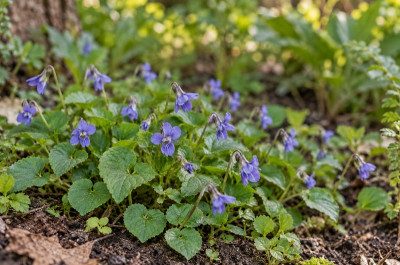
Common blue violet usually forms a low clump. It does not produce a tall main stem.
The leaves grow on long stalks that rise from the plant’s base. They are usually heart-shaped or kidney-shaped. Their edges have small, rounded teeth.
The flowers also grow on separate stalks from the base. They are usually blue-violet or purple. Some plants produce light violet or white flowers.
Each flower has five petals. It usually has two upper petals, two side petals, and one lower petal. The side petals often have small white hairs near the center.
The lower petal may have dark lines that guide insects toward the nectar. It also forms a small spur at the back of the flower.
Watch Out for Look-Alikes
Do not identify common blue violet by its leaves alone.
Violet leaves can look like the leaves of lesser celandine, which can be toxic. The leaves can be especially confusing before either plant begins to flower.
The flowers make common blue violet easier to identify. Beginners should identify the plant while it is blooming. The University of Minnesota advises new foragers to begin by harvesting only the easy-to-identify flowers [1].
If you are unsure about a plant, do not eat it. Ask an experienced local plant expert for help.
When Does Common Blue Violet Bloom?
Common blue violets are best known for their spring flowers.
The exact blooming time depends on the climate. Flowers usually appear during cool spring weather. Some plants may bloom again later if the weather is cool and moist.
Violets also produce small flowers that stay closed. Scientists call these cleistogamous flowers.
These hidden flowers can pollinate themselves and make seeds without opening. This helps violets spread through lawns and gardens.
Where Does Common Blue Violet Grow?
Common blue violet prefers rich soil that stays moist. It grows best in well-drained soil, but an established plant can tolerate some wet conditions.
The plant often does well in partial shade. You may find it under trees, beside buildings, along woodland edges, or in shady parts of a lawn.
It can also grow in full sun where summers are not extremely hot and dry. Its leaves may fade or die back during hot, dry weather.
How Common Blue Violet Spreads
Common blue violet spreads through seeds and short underground stems called rhizomes.
Over time, several plants may join and form a patch.
The seed capsules split open when they are mature. This action can throw the seeds away from the parent plant.
Ants also help move the seeds. Each seed has a small coating that contains fat and protein. The coating attracts ants. They carry the seeds away, eat the coating, and leave the seeds in places where they may grow.
Because violets spread in more than one way, they can be difficult to remove once they form a large patch.
Is Common Blue Violet Edible?
Yes. The leaves and flowers of correctly identified common blue violet are edible [2].
Young leaves are usually more tender than older ones. Older leaves may still be eaten, but they are often better cooked.
Do not eat the roots [3]. Gather only the leaves and flowers that you plan to use.
Never eat a wild plant unless you are completely sure of its identity.
What Do Violet Leaves Taste Like?
Young violet leaves have a mild, green flavor. They blend well with lettuce and other salad greens.
Older leaves may become firm or chewy as the season continues. Cooking can soften them and make them easier to eat.
Start by mixing a few violet leaves with familiar greens instead of making a whole salad from them.
What Do Violet Flowers Taste Like?
Common blue violet flowers have a light, delicate flavor.
People often use them more for their beautiful color than for their taste. The purple-blue flowers can make salads, cakes, fruit dishes, and drinks look more attractive.
Only collect fresh flowers from clean plants that have not been treated with chemicals.
Nutrients in Common Blue Violet
Violet leaves are often described as a source of vitamin C and other plant nutrients. However, reliable food data for common blue violet are limited.
The nutrient levels may change with the soil, season, plant age, and growing conditions. A study of one Viola species may not apply to every other type of violet.
It is best to enjoy common blue violet as one of many edible greens. Do not depend on it as your main source of any vitamin or mineral.
How to Eat Common Blue Violet Leaves
Tender young leaves can be eaten raw in small amounts.
Mix them with lettuce, spinach, or other familiar greens. You can also add a few to sandwiches or wraps.
Violet leaves may also be cooked. Add them to soups, stews, egg dishes, stir-fries, or mixed cooked greens.
Older leaves are usually better cooked because they may be tougher than young ones.
Wash all leaves carefully under clean running water before eating them.
How to Use Violet Flowers
Fresh violet flowers make a colorful edible garnish.
Sprinkle a few flowers over salads, cakes, fruit, or other foods. You can also freeze clean flowers inside ice cubes for summer drinks.
Some people use violet flowers to make syrup, jelly, flavored sugar, candied flowers, vinegar, or herbal drinks.
The flower color may change when mixed with acidic ingredients such as lemon juice. This happens because of the natural pigments in the petals.
When to Harvest Common Blue Violet
Spring is usually the best time to harvest violet leaves and flowers.
The young leaves are tender, and flowers are often plentiful during this season. Pick healthy leaves that do not show signs of disease or serious insect damage.
Harvest only what you need. Leave plenty of leaves so the plant can continue growing. Leave some flowers for visiting insects and for the plant to make seeds.
Avoid pulling up the entire plant unless you are trying to remove it from that area.
Where Not to Harvest Violets
Do not gather violets from places that may contain harmful waste or chemicals.
Avoid plants growing along busy roads, near polluted water, or in places exposed to pet waste. Do not gather from lawns treated with weed killers, pesticides, or other chemicals.
Avoid collecting near old buildings where the soil may contain lead. You should also get permission before harvesting on land you do not own.
Do not eat ornamental violets from a nursery or garden center unless you know they were grown for food. These plants may have been treated with pesticides that are not approved for edible crops.
Garden Benefits of Common Blue Violet
Common blue violet can provide several benefits when it grows in a suitable part of the garden.
It covers bare soil, grows in partial shade, adds spring color, and supports wildlife. Gardeners can decide where the plant is useful and where it needs to be controlled.
It Can Cover Bare Soil
Common blue violet stays fairly close to the ground.
When several plants grow together, their leaves form a low cover over the soil. This can make bare spaces look greener. It can also help shield the soil from direct sun and heavy raindrops.
The roots help hold the top layer of soil in place.
Violets will not replace mulch in every garden. However, they can work as a living ground cover beneath trees or in lightly managed areas.
It Supports Pollinators and Butterflies
Common blue violet flowers provide nectar and pollen for some early bees and other insects. Because violets often flower in spring, they can provide food before many other plants begin blooming.
Their main blooming period is short. Grow other spring flowers nearby to give insects a longer-lasting food supply.
Violets are also host plants for several fritillary butterflies. A host plant is a plant that caterpillars eat as they grow. Fritillary caterpillars feed on violet leaves [1].
Leaving some violets in the garden can therefore help support butterflies.
It Grows Well in Woodland Gardens
Common blue violet fits naturally into partly shaded areas.
It can grow beneath trees where sunlight reaches the ground in early spring. Its small flowers add color before many summer plants begin to bloom.
Violets may also grow in shady places where grass is thin or weak.
How to Grow Common Blue Violet
Common blue violet prefers moist, rich soil and partial shade. However, it can grow under several different conditions.
Keep new plants watered while they become established. Violets may need more water when grown in full sun.
Afternoon shade can help protect them in areas with hot summers.
Growing Common Blue Violet From Seed
You can grow common blue violet from seed, but the seeds may take time to sprout.
They often need a period of cool, moist conditions first. This process is called cold stratification.
You can also sow fresh seeds outdoors. Winter weather may naturally give them the cool conditions they need.
Follow the directions that come with purchased seeds. The treatment may depend on how the seeds were collected and stored.
Growing Violets in Containers
A container is a good choice if you want to grow violets without allowing them to spread freely through a garden bed.
Choose a pot with drainage holes. Fill it with a potting mix that holds some moisture but does not stay soggy.
Place the container where it receives gentle morning sun or partial shade. Do not let the soil dry out completely.
Growing violets in a pot also makes the leaves and flowers easier to harvest.
How to Care for Common Blue Violet
Established common blue violets usually need little care.
Water them during long dry periods if you want the leaves to stay green. Remove dead or damaged leaves when needed.
If a patch grows too large, dig up unwanted plants before they make more seeds. Try to remove the underground rhizomes too. Pieces left in the soil may grow again.
Common Blue Violet vs. African Violet
Common blue violet should not be confused with African violet.
Blue violet belongs to the plant group Viola. African violet is a houseplant from a different plant family.
Do not use African violet in recipes meant for common blue violet. A shared common name does not mean two plants have the same edible uses.
Common Blue Violet Safety
Only eat common blue violet when you are certain that you have identified it correctly.
Eat only the leaves and flowers. Young leaves are usually the most tender. Do not eat the roots.
When trying violet leaves or flowers for the first time, eat only a small amount. A person may react to a wild food even when the plant is normally considered edible.
Stop eating it if you develop itching, swelling, stomach pain, or another unusual reaction. Seek medical help for a serious reaction, including trouble breathing.
Wash the leaves and flowers carefully. Never gather plants from places exposed to pesticides, weed killers, road pollution, animal waste, or other harmful materials.
Takeaway
Common blue violet is more than a small purple flower growing in the lawn.
Its correctly identified leaves and flowers can be used as food. The plant can also cover bare soil, grow in partial shade, support insects, and add spring color to the garden.
However, violets can spread into lawns and garden beds. Keep them in places where their growth will not become a problem.
Most importantly, learn the plant’s main features, watch for look-alikes, avoid eating the roots, and harvest only from clean places.
With careful identification and sensible control, common blue violet can earn a useful place in an edible weed garden.




[…] violet and common blue violet flowers have a […]