

 Sasha Campbell
Oranges are among the most popular fruits in the world. They are sweet, juicy, and full of flavor. You can eat them fresh, squeeze them for juice, or use them in salads, sauces, and desserts.
However, not every orange looks or tastes the same. Some types of oranges are very sweet, while others are tart or bitter. A few have pink or deep-red flesh. Some are almost seedless, while others contain many seeds.
The oranges in this article belong mainly to two groups: sweet oranges and bitter or sour oranges. Sweet oranges are usually eaten fresh or made into juice. Bitter oranges are more often used to make marmalade, flavorings, and other products.
Popular Varieties and Types of Oranges
This list includes both major orange groups and individual varieties within those groups. Here are 15 popular oranges and what makes each one special.
1. Navel Orange
Navel oranges are some of the easiest oranges to recognize. At the bottom of each fruit is a small shape that looks like a belly button, or navel. This navel is formed by a small second fruit that develops inside the blossom end of the main orange.
These oranges have sweet, juicy flesh and very few seeds. Their thick skin is also easy to peel. This makes them a good choice for snacks, children’s lunches, and fruit salads.
Navel oranges are best eaten fresh. Their juice can develop a bitter taste if it sits for too long. Therefore, it is best to drink the juice soon after squeezing it.
2. Valencia Orange
Valencia oranges are often called juice oranges because they contain plenty of sweet juice. They have thin skins, few seeds, and a bright citrus taste. In Florida, Valencia is sometimes called the “king” of juice oranges.
Unlike many oranges that ripen during winter, Valencia oranges usually mature later. In some areas, they can remain on the tree into summer. Their skin may turn slightly green again during hot weather, but the fruit inside can still be ripe.
Valencia oranges are excellent for fresh juice, smoothies, sauces, and marinades. UF/IFAS Gardening Solutions lists Valencia among Florida’s important juice oranges.
3. Washington Navel Orange
The Washington navel is one of the best-known navel orange varieties. It produces large fruit with a rich flavor, thick skin, and few or no seeds.
Like other navel oranges, it is easy to peel and separate into sections. This makes it a good orange for children’s lunches, salads, and fresh eating.
Washington navel trees grow well in warm citrus-growing areas. Cooler weather can help the fruit develop a deeper orange color. The fruit normally ripens during the cooler part of the year, although the exact harvest season depends on the climate.
4. Cara Cara Orange
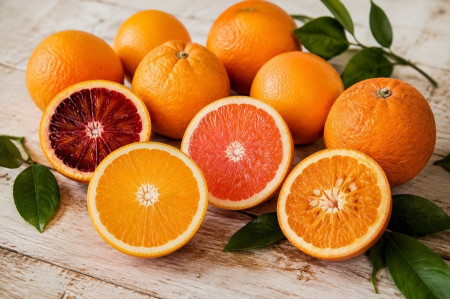
A Cara Cara orange may look like a regular navel orange from the outside. Cut it open, however, and you will find beautiful pink or reddish flesh.
The pink color comes mainly from lycopene, a natural plant pigment also found in tomatoes. Blood oranges get their red color from natural pigments called anthocyanins.
Cara Cara oranges are sweet, low in acid, and usually seedless. Their flavor may have light berry-like hints. They are delicious when eaten fresh and can add color to salads, desserts, and drinks.
According to the University of Arizona Cooperative Extension, Cara Cara oranges are slightly less acidic than regular navel oranges.
5. Blood Orange
Blood oranges are known for their red, maroon, or purple-colored flesh. Some also develop a reddish blush on the peel.
Cool nights help blood oranges develop their deep-red color. In very warm areas, the inside of the fruit may stay mostly orange or have only a few red streaks. The lighter color does not mean the fruit is unsafe or unripe.
Blood oranges have a rich citrus taste that may remind you of raspberries or other berries. You can eat them fresh or use them in juice, salads, sauces, and desserts.
Moro, Tarocco, and Sanguinello are three main blood orange varieties. Their color, sweetness, and harvest season can differ.
6. Moro Orange
Moro is one of the darkest blood orange varieties. Fully colored fruit may have deep-red flesh and juice. The rind can also develop red patches as the orange ripens.
Moro oranges usually have a bold, tart flavor with berry-like notes. They are often more strongly flavored than other blood oranges.
Their dark color makes them a lovely choice for drinks, fruit salads, sauces, and desserts. However, their color may be lighter when the fruit grows in a very warm climate without enough cool weather.
7. Tarocco Orange
Tarocco is a blood orange variety that is believed to have come from Italy. Its flesh may range from orange with a few red streaks to a deeper reddish shade.
This orange is known for having a sweet, balanced taste. It is often less sharply flavored than the Moro blood orange. The fruit is juicy and usually has few seeds.
Tarocco oranges are good for eating fresh, squeezing into juice, or adding to a colorful citrus salad.
8. Sanguinello Orange
Sanguinello, also called Sanguinelli, is a blood orange variety that came from Spain. Its flesh can have red streaks or a deeper blood-red color. The peel may also develop a red blush.
The fruit is sweet but may have a gentle tartness. It is juicy and often contains few or no seeds. Sanguinello oranges can be eaten fresh or used to make juice, preserves, desserts, and sauces.
Like other blood oranges, the depth of the red color can change with the weather and growing conditions.
9. Hamlin Orange
The Hamlin orange is an early-season sweet orange. It usually ripens before Valencia and many other common varieties.
Hamlin oranges have thin skin, a mild flavor, and very few seeds. They are also very juicy, which makes them valuable for orange juice production. However, their flesh and juice may be lighter in color than those of some later varieties.
This variety is especially common in Florida. It is a useful choice for making juice early in the orange season.
10. Pineapple Orange
Despite its name, the Pineapple orange is not crossed with a pineapple. It is a sweet orange variety with a rich smell and strong citrus flavor.
The fruit is usually juicy and may contain several seeds. It ripens during the middle of the orange season. This is normally after early varieties such as Hamlin but before late Valencia oranges.
Pineapple oranges are mainly grown for juice, although they can also be eaten fresh. Their strong aroma helps make flavorful drinks, sauces, and other citrus recipes.
11. Jaffa Orange
Jaffa oranges take their name from the historic port city of Jaffa. The name was commonly used for Shamouti oranges grown and shipped from that region.
These oranges have thick, easy-to-peel skins, sweet flesh, and few or no seeds. Their sturdy peel helped protect them during storage and long-distance shipping.
Jaffa oranges are best for eating fresh. They can also be added to salads, cakes, and other recipes that need orange pieces. The UC Riverside Citrus Variety Collection notes that Shamouti has also been called Jaffa in Europe.
12. Parson Brown Orange
Parson Brown is an early-season sweet orange that has long been grown in Florida. Its fruit may be ready around the same general time as Hamlin, although harvest dates can change by location.
This orange has juicy flesh and a pleasant sweet-tart taste. It may contain more seeds than a Hamlin orange.
Parson Brown oranges are most often used for juice. They may also be eaten fresh when fully ripe, but other orange varieties are usually easier to find in stores.
13. Acidless Orange
Acidless oranges are a low-acid group of sweet oranges. They are sometimes called sweet-acidless oranges. Examples include Vaniglia Sanguigno and Orange of Heaven.
These fruits contain much less acid than regular oranges. Because of this, they can taste very sweet even when their sugar level is not unusually high. Their flavor is mild and lacks the sharp tang found in a Valencia or blood orange.
Acidless oranges are mainly eaten fresh in places where they are grown. Their mild taste is usually less suitable for traditional orange juice, which needs some acidity for a balanced flavor.
14. Seville Orange
The Seville orange is a bitter or sour orange rather than a sweet orange. It has thick, rough skin, sour flesh, and many seeds. Most people would find it too sour or bitter to eat like a navel orange.
However, its strong flavor makes the Seville orange useful in the kitchen. It is famous for making orange marmalade. Its juice and peel can also flavor sauces, marinades, syrups, and baked foods.
The peel contains fragrant oils. Wash the orange well under clean running water before using its peel. Do not wash it with soap.
15. Bergamot Orange
Bergamot is a fragrant citrus fruit that is often called an orange. However, it is different from the common sweet orange. It usually has yellow or greenish-yellow skin and a sharp, bitter taste.
People do not normally eat bergamot fresh. Oil taken from its peel gives Earl Grey tea its well-known smell and flavor. Bergamot may also be used in perfumes, candies, preserves, and other flavored products.
Do not swallow bergamot essential oil unless the product is clearly made for use in food. Some bergamot oils can also make skin more sensitive to sunlight. Always follow the directions and safety warnings on the product label.
Are Mandarins and Tangerines Oranges?
Mandarins, tangerines, satsumas, and clementines are often called oranges in everyday speech. However, they differ from the sweet oranges listed above.
Mandarins are usually smaller, flatter, and easier to peel. Tangerine is a name commonly used for certain mandarins with deep-orange or reddish skin. Clementines are small, sweet mandarins that often have few or no seeds.
Tangelos and tangors are citrus hybrids. A tangelo usually comes from a mandarin crossed with a grapefruit or pomelo. A tangor is generally a cross between a mandarin and a sweet orange.
How to Choose the Best Orange
Look for an orange that feels heavy for its size. A heavy fruit will often contain plenty of juice. The skin should be firm and free from mold, leaking juice, deep cuts, or very soft areas.
Small marks or scars on the peel do not always affect the fruit inside. However, avoid oranges that smell spoiled or have large damaged areas.
Do not judge ripeness only by skin color. In warm climates, a ripe orange may keep some green color. Its peel may also turn green again after it has become orange. This does not always mean the fruit is unripe.
Choose the variety based on how you plan to use it. Navel and Cara Cara oranges are excellent for snacks. Valencia, Hamlin, and Pineapple oranges are good for juice. Blood oranges add rich color to recipes, while Seville oranges are ideal for marmalade.
How to Store Oranges
You can keep oranges at room temperature if you plan to eat them within a few days. Place them in a cool, dry area away from direct sunlight.
For longer storage, keep them in the refrigerator. Do not seal wet oranges inside a closed bag because trapped moisture can encourage mold. Check stored fruit often and remove any orange that begins to spoil.
Wash oranges under clean running water before cutting, peeling, or zesting them. Even if you do not eat the peel, a knife can carry dirt or germs from the outside of the fruit to the flesh inside.
Takeaway
There are many types and varieties of oranges, and each one offers something different. Some are sweet and easy to peel. Others are extra juicy, beautifully colored, tart, or useful for cooking.
Trying several orange varieties is one of the best ways to discover the flavor you enjoy most. Whether you want a simple snack, a glass of fresh juice, a colorful salad, or homemade marmalade, there is an orange that fits the job.





[…] citrus trees most commonly affected are lemons, grapefruits, sour oranges, sweet oranges, mandarins, and […]
[…] with fruit trees and flowering shrubs attract orioles. Providing slices of fresh oranges in feeders can also appeal to these […]