

 Sasha Campbell
Healthy soil is important for growing healthy plants. However, soil can sometimes become polluted with harmful substances. Heavy metals, fuel, industrial chemicals, pesticides, and other contaminants may remain in the ground for years.
In some cases, plants can help.
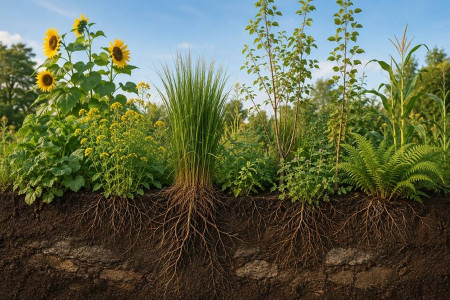
The use of plants to remove, contain, or reduce pollutants in soil is called phytoremediation.
Some plants take certain contaminants into their roots and move them into their stems and leaves. Others help keep pollutants from spreading. Some also support soil microbes that break down chemicals found in certain fuels, solvents, and pesticides.
Phytoremediation can be useful, but it is not a quick fix. It may take several growing seasons, and the right plant depends on the contaminant. Severely polluted land should be tested and handled with professional guidance.
Do not dig, till, or plant in soil that may be badly contaminated until you get expert advice. Digging can release polluted dust or spread contaminated soil [1].
Phytoremediation is usually a planned cleanup method, not a simple home gardening remedy.
Plants Used for Phytoremediation
Here are some plants that have been studied for their ability to help clean or stabilize contaminated soil.
1. Sunflowers
Sunflowers (Helianthus annuus) are often mentioned as plants that can clean polluted soil. Their spreading roots reach through a large area of soil. Researchers have studied them to see whether they can take up certain metals from soil or polluted water. However, their success varies greatly.
Sunflowers do not magically remove every heavy metal from the ground. How well they work depends on the contaminant, soil conditions, sunflower variety, and other factors.
If sunflowers take up harmful metals, those contaminants may remain inside the plant. This means the harvested plants may need to be treated as contaminated material rather than added to compost.
2. Indian Mustard
Indian mustard (Brassica juncea) is another plant widely studied for phytoremediation.
It grows quickly and produces plenty of plant material. More importantly, it can take up certain heavy metals through its roots. Researchers have studied it in soils containing metals such as cadmium, chromium, nickel, and lead.
Lead often stays attached to soil particles, which makes it difficult for plants to remove [1]. Indian mustard should not be presented as a reliable way to remove lead from a home garden.
The amount removed can vary greatly. Soil pH, metal concentration, plant growth, and how tightly the contaminant is attached to soil particles all affect the results.
Indian mustard may therefore be useful as part of a larger soil cleanup plan rather than as a guaranteed home remedy.
3. Vetiver Grass
Vetiver (Chrysopogon zizanioides) is a tough grass with an impressive root system. Its roots can grow deep into the soil and help hold the ground together.
This makes vetiver especially useful for phytostabilization. Instead of removing all contaminants, phytostabilization uses plants to help keep polluted soil in place. This may reduce erosion, dust, and the movement of contaminants into nearby areas.
Vetiver has also been studied for its tolerance of soils polluted with certain heavy metals. Because it grows well in warm climates, vetiver can be especially useful in tropical and subtropical areas.
The contaminants remain in the soil, so the land does not become safe simply because vetiver is growing there. The plant mainly helps reduce the chance that polluted soil will wash or blow away.
4. Willow Trees
Willows (Salix species) grow quickly and develop large root systems. They also use plenty of water.
Researchers have studied willows for land polluted by certain heavy metals and organic contaminants. Their roots can also influence the microorganisms living around them.
These microbes are important because some can help break down pollutants such as certain fuels and industrial chemicals.
Willows are not suitable for every property. Their roots can spread widely, and the trees generally prefer moist conditions. Give them plenty of space and keep them away from structures and underground pipes.
5. Poplar Trees
Poplars (Populus species) are another group of fast-growing trees used in phytoremediation research and projects.
Their extensive roots and high water use make them useful for some contaminated sites. Poplars have been studied for helping manage certain petroleum products, solvents, and other industrial chemicals.
Poplar roots may reach deeper than the roots of many small plants. However, phytoremediation usually works only where roots can reach the contamination. Deep pollution may require other cleanup methods.
Phytoremediation with trees can also take years. Their mature size must be considered before planting.
6. Alfalfa
Alfalfa (Medicago sativa) is usually grown as a forage crop or cover crop, but it has also attracted attention in phytoremediation research.
Its roots grow deep into the ground and support an active community of soil microorganisms. These microbes may help break down certain organic pollutants, including some petroleum-related contaminants.
This process is known as rhizodegradation. The plant does not necessarily pull the entire pollutant into its leaves. Instead, activity around its roots may help microorganisms break down some contaminants.
Alfalfa can cover bare ground and help reduce erosion. However, plants grown on polluted soil should not be dug back into the ground unless experts say it is safe.
7. Hemp
Industrial hemp (Cannabis sativa) has also been studied for phytoremediation.
The plant grows quickly, develops a strong root system, and produces a large amount of plant material. Research suggests that hemp can tolerate and take up certain heavy metals under some conditions.
This does not mean hemp grown on contaminated soil is safe to use afterward. Hemp grown for soil cleanup should not be used for food, animal feed, medicine, CBD products, fiber, fuel, or home compost unless testing and local authorities confirm that the material is safe.
There may also be legal rules about growing hemp depending on where you live.
8. Corn
Corn (Zea mays) is better known as a food crop, but researchers have also investigated its ability to grow in and take up contaminants from polluted soils.
It has been tested in soil containing metals such as cadmium and lead. However, growing corn does not mean it will remove enough lead to make the soil safe.
Most importantly, do not eat corn grown for soil cleanup. When a crop is being used on contaminated land, assume the plant material may also be contaminated unless proper testing proves otherwise.
Treat food production and phytoremediation as separate purposes.
9. Canola
Canola varieties, including varieties of Brassica napus and Brassica rapa, have been studied for their response to metal-contaminated soil.
These plants can grow fairly quickly and produce a useful amount of biomass. Their roots also interact with soil microbes, which may influence the way contaminants behave in the soil.
As with Indian mustard, results depend heavily on the soil and pollutant involved. A plant that performs well in one contaminated site may perform poorly at another.
10. Ferns
Some ferns have remarkable abilities to tolerate certain contaminants.
One of the best-known examples is Chinese brake fern (Pteris vittata). This plant is known as an arsenic hyperaccumulator because it can take up unusually large amounts of arsenic and store much of it in its fronds [2].
This has made the fern an important plant in research on arsenic-contaminated soil.
However, arsenic is highly toxic. Using plants to manage arsenic contamination should be done carefully and with proper testing and expert advice.
How Do Plants Clean Contaminated Soil?
Plants can help polluted soil in several different ways.
Phytoextraction happens when roots absorb contaminants, usually metals, and move them into parts of the plant above ground. Those plant parts can then be harvested and removed.
Phytostabilization works differently. Plants hold soil in place and may reduce pollutant movement through erosion, water, or dust.
Rhizodegradation happens around plant roots. Root activity encourages certain microorganisms that can break down pollutants such as fuels and some pesticides.
Trees and other thirsty plants may help slow the movement of polluted groundwater by taking up large amounts of water. This method works only for certain sites and contaminants.
The important point is that phytoremediation does not always mean that a plant literally “sucks toxins out of the soil.” Different plants and contaminants involve different processes.
Test the Soil Before Planting
If you think your soil is contaminated, testing should come first.
Don’t choose a plant simply because you have heard it removes toxins. You first need to know what contaminant is present.
For example, a plant useful for arsenic may not work well for lead. Another plant may help with petroleum pollution but do very little for heavy metals.
Ask a qualified environmental laboratory to test for the pollutants you suspect. A regular garden soil test may check only nutrients, pH, and organic matter. It may not test for lead, arsenic, pesticides, fuel, or other harmful chemicals.
This is especially important near old industrial sites, former dumps, mining areas, busy or older roads, and buildings that may once have been painted with lead-based paint. Testing is also important anywhere fuel, pesticides, or other chemicals may have spilled.
What Should You Do With the Plants Afterward?
This is one of the most important parts of phytoremediation.
If plants pull heavy metals from contaminated soil, the metals do not simply disappear. Some may end up in the roots, stems, or leaves.
Do not place potentially contaminated plants in your regular compost pile. Composting could return contaminants to the soil.
Do not eat the plants or feed them to livestock. When possible, keep wildlife and pets from eating them. Do not burn contaminated plants at home because the smoke or ash may contain harmful substances.
Depending on the type and level of contamination, harvested plants may need to be handled and disposed of according to local environmental rules [3].
Contact your local waste or environmental authority before throwing the plants in household garbage. The correct disposal method depends on the contaminant and the amount found in the plant.
Can You Garden in Contaminated Soil?
Do not assume soil is safe for vegetables simply because phytoremediation plants have been growing there.
Test the soil again before growing food. Raised beds or containers filled with tested, clean soil may reduce contact with contaminated ground.
Local experts may also recommend placing a suitable barrier beneath a raised bed. However, raised beds do not clean the soil underneath them, and they may not be enough for every contaminated site.
For serious contamination, contact your local environmental or agricultural authority for advice.
Takeaway
Plants may offer a lower-disturbance way to help manage some types of soil pollution. Sunflowers, Indian mustard, vetiver grass, willows, poplars, alfalfa, hemp, corn, canola, and certain ferns have all been studied for phytoremediation.
But no single plant can clean every contaminated site.
The best plant depends on the pollutant, its concentration, the soil, the climate, and the depth of the contamination. Some plants remove certain contaminants, while others mainly stop them from spreading or encourage microbes that break them down.
Most importantly, have the soil tested before planting and again during and after the project. Do not assume the soil is safe until a qualified expert has reviewed the results.
If heavy metals or dangerous chemicals are present, get professional advice and handle harvested plants carefully.
Plants can be powerful partners in restoring damaged land, but successful soil cleanup starts with knowing exactly what is in the ground.




Add comment