

 Sasha Campbell
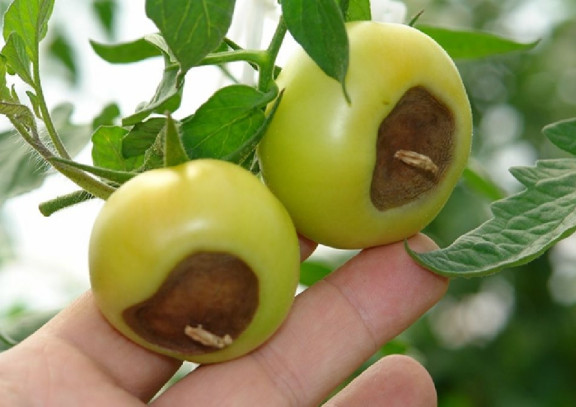
As gardeners, we know how disappointing it is to find a tomato fruit with blossom-end rot. This disorder can also affect peppers, cucumbers, watermelons, eggplants, and squash.
Calcium deficiency in the developing fruits causes blossom-end rot [1].
Various factors can contribute to this calcium deficiency. These include uneven watering, improper soil pH, and root damage.
However, much can be done to prevent blossom end rot.
How to Stop Blossom End Rot Naturally
1. Remove Affected Fruits
One of the first signs of this physiological disorder is that the bottom of the fruits displays water-soaked, light-brown spots.
The first step in treating blossom end rot is to remove the affected fruits. Pruning the plants will also help redirect water and calcium to developing fruits.
2. Water Plants Properly
Successfully combating blossom end rot is about balance. Too wet or too dry conditions can both cause problems.
So, with water, it should be the right amount to keep the soil evenly moist.
Therefore, properly water the root zone of plants once or twice a week in hot, dry conditions. You can also dig trenches around outdoor plants for drainage during heavy rainfall.
Also, a period of hot weather may mean the soil is too hot and dry. Plants can also suffer heat stress if grown in a greenhouse without proper shade or temperature control.
Greenhouse plants can benefit from self-watering containers or timed water-dispensing devices.
3. Use Mulch to Retain Soil Moisture
Prevent blossom end rot in tomatoes, peppers, zucchini, and other vegetables by keeping the soil consistently moist. You can do this by applying mulch around the base of the plants.
Organic mulches like straw, hay, newspaper, or grass clippings will help keep the soil warm. These will also maintain moderate moisture levels and help keep weeds at bay.
4. Check the Soil pH Regularly
Most plants thrive in soil with a pH between 6.0 and 7.0, with tomatoes benefiting from a soil pH of 6.2 to 6.8 [2]. So, it is best to test the soil regularly, as the right pH level is needed for calcium uptake.
You can easily buy a pH soil tester online or at your local garden store. Alternatively, take soil samples to your local extension office for testing.
Thereafter, check the soil regularly to monitor its acidity. Correct it if necessary with a suitable amendment.
5. Avoid Using Nitrogen-Heavy Fertilizers
Although nitrogen is essential to plant growth, too much can prevent plants from taking up calcium and other nutrients.
To fix the problem, avoid using high-nitrogen fertilizers on fruiting crops. They can upset the balance of calcium and other nutrients in the soil.
6. Add Calcium to the Soil
Adding calcium in some form to the soil can also help prevent blossom-end rot. The best time to do this is before planting the crops.
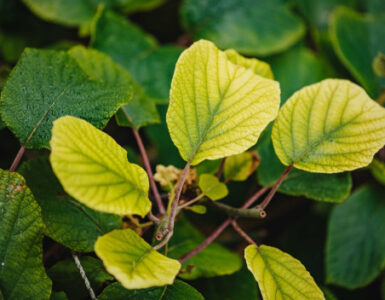
Plants that don’t take up enough calcium can also show other unhealthy signs. These include wilting, blackened leaf tips, paling of young leaves, and stunted growth.
Various commercial products are available to increase soil calcium levels. However, crushed eggshells are a natural home remedy you can try.
Ag lime and gypsum are also traditionally added to the soil to help increase its calcium levels.
7. Bone Meal
Another calcium solution for blossom end rot is bone meal. Add some to the soil in the required amount before planting young plants.
Follow the package instructions: mix in 1 to 2 tablespoons per gallon of soil for new plantings.
8. Bonide Rot-Stop
This is an organic blossom-end rot spray for tomatoes and other crops, such as cucumbers, peppers, and melons.
Bonide Rot-Stop provides additional calcium in a ready-to-use foliar spray. However, it is best to apply it after rainy periods when calcium leaches away.
Additionally, use this treatment in the evening or early morning to avoid leaf burn.
9. Milk
One homemade treatment for blossom end rot is milk. Fresh or powdered milk both contain calcium that you can use to feed your plants.
Unfortunately, milk won’t help the fruits that are already showing signs of blossom-end rot. However, the next crop will benefit from the extra calcium.
To use powdered milk for blossom-end rot, gently fork it around the base of the plants and water it in. The recommended amount is 1/4 to 1/2 cup of powdered milk per plant.
You can also make a spray using fresh milk by diluting it in water at a ratio of 1:2. Use the solution to spray the plant leaves.
Water your plants regularly after the milk treatment.
Will Epsom Salt Help?
Epsom salt is often used by gardeners to boost tomato growth and help start seedlings. It also helps reduce transplant shock and prevent leaf yellowing, among other benefits.
But should you use Epsom salt as a home remedy for tomato blossom-end rot? The answer is no.
Experts state that Epsom salt will not cure or prevent blossom end rot, but instead promotes it by adding magnesium to the soil.
The more magnesium the soil contains, the less calcium plants absorb [3]. Epsom salt, therefore, increases the chances of blossom-end rot showing up.
Takeaway
Applying these natural methods to plants vulnerable to this plant disorder will help produce a healthy crop.
However, you can still eat tomatoes with blossom end rot. Just cut off the bottom if it is turning brown or black.



Add comment