

 Andre Campbell
Many gardeners have dealt with the irritation of finding grubs in the soil among their plants.
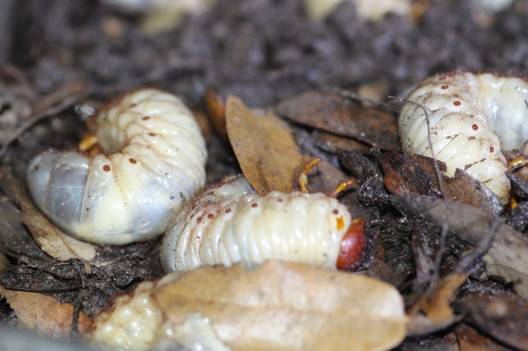
White grubs are root-eating pests. They turn into leaf-eating adult beetles [1].
It’s not a good thing to see these critters crawling around. They will eat the roots of your crops and damage your lawn.
If you’re reading this, you likely want natural ways to get rid of grubs for good.
Fortunately, there are plenty of natural methods to rid your garden of them without harming your plants.
How to Get Rid of Grubs Naturally
Below are some of the best organic solutions and home remedies for grub control.
1. Beneficial Nematodes
Beneficial nematodes can help control grubs in your vegetable garden, flower beds, and lawns. They search for various soil-dwelling pests and kill them.
You can buy beneficial nematodes online or at specific garden centers. Soak them in water on the sponge they come on.
Next, put them into a sprayer attached to a hose, then give your yard and garden a thorough spray to release them. Once infected by the nematodes, the grubs will die within one to two days.
2. Soap and Water
Soapy water is enough to kill grubs in your lawn and garden, as the soap itself will smother them.
Mix three tablespoons of organic liquid soap with a gallon of water for a homemade grub killer. However, you can use Dawn dish soap if you are only using it for your lawn.
Spray the soapy water solution on the infested lawn or soil.
3. Milky Spore
Once applied in your garden, this naturally occurring bacterium will not harm you or your plants.
Milky spore is highly effective as a natural grub killer. However, it can take up to two years to fully take effect.
Additionally, it is only effective against Japanese beetle grubs [2], so it is best used in combination with other remedies.
Read the package instructions carefully to learn how to apply the product correctly.
4. Birds and Chickens
In our opinion, the best grub-worm killers are birds and chickens.
Set up bird feeders or a chicken coop. Chickens and some birds will peck and forage in the soil for anything, including beetle grubs.
The only issue is that they may also target beneficial insects you want to keep.
5. Organic Fertilizer
Organic fertilizer poses a lower risk to beneficial soil organisms, such as nematodes, compared to synthetic fertilizer. Read 29 Organic and Homemade Fertilizers for Plants.
It may not stop root-eating grubs, but it allows everything else to keep living. Organic fertilizers give beneficial nematodes a better chance to survive and target grubs.
6. Neem Oil
You can also use neem oil for grubs in the garden. It is very popular among organic gardeners as a natural and healthy home remedy for pest control.
Create a natural grub-repellent spray by combining 2 tablespoons of neem oil, 2 teaspoons of liquid soap, and 1 gallon of water.
Next, apply it to your lawn and garden soil to repel grubs. You can find neem oil at a reasonable price online or at select retail gardening stores.
7. Diatomaceous Earth (DE)
Food-grade diatomaceous earth is an excellent organic remedy for killing grubs and other harmful garden pests naturally. Moreover, it is pet-friendly and safe to use both indoors and in vegetable gardens.
The product will dry out insects, dehydrating them to death. To apply, dust a little onto the soil around your plants.
This natural grub worm treatment is very effective but indiscriminate, so use it sparingly.
8. Garlic Spray
Many vegetable garden pests can’t stand the smell of garlic spray. Making a garlic spray and using it in your garden can help keep it free of many pests.
For this DIY grub-control spray, purée 4 garlic bulbs with 1 cup of water. Next, let it sit overnight.
Afterward, strain the solution and apply it around your garden beds and potted plants. It will deter grubs, slugs, caterpillars, and other unwanted pests.
9. PyGanic
PyGanic is an organic insecticide that helps get rid of lawn grubs and certain pests in your garden.
As it contains pyrethrin as its active ingredient, this product is safe for use on organic crops. Moreover, when used moderately, it will not harm earthworms.
10. Surround WP
Made from modified kaolin clay, Surround WP is another effective natural pesticide for controlling white grub worms. When applied, it forms a barrier film that protects against these pests.
To use this treatment, follow the package directions.
11. Limit Irrigation
These fat white worms (as some people call them) thrive in moist soil. So, limiting the amount of water flowing into your garden or over your lawn may reduce the grubs’ population.
Will Epsom Salt Work?
Some say it doesn’t, while others say high doses can. However, high doses of Epsom salt can be toxic to earthworms, so it is best to reconsider using this product.
What are Grub Worms?
They are nothing more than the larvae of certain beetles. However, grub worms are especially harmful to your garden and must be dealt with immediately.
They will nibble on the roots of your plants and, later in life, chew on the leaves of your crops. So, eliminate them from your garden as soon as you spot them.
Signs of Infestation
You’ll see telltale signs of grubs in your lawn, such as dead or damaged patches. Seeing wildlife digging in your grass is another sign of grubs.
If you happen to pull back a section of grass and can count more than five grubs per square foot, you’ve got an infestation. These signs also mean that they are most likely present in your garden.
Droopy leaves, the sudden death of plants, and the appearance of garden moles are all signs of a grub infestation.
When to Treat for Grubs?
The best time to kill grubs is usually in spring and early fall, when activity in your garden or lawn is higher.
Takeaway
The grub issue can be a significant challenge for any gardener or farmer, and there are numerous ways to deal with it, making it difficult to choose the most effective approach.
However, with some experimentation, you will find the perfect natural remedy to keep garden and grass grubs away for good.

 Sasha Campbell


How often should I use the soap and water method for grubs.
Thank you
Apply once every 7 days until they are gone completely.
Will this also kill firefly larva? I want to get rid of the food source for moles digging up my yard but don’t want to kill the fireflies, either.