

 Sasha Campbell
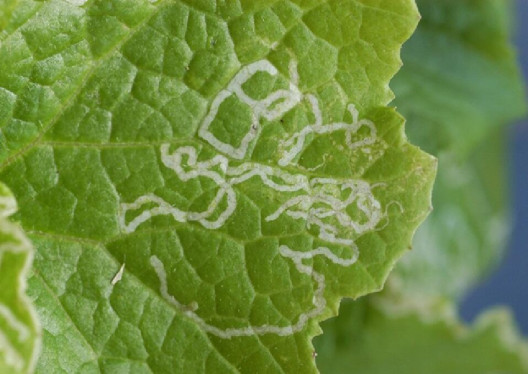
It can be so disheartening to find leaf miner damage on your plants. Instead of healthy growth, you find your plant leaves with trails of light green to white, squiggly lines.
Those are signs that the eggs of leaf miner flies that may have been sitting snugly inside your plants’ leaves have developed into larvae. The larvae are now busy tunneling and feeding within the layers of the plants’ leaves [1].
At this point, figuring out how to get rid of them is vital. It’s time to take action before an infestation begins.
Below is how to get rid of leaf miners naturally. These are home remedies and organic solutions to help keep these plant pests away.
1. Beneficial Insects
Many helpful bugs and insects in the garden enjoy feasting on destructive insects.
Ladybugs, lacewings, and other useful insects help keep harmful bugs in check. Leaf miner predators include parasitic wasps from the genus Diglyphus, soldier beetles, and predatory bugs.
2. Hot Pepper Spray
Hot pepper spray is an excellent home remedy for leaf miners on tomatoes, basil, pepper plants, Swiss chard, and other vegetables. You’ll find various recipes for this spray online, but we have one that is easy to make.
To make a simple pepper spray for leafminers, blend 2 hot peppers, 1 onion, and 1 garlic bulb with 1 quart of water.
Let the mixture sit for about an hour before straining. Afterward, add a tablespoon of organic liquid soap and shake it well.
Use this DIY leaf miner control spray to coat your plants, including the undersides of the leaves.
3. Neem Oil
Today, neem oil is widely used in organic farming. It effectively controls many insect pests, including leaf miners [2].
To use neem oil for leaf miners, mix 2 tablespoons of neem oil with 1 gallon of water to make a spray. Shake well, then spray the solution onto the affected plants.
You can also use this organic pesticide to control insect pests and to prevent or kill fungal diseases on your plants.
4. Row Covers
Row covers protect young plants from harmful insects. They may also protect against birds, some domestic pets, night frosts, and daytime sun damage.
You can buy row covers or make your own from fine mesh or other lightweight fabrics. Once the growing season is over, remove the covers.
5. Till the Soil
Tilling the soil after harvest can destroy any pupae, reducing the chances of adult flies emerging again.
6. Sticky Trap
Using sticky traps is an old, effective way to deal with annoying garden insects. These colored strips of sticky material attract pests that become stuck and cannot mate, lay eggs, or survive.
Sticky traps are handy when hung in greenhouses or near indoor plants.
Different colors attract different pests. However, use yellow or blue for the leaf miner fly.
7. Remove the Eggs
Removing leaves with leaf miner eggs at the first sign of these pests may be tedious, but it is also practical. The eggs may appear as tiny, elongated white specks, usually in clusters.
8. Spinosad
Spinosad is another organic product you can use to control leaf miners. Spray it on the leaves.
This garden insect spray paralyzes and kills leafminers in a day or two. However, you may need more than one application during the growing season.
If you have concerns about Spinosad’s toxicity, the manufacturers state that it is low in toxicity to mammals. However, it may harm bees.
So, spraying less or not at all during flowering can make this leaf miner treatment more worthwhile.
9. Beneficial Nematodes
This one is increasingly popular in organic pest control and also treats leaf miners in the soil. Beneficial nematodes are tiny organisms that naturally occur in the soil.
These microscopic roundworms can destroy many garden pests at their developmental stage in the soil.
Nematodes enter the insect’s gut and release bacteria that cause blood poisoning and death. They then feed off the dead matter until no further food is available, obliging them to seek new hosts to kill.
Moreover, a constant food source allows nematodes to grow and multiply, naturally breaking the cycle of infestation.
10. Parasitic Wasps
Some species of parasitic wasps, including Diglyphus isaea, attack and kill leaf miners.
Female parasitic wasps lay their eggs on or inside fly larvae or pupae. After hatching, the wasp larvae feed on the host larvae.
Plant dill, yarrow, zinnias, and fennel to attract parasitic wasps. You can also purchase Diglyphus isaea from reputable suppliers.
11. Diatomaceous Earth
Diatomaceous earth is processed so that its particles dehydrate many insects. As a result, it works well as a leafminer control remedy.
You can make it into a homemade leaf-miner spray or use it in powder form by dusting it onto the leaves. However, one point to consider is that a rain shower will mean reapplication.
12. Trap Crops
Trap crops are grown to lure pests away from your main crops. As such, they are sometimes called “sacrificial” plants.
Columbine, chickweed, lamb’s quarters, velvetleaf, and plantain are trap crops for the leaf miner insect. Companion planting with marigolds and garlic can also deter these insects.
13. Pruning
This DIY method works best for trees like citrus. Pruning will greatly help keep your plants healthy and enable early detection of potential pest infestations.
You can then remove and dispose of the infected leaves. These critters may also be found frequently on boxwood.
14. Vinegar
A spray of 1 part vinegar to 3 parts water can also help deter adult flies from laying eggs. Spray it on affected (and those likely to be affected) plant leaves.
15. Baking Soda Spray
Baking soda is useful for protecting plants from certain pests and fungal attacks.
To use baking soda for leaf miners, mix 1 tablespoon of baking soda with 1 tablespoon of dish soap in 1 gallon of water.
Shake well, then spray your plants.
Damage
Leaf miner damage mainly appears as tunnels and pale white, curvy lines on plant leaves.
Plants that leaf miners attack include spinach, basil, beets, Swiss chard, tomato plants, lettuce, and other vegetables. They also go after pigweed, lamb’s quarters, and other weeds.
Takeaway
Commercial leaf miner pesticides are available. However, as you can see, many solutions also exist to control the critters organically.
Try one or more of these natural remedies and see what works best for you.



How often do you apply Neem Oil to tomatoes to get rid of active Leaf Miners?
Apply once a week until it clears up.