

 Sasha Campbell
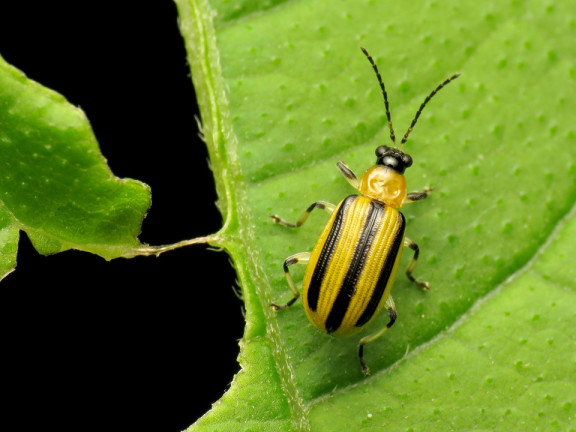
Cucumber beetles may seem harmless. But they can ruin gardens.
These small beetles can damage many garden plants. They feed on leaves, stems, flowers, and even fruits [1].
Striped cucumber beetles may also spread bacterial wilt, a disease that can kill cucurbits [2].
You don’t have to worry, though. There are several natural ways to protect your plants without chemical pesticides.
Natural Repellent Sprays and Treatments for Cucumber Beetles
Below are some of the best homemade and organic store-bought cucumber beetle sprays.
1. Neem Oil
Neem oil is one of the most popular natural pest repellents available.
Neem oil can repel cucumber beetles [3]. It may also reduce feeding and interfere with their growth and reproduction.
You can easily make a DIY neem oil spray for cucumber beetles. For the recipe, mix 2 teaspoons of cold-pressed neem oil with 1 teaspoon of mild liquid soap in 1 quart of water.
Once you shake it well, it’s ready to spray. This homemade cucumber beetle pesticide can control both spotted and striped cucumber beetles.
2. Essential Oil
Some essential oils can also help deter cucumber beetles.
For example, peppermint, lemon eucalyptus, lavender, and rosemary oils have natural insect-repelling properties.
Mix 10 to 15 drops of one essential oil with 1 quart of water and 1 teaspoon of mild liquid soap. Shake well before each use.
This solution may help repel cucumber beetles and some other garden pests.
3. Kaolin Clay
Kaolin clay is a unique option because it acts as a physical repellent.
When applied appropriately, it leaves a white film on plant leaves. This film makes it harder for cucumber beetles to settle and feed on the plants.
Mix the kaolin clay powder with water to use. The ratio is about three cups of clay per gallon of water.
Stir it well. You can also add a tablespoon of dish soap to the solution.
Once sprayed on plants, the clay coating helps discourage cucumber beetles from feeding.
4. Vinegar Spray
If mixed strongly enough, vinegar spray can kill beetles. However, that spray might also damage your plants.
A diluted vinegar spray may help discourage cucumber beetles for a short time. But its effects are usually limited, and stronger mixtures can damage plants.
Combine 1 cup of white vinegar with 3 cups of water, then add a few drops of mild soap. Shake well and apply this homemade cucumber beetle spray to the plants’ leaves and stems.
5. Diatomaceous Earth
This product is another home remedy you can use to organically get rid of cucumber beetles. The powder damages the insects’ protective outer coating, causing them to lose moisture and die.
To use it as a spray, mix two tablespoons of food-grade diatomaceous earth with a quart of water. Be sure to shake the mixture frequently while applying it, as the powder will settle to the bottom.
Finally, apply this natural spray to your plants, covering the leaves. Once it dries, the powder can kill cucumber beetles that crawl over it.
6. Horticultural Oil
Horticultural oil may help control cucumber beetles when sprayed directly on them. It works best when sprayed directly on the beetles.
Mix the oil according to the label directions. Spray the affected plants, making sure to cover both sides of the leaves.
Avoid spraying during the hottest part of the day or when bees are active.
7. Hot Pepper and Garlic
Another organic cucumber beetle control remedy that you can make is a hot pepper and garlic spray.
This spray creates a strong smell and taste that may discourage cucumber beetles from feeding.
Chop one small head of garlic and a cup of hot peppers (the hotter, the better). Let them steep in a gallon of water for a few hours or overnight.
Once strained, add two tablespoons of mild liquid soap. Spray this mixture on your plants.
It may also help repel squash bugs and some other garden pests.
8. Homemade Insecticidal Soap
It’s easy to make a simple insecticidal soap at home.
Combine two tablespoons of pure liquid Castile soap (or another mild soap) with a quart of water. Thoroughly mix the solution before spraying it directly onto the beetles and the affected leaves.
You can also buy premade insecticidal soap and use it accordingly.
9. Beneficial Nematodes
Beneficial nematodes are tiny worms that attack cucumber beetle larvae living in the soil. Killing the larvae helps reduce the number of adult beetles later in the season.
Mix the nematodes with water according to the package directions.
Apply them to moist soil around cucumber, squash, melon, and pumpkin plants. Water the area before and after application to help the nematodes move through the soil.
This treatment works best in spring or early summer when beetle larvae are developing.
10. Citrus Spray
Some gardeners use citrus peel sprays as a natural deterrent. However, there is limited scientific evidence that they consistently repel cucumber beetles.
If you’d like to try it, boil citrus peels, such as orange, lemon, or lime peels, in water for 10 minutes. Strain the liquid, let it cool, and spray it on your garden plants.
11. Spinosad
Spinosad is one of the most effective insecticides for controlling cucumber beetles and other pests [4].
You can find spinosad in ready-made sprays at garden centers. Follow the directions carefully, as spinosad can harm beneficial insects if overused.
Spray in the evening after bees have stopped visiting flowers, and allow the spray to dry before pollinators return.
12. BioCeres WP Biopesticide
BioCeres WP Biopesticide is a biopesticide.
It contains the naturally occurring fungus Beauveria bassiana. It helps control a range of insect pests, including cucumber beetles.
Mix BioCeres WP according to the package directions. Spray it directly on the affected plants.
13. Monterey Bug Buster-O
This product is also a powerful natural insecticide. It contains pyrethrin.
Pyrethrin attacks the nervous system of insects. It’s a good choice for a heavy infestation.
However, use Bug Buster-O with care. It can harm beneficial insects, including bees.
Tip
Spray plants early in the morning or late in the evening when bees are less active. Avoid spraying open flowers whenever possible to protect pollinators.
Takeaway
Many of these natural options can help reduce cucumber beetle damage while being gentler on the environment than many conventional insecticides.
For best results, spray early in the season. Do this before cucumber beetle populations grow.
See our other home remedies for getting rid of cucumber beetles naturally.




Add comment