

 Sasha Campbell
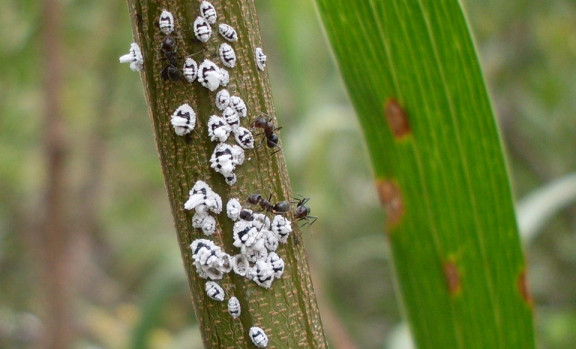
If you’re a gardener, you’ve probably encountered mealybugs at some point. These small, soft-bodied pests feed on plant sap and can weaken plants, stunt growth, and cause leaves to yellow or drop.
Thankfully, many natural, homemade solutions can help you tackle this problem.
Homemade Sprays for Mealybugs
Let’s explore a few simple, effective sprays you can make at home to help protect your garden from these pests.
1. Neem Oil Spray
Neem oil is a popular natural remedy for garden pests, including mealybugs.
This oil helps control many insect pests. It disrupts their life cycle, stunting their growth and preventing them from feeding [1].
To make a neem oil spray, mix 1/2 tablespoon of neem oil with 1 quart of water. Add a few drops of mild liquid soap to help the oil mix with the water.
Next, pour the mixture into a spray bottle. Apply it to your plants, focusing on areas with mealybugs.
You can also buy ready-to-use neem oil insecticide at most garden centers if you’d rather not make your own neem oil spray. These pre-mixed sprays are excellent for treating mealybugs on plants.
2. Hose Them
Sometimes, the simplest solution is the best one. If you do not want to mix up a spray, you can try hosing down your plants with a strong stream of water.
Mealybugs can be knocked off the plant instantly with enough force. A good, hard spray from a garden hose can dislodge the pests and rinse them away.
Hosing your plants is a non-toxic, safe, and simple way to combat mealybugs. However, it is best for small infestations.
You may also need to repeat applications, as mealybugs often hide in leaf joints, stems, and other protected areas.
3. Insecticidal Soap Spray
One of the most effective homemade sprays for mealybugs is insecticidal soap [2].
This simple solution damages the pests’ outer protective layer, causing them to dehydrate. As a result, they dehydrate and die.
To make a homemade insecticidal soap spray, mix 1 tablespoon of mild liquid soap with 1 quart of water. Avoid using degreasing dish detergents, as they may injure some plants.
Pour the mixture into a spray bottle and shake well.
Spray the solution directly onto mealybugs and the affected parts of the plant. Pay special attention to leaf undersides and stem joints where the pests often hide.
Always test the spray on a small section of the plant first and wait 24 hours to ensure it does not cause damage. Reapply every few days until the infestation is under control.
4. Vinegar Spray
Vinegar is a cheap way to deal with a mealybug infestation. It may kill mealybugs on contact, but it can also damage plant foliage.
Use it cautiously and always test a small section of the plant first. Also, because it can burn plant leaves, avoid spraying it heavily on desirable plants and use it only as a spot treatment.
To use, mix one part white vinegar with three parts water to make a vinegar spray. Next, transfer the solution to a spray bottle and mist the affected areas of your plants.
5. Essential Oils
Essential oils can also work wonders as natural pest repellents.
Some essential oils have insecticidal properties that may help control mealybugs [3]. These include peppermint, citrus, and lavender oils. But their effectiveness against established mealybug infestations can vary.
Mix 10-20 drops of your chosen essential oil with 4 ounces of water to make an essential oil spray. Shake well and spray the mixture directly onto the affected areas of your plants.
Some essential oils repel mealybugs and other pests on houseplants and in the garden. However, some oils can be potent, so test a small area of the plant before applying the spray to the whole plant.
6. Horticultural Oil
You can also use horticultural oil to control various garden pests, including mealybugs. The oil smothers the pests. It blocks their breathing pores, causing them to suffocate.
Mix 2 cups of vegetable oil with 1/2 cup of organic liquid soap in a bottle to make a homemade horticultural oil spray.
Shake the mixture vigorously until it becomes milky white. Finally, store it in a cool, dry place until you’re ready to use it on your plants.
When it’s time to use it, dilute two teaspoons of concentrated horticultural oil in a liter of water. Shake it well and spray the affected plants.
However, you can also buy ready-to-use horticultural oil if this DIY process is too much.
7. Coffee Spray
Surprisingly, coffee can also be used to make homemade pesticides. Coffee contains caffeine, which has shown insecticidal properties in some studies [4].
Some gardeners have success using coffee grounds or diluted coffee for certain pests. However, there isn’t much scientific proof that they control mealybugs.
To give it a try, mix one cup of used coffee grounds with two gallons of water to make a coffee spray. Let the mixture steep for about three days.
Finally, strain and pour the coffee water into a spray bottle, and apply it to the infested areas of your plants.
You can also brew a strong pot of coffee and let it cool. Afterward, combine 2 parts brewed coffee with 1 part water, then apply it to the plants.
8. Garlic and Onion
These ingredients aren’t just great for cooking; they can also be powerful pest repellents in the garden.
Both garlic and onion contain natural compounds that can deter insects. They may help repel mealybugs and other garden pests naturally.
The strong smell of garlic and onion masks the plants’ scent. This makes them less attractive to pests.
You need onions, garlic, liquid soap, and water to make a garlic-and-onion spray for mealybugs on plants.
Now blend one garlic bulb and one small onion with one quart of water.
Strain the mixture through a fine sieve to remove any solid bits. Then, pour the liquid into a spray bottle and add a teaspoon of liquid soap.
Finally, apply this DIY repellent spray to the affected areas of your plants. Regular application (once a week) can help keep mealybug populations under control.
9. Rubbing Alcohol Spray
Rubbing alcohol is one of the most popular DIY mealybug sprays. It kills the pests on contact. It does this by dissolving their waxy coating and dehydrating them.
To make a rubbing alcohol spray, mix 1 cup of 70% isopropyl alcohol with 1 cup of water. For added effectiveness, you can also add a few drops of mild liquid soap.
Pour the mixture into a spray bottle and apply it directly to mealybugs and infested plant surfaces. Be sure to cover hidden areas where the insects may be feeding.
For small infestations, you can dip a cotton swab in rubbing alcohol. Then, touch individual mealybugs directly with it.
As with any homemade remedy, test the solution on a small area of the plant first. Some sensitive plants may suffer leaf damage if the alcohol concentration is too strong.
Regular applications may be necessary until all signs of the infestation are gone.
Takeaway
Mealybugs can be a pesky problem for gardeners. But with a bit of creativity and household ingredients, you can protect your plants and repel these pests.
Many homemade remedies can help reduce mealybug populations and keep your plants healthier. However, when you use a homemade spray, make sure to cover the undersides of leaves, stems, and other hiding places where mealybugs like to gather.
For more home remedies, this article highlights additional ways to get rid of mealybugs organically.




Add comment