

 Sasha Campbell
Amaranth is an old food crop that is finding a new place in modern gardens.
Some types are grown for their tender leaves. Others are grown for their tiny seeds. A few can provide both.
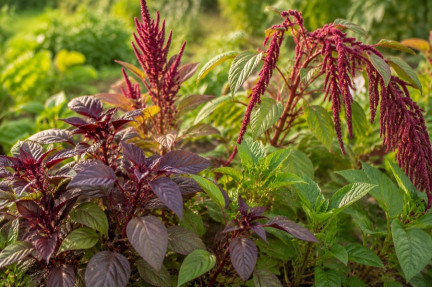
Edible amaranths belong to the Amaranthus genus [1]. They are warm-season plants known for their quick growth, colorful leaves, and tall flower heads.
Wild amaranths may appear on their own. Cultivated types are planted on purpose for food. Gardeners can choose varieties grown for leaves, grain, or both.
If you want a useful plant for the hottest part of the growing season, edible amaranth is worth considering.
What Is Edible Amaranth?
Edible amaranth is a group of annual plants grown for food. Depending on the species and variety, people may harvest the leaves, young stems, shoots, or seeds.
Vegetable amaranths are important food crops in warm parts of Asia, Africa, the Caribbean, and other areas. They are also becoming more popular with gardeners in the United States.
The University of Florida lists A. cruentus, A. blitum, A. dubius, and A. tricolor among the popular vegetable amaranth species [2].
Buy a named edible variety from a trusted seed seller. Common names can describe more than one plant, so check the botanical name on the seed packet.
Do not eat an ornamental plant if it has been treated with chemicals that are not approved for food crops. Never eat a wild plant unless you are certain of its identity and know it grew in a clean area.
Leaf Amaranth vs. Grain Amaranth
Edible amaranths can be placed into two broad groups.
Vegetable or leaf amaranths are grown mainly for their tender leaves and shoots. They tend to produce plenty of soft, leafy growth.
Grain amaranths are grown mainly for their seeds. The three main grain species are Amaranthus cruentus, Amaranthus hypochondriacus, and Amaranthus caudatus.
The groups are not completely separate. Young leaves from many grain amaranths are edible too. However, removing too many leaves can lower the amount of grain the plant produces.
Popular Edible Amaranth Species
Amaranthus tricolor
Amaranthus tricolor is one of the best-known vegetable amaranths.
It is grown mainly for its tender leaves and young stems. Depending on the variety, the leaves may be green, red, purple, yellow, or a mixture of colors.
You may see it sold as Chinese spinach, red amaranth, Chinese amaranth, or Joseph’s coat. However, some of these common names are also used for other plants. Always check the botanical name.
This species can be both a food crop and a beautiful garden plant.
Amaranthus cruentus
Amaranthus cruentus is a useful dual-purpose species. It can produce edible leaves as well as grain.
It normally grows upright and later forms large flower heads filled with tiny seeds.
Gardeners who want both greens and grain may find this species especially useful. Just remember that heavy leaf harvesting can reduce the final grain harvest.
Amaranthus hypochondriacus
Amaranthus hypochondriacus is mainly grown for grain.
The plants can become tall and produce large seed heads. It is one of the main grain amaranths grown for sale in the United States.
Its young leaves can also be eaten.
Amaranthus caudatus
Amaranthus caudatus is another important grain species.
It is easy to notice when mature because many varieties form long, hanging flower clusters. This feature has helped give some ornamental forms the common name “love-lies-bleeding.”
The seeds can be collected and cooked like other amaranth grains.
Other Vegetable Amaranths
Other species are also grown or gathered for their greens.
These include A. dubius, A. blitum, and several types that are important in certain parts of the world. The varieties available to you will depend on where you live.
What Does Edible Amaranth Look Like?
The appearance of edible amaranth varies by species and variety.
Most cultivated edible amaranths grow upright. They have broad leaves attached to firm stems. The leaves may be plain green, deep red, or burgundy.
Some varieties have leaves marked with red, yellow, purple, or pink.
As the plants grow older, they produce clusters of tiny flowers. Grain types may form especially large seed heads that hold thousands of very small seeds.
These details are not enough to safely identify an unknown wild plant. If you are growing amaranth for food, start with a named variety from a trusted source.
How Tall Does Amaranth Grow?
Height depends on the variety and growing conditions.
Vegetable types may be harvested while they are still fairly small. Grain amaranths are left to mature and can grow several feet tall.
Some plants can reach around five to seven feet in good conditions.
This makes placement important. Tall varieties may shade smaller vegetables growing nearby. They may also need support in windy locations.
Growing Amaranth for Food
Amaranth can be a fairly easy crop once warm weather arrives.
It likes heat and grows quickly when temperatures are suitable. Vegetable amaranth is especially useful as a summer green because many common leafy vegetables struggle in hot weather.
Cold weather is a different story. Amaranth is a warm-season annual. Frost can damage or kill it.
Where to Plant Edible Amaranth
Choose a warm, sunny part of the garden.
Amaranth usually performs best in full sun. Good soil helps the plants produce plenty of healthy growth, but amaranth can grow in several soil types.
The soil should drain well. Avoid areas where water remains around the roots for a long time.
You can grow vegetable amaranth in garden beds, raised beds, or large containers.
Starting Amaranth From Seed
Amaranth seeds are very small.
Sow them directly in prepared soil after the danger of frost has passed and the soil has warmed. Cover the seeds only lightly. They do not need to be planted deeply.
Keep the soil moist, but not soaked, while the seeds are sprouting and the young plants are becoming established.
Once many seedlings appear, thin them so the plants have enough room to grow. Follow the spacing directions on the seed packet.
For many leaf varieties, you can thin the plants to about six inches apart. Large grain varieties may need more room.
You can eat the healthy young plants removed during thinning if they came from an edible variety. Wash them well before using them.
Watering Amaranth
Young plants need steady moisture while their roots develop.
Once established, some amaranths can handle short dry periods. Grain amaranth is fairly drought-tolerant once established.
However, drought tolerance does not mean the plants never need water. A long dry period can cause early flowering and lower the harvest.
Vegetable amaranth grown for soft leaves benefits from regular watering, especially in hot, dry weather. Keep the soil slightly moist, but do not leave the roots sitting in water.
Feeding the Plants
Healthy soil encourages strong, leafy growth.
Adding compost before planting can improve the soil and supply nutrients. If your soil is already fertile, the plants may not need much extra feeding.
Do not add more fertilizer than the plants need. Too much nitrogen can cause very soft growth and high nitrate levels in the leaves.
A soil test is the best way to find out what your garden needs.
Harvesting Amaranth Leaves
You do not have to wait long for your first harvest.
Young leaves and shoot tips from vegetable amaranth may be ready about three to six weeks after planting. Some varieties may take longer or shorter.
Pick the tender leaves while the plants are actively growing.
You can remove individual leaves or cut young shoots. Leave enough healthy growth so the plant can keep growing. With careful cutting, one plant may provide several harvests.
As plants age and start flowering, they usually produce fewer leaves. The older leaves and stems may also become tougher.
Harvesting Amaranth Grain
Grain amaranth takes longer to mature than leaf amaranth.
Allow the flower heads to develop and the seeds to ripen. The time needed will depend on the species, variety, climate, and planting date.
The seed heads are close to ready when they feel dry, and some seeds fall out as you gently rub them. Harvest them on a dry day.
Cut the heads over a clean container or place them directly into a clean bag. This helps prevent the tiny seeds from being lost.
Dry the seed heads well before separating the grain. Clean the grain to remove dried plant pieces, soil, and weed seeds. Make sure the seeds are fully dry before placing them in an airtight container.
Store the grain in a cool, dry place.
Nutrients in Amaranth Leaves
Amaranth greens can add useful nutrients to meals [3].
The leaves provide some protein and fiber. They also contain minerals and vitamins, including calcium, iron, magnesium, folate, vitamin C, and carotenoids.
Exact amounts depend on the species, growing conditions, leaf age, and cooking method. This is one reason amaranth is valued as a leafy vegetable in many parts of the world.
Nutrients in Amaranth Grain
The seeds have a different mix of nutrients from the leaves.
Amaranth grain provides carbohydrates, protein, fiber, minerals, and fat. Its protein contains a good mix of amino acids. It has more lysine than many common cereal grains.
Amaranth is naturally gluten-free. However, grain and flour may come into contact with wheat during growing, packing, or processing. People with celiac disease should choose amaranth products marked “certified gluten-free.”
Although people often call the seeds a grain, amaranth is not a true cereal grass like wheat, rice, or corn.
It is called a pseudocereal. This means it is not a grass, but its seeds are cooked and used in much the same way as cereal grains.
How to Eat Amaranth Leaves
Young amaranth greens can be used in many meals.
Cook them much like spinach or other leafy greens. Add them to soups, stews, stir-fries, or mixed vegetable dishes.
Very young leaves are sometimes eaten raw. However, amaranth leaves can contain oxalates and nitrates. Cooking the leaves is a good choice if you eat them often.
Boiling the leaves and pouring away the cooking water can lower some of these compounds, but it will not remove all of them. People who have been told to follow a low-oxalate diet should speak with a qualified health professional before eating large amounts.
The tender stems of vegetable varieties can also be cooked.
How to Use Amaranth Seeds
Amaranth grain has several kitchen uses.
Cook the seeds in water to make a soft, porridge-like dish. They can also be ground into flour or added to baked foods.
Another option is to pop the tiny seeds in a hot, dry pan. Popped amaranth has a light, toasted taste. You can add it to cereals, snacks, and other dishes.
Amaranth flour contains no gluten, so it behaves differently from wheat flour. Bakers often mix it with other flours when making yeast bread.
Most people cook, pop, or grind amaranth grain before eating it. Whole raw seeds can be hard to chew and digest.
Garden Benefits of Growing Amaranth
Amaranth does more than provide food.
Its quick summer growth can help fill empty spaces after cool-season greens have finished. Tall edible amaranth varieties can also add color and height to an edible garden.
Mature seed heads may attract seed-eating birds. This can add wildlife to the garden, but you may need to protect the heads if you want to harvest the grain.
Growing crops such as amaranth can also add variety to the vegetable garden.
Can You Grow Amaranth in Containers?
Yes, you can grow amaranth in containers.
Leaf amaranth is especially suitable because you can harvest it while the plants are young.
Choose a container with drainage holes. Fill it with good-quality potting mix and place it where the plants will receive plenty of sunlight.
Keep the soil slightly moist. Containers can dry out faster than garden beds, especially in hot weather.
For full-sized grain amaranth, use a large, heavy container. Mature plants can become tall and top-heavy. They may also need a stake or other support.
Saving Amaranth Seeds
Amaranth can produce a huge number of seeds.
If you grow an open-pollinated variety, you may be able to save seeds for planting the following season. Allow healthy seed heads to mature before collecting and drying them.
Amaranths of the same species may cross. Some closely related species may also cross. Wild amaranths growing nearby may affect the seeds you save.
As a result, the new plants may not look or grow exactly like the parent plant.
Amaranth may also drop many seeds and grow again the following year. Harvest or remove unwanted seed heads before the seeds fall if you do not want extra plants.
Is Cultivated Amaranth the Same as Pigweed?
Cultivated amaranth and pigweed are closely related, but these names do not describe one single plant [3].
People use “pigweed” as a common name for several Amaranthus species that often grow as weeds. Many of these species look alike, which can make identification difficult.
Growers have selected cultivated amaranths for useful features. These features may include tender leaves, larger seed heads, attractive colors, or better grain production.
For dependable food quality and easier identification, grow a named edible variety from a trusted seed seller.
Do not assume that an unknown plant is safe to eat simply because it looks like cultivated amaranth.
Pigweed species can be hard to identify. Like cultivated amaranth, they can build up nitrates under certain growing conditions. Wild plants may also grow in polluted soil.
Takeaway
Cultivated edible amaranths deserve more attention from home gardeners.
They enjoy warm weather, grow quickly, and can provide colorful leafy greens when some cool-season vegetables are struggling. Grain varieties offer another option by producing tiny edible seeds that can be cooked, popped, or ground.
You can grow a leafy type such as Amaranthus tricolor, a grain type such as A. hypochondriacus or A. caudatus, or a dual-purpose type such as A. cruentus.
Whichever one you choose, amaranth can bring food, color, height, and variety to your edible garden.




Add comment