

 Sasha Campbell
Garlic mustard is an edible wild plant with a strong smell and bold flavor. Its scientific name is Alliaria petiolata. It belongs to the mustard family, along with cabbage, broccoli, kale, and radishes.
The plant is native to Europe, parts of Asia, and North Africa. People have used it as food and seasoning for hundreds of years. However, garlic mustard has become an invasive weed in much of North America.
The plant provides useful nutrients and edible parts. However, it can also harm forests and gardens. Learning about garlic mustard can help you use plants that are already growing without helping them spread.
What Does Garlic Mustard Look Like?
Garlic mustard changes as it grows.
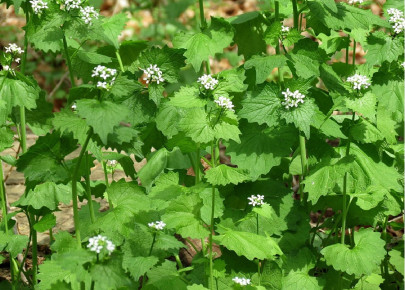
During its first year, it forms a low circle of leaves called a rosette. These leaves may be round, heart-shaped, or kidney-shaped. They have scalloped edges and long leaf stems.
In its second year, the plant sends up a tall flower stalk. The upper leaves become more pointed and triangular. Their edges are sharply toothed.
Mature garlic mustard plants usually grow between 1 and 4 feet tall.
How to Recognize the Leaves
Garlic mustard leaves are bright green. They may have a slightly wrinkled surface, and their veins are easy to see.
Crush a leaf gently between your fingers. It should give off a garlic-like smell. This smell is one of the plant’s best-known features.
However, never use smell alone to identify the plant. The scent may become weaker as the leaves age.
What Do the Flowers Look Like?
Garlic mustard produces small white flowers in spring or early summer.
Each flower has four petals arranged in the shape of a cross. This is a common feature of plants in the mustard family.
The flowers grow in small groups at the tops of the stems. New flowers continue to open near the top as the stem grows.
How Garlic Mustard Produces Seeds
After flowering, the plant forms long, narrow seedpods called siliques. They look like thin green sticks growing away from the stem.
The pods turn brown as they dry. When they open, they release many small, dark seeds.
One plant may produce hundreds or even thousands of seeds. These seeds can remain in the soil and produce new plants later.
Gardeners should remove garlic mustard before it flowers when possible. If the plant already has flowers or seedpods, place it in a secure bag and follow local disposal rules. Pulled flowering plants may continue developing seeds [1].
How Does Garlic Mustard Grow?
Garlic mustard is usually a biennial. A biennial plant completes its life cycle over two years.
During the first year, it grows leaves close to the ground. The plant may remain green through winter.
During the second year, it grows taller, flowers, produces seeds, and dies. Its seeds then begin the cycle again.
Garlic mustard spreads only by seed. It does not spread through underground runners.
Where Does Garlic Mustard Grow?
Garlic mustard often grows in moist, partly shaded places.
You may find it along woodland edges, walking trails, fences, streams, roads, and shaded garden beds.
It can also grow in full sun and many types of soil. Flooding, digging, construction, and the removal of other plants can leave open ground where garlic mustard can take hold.
The plant begins growing early in spring. This gives it a head start before many native plants appear.
Does Garlic Mustard Need Rich Soil?
Garlic mustard can grow in many types of soil.
It often does well in moist, fertile ground. However, it can also survive in less favorable places.
Finding garlic mustard may point to disturbed soil or an area where other plant cover has been removed. However, its presence does not provide a complete soil test.
Do not assume that the soil has a certain pH or nutrient level just because garlic mustard is growing there.
Is Garlic Mustard Edible?
Garlic mustard has several edible parts.
The young leaves, flowers, tender stems, and roots have been used as food. The seeds have also been used as seasoning.
However, collecting mature seeds is not a good idea in places where the plant is invasive. The seeds can fall from your hands, clothing, tools, or containers and start new patches.
Young leaves usually have the softest texture. Their flavor combines garlic, mustard, and a little bitterness.
Older leaves may become stronger and more bitter. The flowers and tender stem tips are also edible when the plant is correctly identified and gathered from a clean location.
A Safety Note About Natural Plant Compounds
Garlic mustard contains glucosinolates. These natural sulfur compounds help create its sharp mustard flavor.
The plant also contains a compound that can produce cyanide. One study found levels as high as 100 parts per million in some fresh plant tissue. The highest levels appeared in the youngest leaves of first-year plants [2].
Researchers have not set a safe serving size for garlic mustard. For extra care, use it as an herb or a small part of a meal. Avoid eating large amounts raw. Chopping, blanching, and cooking may help lower these compounds.
Try only a small amount the first time you eat it.
What Nutrients Are in Garlic Mustard?
Garlic mustard leaves provide water, fiber, carotenoids, vitamin C, and several minerals.
One study tested tender leaves collected from different places in southeastern Spain. The garlic mustard samples contained an average of 261 milligrams of vitamin C per 100 grams of fresh leaves [3].
This number should not be treated as a fixed value for every plant. Nutrient levels can change with the soil, weather, plant age, and growing location.
People also tend to eat wild greens in small amounts. The nutrients you receive will depend on how much you eat.
Vitamin C in the Leaves
Vitamin C is one of the nutrients found in garlic mustard leaves.
Fresh leaves may keep more vitamin C than leaves cooked for a long time. Heat, storage, and plant age can all affect the amount.
The result from one study does not mean every garlic mustard plant contains the same amount of vitamin C.
Carotenoids in Garlic Mustard
The green leaves also contain carotenoids.
Carotenoids are natural plant pigments. The body can change some types of carotenoids into vitamin A.
The amount in the leaves may change with plant age, sunlight, and growing conditions.
Fiber and Minerals
Garlic mustard provides dietary fiber, as many leafy plants do. Fiber gives the leaves their structure and adds bulk to food.
Researchers have also found calcium, potassium, magnesium, phosphorus, iron, copper, zinc, and manganese in garlic mustard leaves.
The exact amounts will not be the same in every plant.
How Does Garlic Mustard Taste?
Young leaves have a fresh garlic and mustard taste. Some plants taste mild, while others are hot or bitter.
The flavor often becomes stronger after the plant begins flowering. Shade, soil moisture, heat, and plant age may also affect the taste.
Mixing garlic mustard with milder foods can keep its strong flavor from taking over a dish.
Ways to Use Garlic Mustard
Young leaves can be chopped and added to salads in small amounts. They can also be added to soups, sauces, dips, or cooked greens.
Some foragers use garlic mustard in pesto. Mixing it with basil, parsley, nuts, cheese, or another mild green can soften its bitter taste.
The flowers can be used as an edible garnish. Tender stem tips can be cooked like other mustard greens.
The roots have a sharp taste that is sometimes compared to horseradish. Wash and peel them well before use.
Can Garlic Mustard Benefit the Garden?
Garlic mustard does not offer enough garden benefits to make it a good plant to grow where it is invasive.
In its native range, garlic mustard is part of established plant and insect communities. However, this does not make it a suitable garden plant in places where it is invasive.
In much of North America, it can form thick patches that crowd out native woodland plants. It may also change soil conditions and interfere with fungi that help certain trees and native plants grow.
Can You Compost Garlic Mustard?
Do not place flowering or seed-bearing garlic mustard in a normal backyard compost pile. The seeds may survive and spread when you use the finished compost.
Bag flowering plants or dispose of them in the way your local invasive-plant office recommends. Some locations have special rules for burning, bagging, moving, or disposing of invasive weeds.
Young plants without flowers or seedpods may be handled differently. Always follow local advice instead of assuming they are safe to compost.
Why Can Garlic Mustard Be Harmful?
Garlic mustard begins growing early and may stay green when many other plants are dormant.
This allows it to take up space before spring wildflowers emerge. Thick patches may reduce the number and variety of native plants growing beneath trees.
This change can also affect insects and animals that depend on native plants for food and shelter.
Research has found that garlic mustard may change soil nutrients and the relationships between plants and helpful soil fungi [4].
The effects may not be the same in every forest. However, the plant remains a serious invasive weed in many areas.
Should You Plant Garlic Mustard?
Do not plant garlic mustard in places where it is invasive.
In some states, selling, moving, or planting it is restricted or illegal. For example, Minnesota lists garlic mustard as a restricted noxious weed. The state does not allow people to grow or sell it. Minnesota also limits how the plant and its seeds may be moved [5].
Check your local invasive-plant rules before collecting, moving, or disposing of garlic mustard.
How to Harvest Garlic Mustard Responsibly
Only harvest garlic mustard after you are fully sure of its identity.
Choose plants growing away from busy roads, sprayed lawns, old industrial areas, pet waste, and polluted water.
Do not gather plants from land you do not own without permission. Foraging may be banned in parks, nature preserves, and other protected places.
Check local rules before taking garlic mustard away from the site. Some places limit the movement of invasive plants and seeds.
Do not carry open seedpods from one place to another. Seeds may fall and start a new patch.
When Is the Best Time to Harvest?
The best time to gather garlic mustard leaves is usually early to mid-spring, depending on the local climate.
Tender second-year leaves and young flower stems are often milder than older parts. First-year rosettes may also be gathered, but young first-year leaves can contain higher levels of cyanide-forming compounds.
Harvesting before seedpods form lowers the risk of spreading seeds.
If the plant is already flowering, handle it carefully. A pulled flowering plant may continue developing seeds.
Important Foraging Safety
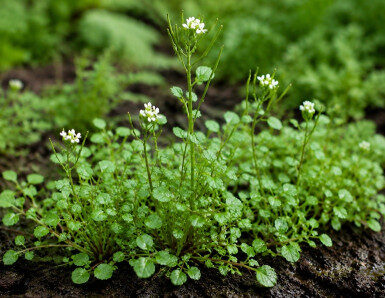
First-year garlic mustard may resemble violets, wild ginger, ground ivy, and other low-growing plants.
Use several features to identify it. Check the leaf shape, leaf arrangement, flower structure, growth pattern, and smell.
Never taste a wild plant to identify it.
Wash garlic mustard well before using it. Washing can remove soil and insects, but it cannot make a plant from a polluted or sprayed area safe to eat.
Try a small cooked serving the first time. Stop eating it if you develop itching, swelling, stomach pain, or another unwanted reaction.
Get emergency help if you have trouble breathing or if your face, mouth, or throat begins to swell.
Takeaway
Garlic mustard offers a strong flavor, useful nutrients, and several edible parts. Removing and using existing plants may become one small part of an invasive-weed control plan.
However, its edible value does not make it safe to plant or spread.
The responsible approach is to identify garlic mustard correctly, gather it from a clean place, use only small amounts, prevent seeds from spreading, and dispose of unwanted plant parts safely.
You must also return to the area and remove new plants. With careful handling, you can use this edible weed while protecting gardens and nearby natural areas.




Add comment