

 Andre Campbell
If you notice woolly aphids on your plants, it’s essential to act immediately.
Although small infestations usually cause only minor damage, large or repeated infestations can weaken plants, deform new growth, and make trees more susceptible to disease.
Here, we’ll discuss some of the different methods to treat woolly aphids at home naturally. We’ll also tell you how to identify these pests and the plants that they mostly go after.
Identification
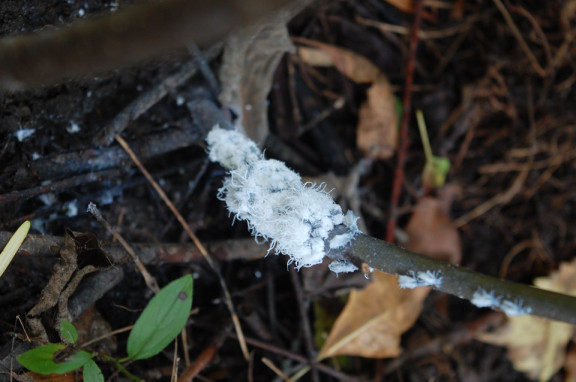
They look different from other aphids in appearance. They are tiny, pear-shaped, and covered in a fuzzy, waxy white coating. Their fluffy coating also resembles wool.
The young nymphs and adults produce a fluffy white wax that forms cotton-like masses on twigs, branches, leaves, or roots, depending on the species.
Plants That Woolly Aphids Attack
These sap-sucking pests prefer woody stems but may also attack leaves and buds.
You’ll find them on many different trees and shrubs [1]. They can cause damage to apple trees, olive trees, cotoneaster, pyracantha, citrus trees, chaenomeles, elm, hawthorn, alder, and other plants.
How to Get Rid of Woolly Aphids Naturally
Below, we’ll discuss the best methods and home remedies for naturally dealing with woolly aphids. These include making organic sprays and using beneficial insects to your advantage.
1. Neem Oil
Have you ever heard of neem oil? It’s a natural pesticide that manufacturers extract from neem seeds.
Neem oil is a broad-spectrum insecticide, which means it kills a wide variety of bugs.
To make a homemade spray for woolly aphids, mix 2 tablespoons of neem oil with 1 teaspoon of liquid soap and 1 gallon of water.
Next, use it to spray the pests. However, spray in the early morning or evening to avoid leaf burn and to protect pollinators.
You can also use this DIY treatment to wipe down houseplants.
2. Insecticidal Soap
Insecticidal soap is a contact poison, meaning it kills insects that come into contact with it. It is considered one of the safer insecticides for home gardens when used according to the label.
Make your own by following various online recipes, or skip the whole DIY process and buy one. Bonide and Safer are popular brands of insecticidal soap.
To use it, mix it with water in a spray bottle. Be sure to follow the directions that come with your order.
Next, shake well and spray the affected plants. Wet the leaves and stems thoroughly, then repeat the process every 7 days until the aphids are gone.
3. Remove Infested Branches
Remove branches from trees infested with woolly aphids. This will help stop the infestation from spreading.
Use a knife or pruners to cut the branches off. Next, throw away the branches, then thoroughly wash your hands.
Only prune if the infestation is localized. Also, avoid heavy pruning during very hot weather.
4. Hose Them
Use a garden hose with a nozzle to spray the aphids off your plants. But ensure that it’s not too strong to break fragile plant stems.
This works best for light infestations before colonies become well established.
5. Parasitic Wasps
These are wasps that lay their eggs inside woolly aphids and certain other pests. And when the eggs hatch, the wasp larvae eat the pests from the inside out.
Gross, right? But it’s very effective.
Moreover, you can buy parasitic wasps from a garden store or online. It’s a great way to kill woolly aphids without using pesticides.
Aphelinus mali is a tiny parasitic wasp that specializes in woolly apple aphids [2].
6. Ladybugs
Utilizing ladybugs is another organic way to control white, fuzzy aphids. Large aphid populations can attract ladybugs, which feed on both adults and larvae.
But you can also help things along by getting a few ladybugs of your own. You can attract ladybugs or buy them.
If purchased, release them outdoors, and they will take care of these pests for you.
7. Hoverfly Larvae
Hoverfly larvae feed on a wide range of plant pests, including woolly and green peach aphids. They’re attracted to yards and gardens that feature flowering plants, such as dandelions and marigolds.
So, in this case, it’s a good idea to plant some flowers in your garden that will attract hoverflies.
Utilizing predatory insects like these is one of the best methods for controlling woolly aphids.
8. Green Lacewings
Have you ever heard of green lacewings? They’re natural predators of aphids, gall mites, and other pests, and they’re really good at taking them down.
So how can you get green lacewings where you want them?
One way is to grow plants such as caraway, tansy, angelica, and cosmos to attract them. It’s also best to limit the use of chemical pesticides.
And finally, you can purchase and release green lacewings into the area where they are needed. They’ll be happy to clear up the infestation for you.
9. Soap and Water
Soapy water is another effective home remedy for eliminating woolly aphids.
Just pour 1 to 2 tablespoons of dish soap into a gallon of water. Next, make it even by shaking it well; then give the plants and pests a good spritz.
The soap breaks down the insects’ protective outer layer, causing them to dry out and die.
10. Rubbing Alcohol Spot Treatment
Rubbing alcohol is an effective spot treatment for woolly aphids. It is especially useful for small infestations or on branches that are heavily affected.
It works by breaking down the waxy coating that protects the insects, causing them to dry out quickly.
To use it, mix 1 part 70% isopropyl alcohol with 1 part water. Apply it directly onto the woolly clusters using a spray bottle or a cotton swab.
Focus on affected stems and leaf joints where the pests gather. Avoid soaking the entire plant, especially in the hot sun, as this can stress tender growth.
Also, test on a small area first, and repeat every few days if needed until the infestation is reduced. This method is best used for targeted treatment rather than large-scale spraying.
11. Keep Plants Healthy
Another great way to keep woolly aphids at bay is to maintain a healthy garden.
Feed your plants with high-quality organic fertilizer. This will help them stay healthy and strong. It will also make them less vulnerable to pests and diseases.
However, avoid excessive nitrogen use in the soil, as it can attract woolly aphids. Also, avoid excessive pruning because vigorous new growth often attracts aphids.
Takeaway
As you can see, there are a few different ways to control woolly aphids on plants naturally. These natural methods can help reduce or control woolly aphid populations.

 Sasha Campbell



I started treating Wooly Aphids on my strawberry plants, grown in a small indoor green house under LEDS. I used soap mixture, Gin (alcoholic beverage mixed with soap), and alcohol diluted in water. I used a direct application with Q-tip/ artist brush, and general spray. I also used a consumer product GARDEN SAFE with pyrethrins. All of these in rotation for about 10 weeks. I could not control them and ended up ripping out all the plants (strawberry and tomato). These Wooly Aphids are really tough to control indoors and organically…
I haven’t had much success with NEEM oil as it doesn’t mix well unless heated. Are there methods of mixing NEEM oil in water so the neem doesn’t solidify on the sides of the spray bottle?
Yes — that’s a common problem with neem oil, especially in cooler temperatures. Neem oil hardens when cold, so always mix it with lukewarm water. Also, oil and water don’t mix naturally, so you need something to help them combine. Add an emulsifier like a mild liquid soap.
However, even with an emulsifier, neem oil can start to separate after a while, so shake the bottle vigorously before each use to keep the solution well blended.