

 Sasha Campbell
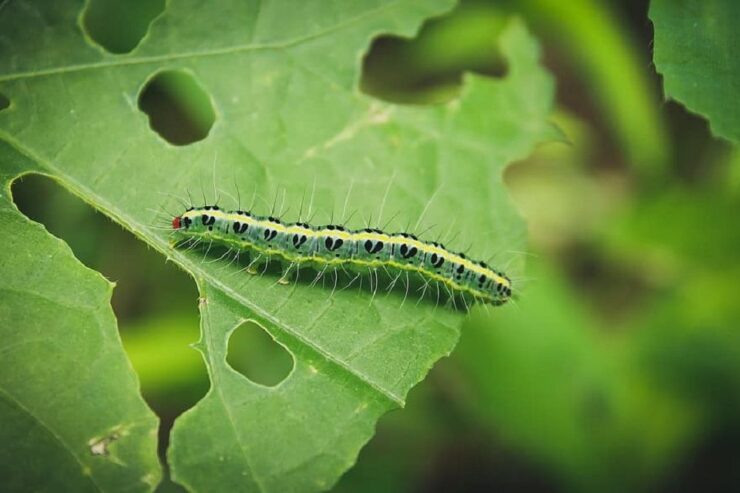
There are as many species of caterpillars as there are butterflies and moths. Most feed on leaves, and some even eat flowers and fruits.
A well-known type of green caterpillar is the Tomato Hornworm. Hornworms are blue-green in appearance with white stripes and a horn-like spine on their rear [1].
Hornworms eat a variety of vegetables and other plants. They will devour the leaves of tomatoes, peppers, spinach, tobacco, and other plants.
Understanding what caterpillars eat and drink helps gardeners protect plants.
Caterpillar Food Sources
Many people think caterpillars will eat anything green, but they actually have specific diets.
Plant Leaves
The primary food source for most caterpillars is leaves. Fresh, tender foliage provides the nutrients they need to grow rapidly during the larval stage.
Unlike most adult butterflies that sip nectar [2], caterpillars are chewing insects.
Young caterpillars usually start feeding on the same plant where their eggs were laid. This is no accident.
Female butterflies and moths thoughtfully choose host plants. These plants are essential for nourishing their young once they hatch.
Many caterpillars prefer soft new growth because it is easier to chew and contains more moisture. As they grow larger, they can handle tougher leaves and may consume entire sections of plants.
Some common host plants include milkweed, cabbage, parsley, dill, oak, willow, and tomato plants, depending on the species.
Specific Host Plants
One of the most fascinating facts about caterpillars is how picky many of them are. Certain species can survive to adulthood only on one type of plant.
For example, monarch caterpillars feed almost exclusively on milkweed [3, 4].
Black swallowtail caterpillars are drawn to plants in the carrot family. They particularly favor parsley, fennel, and dill.
Because of the close relationship between insects and plants, removing host plants from gardens can reduce butterfly populations.
Flowers, Buds, and Fruits
Although leaves are the main food source, many caterpillars expand their diet as they grow. Some species feed on flower petals, unopened buds, seeds, or developing fruits.
Gardeners often notice this behavior when caterpillars attack tomatoes, peppers, or ornamental flowers.
Flower-feeding caterpillars can also cause noticeable damage because they target the reproductive parts of the plant.
Budworms and hornworms are well-known examples that feed on flowers and fruiting plants.
Unusual Foods
Not all caterpillars follow the typical plant-eating lifestyle. Some species have surprisingly unusual diets.
Certain caterpillars feed on lichens, mosses, and even hair and fur instead of fresh leaves. Others may also eat fallen leaves on the forest floor.
Additionally, there are rare carnivorous caterpillars that feed on small insects, such as aphids or ant larvae. And in tropical regions, some caterpillars feed on algae growing on tree bark.
How Much Do Caterpillars Eat?
Caterpillars eat an astonishing amount relative to their size. Their main purpose during the larval stage is to grow as quickly as possible before transforming into adults.
Many caterpillars increase their body weight by hundreds of times within just a few weeks. To achieve this, they spend most of their time eating and resting.
They go through several growth stages called instars. After each stage, they shed their skin and continue feeding even more aggressively.
During peak feeding periods, a single caterpillar can skeletonize many leaves overnight.
What Do Caterpillars Drink?
Unlike mammals or birds, caterpillars do not drink water in the traditional sense. Instead, they get most of their hydration directly from the plants they eat.
Leaves contain a high water content, which provides enough moisture to meet their needs. Every bite provides both nutrients and hydration.
In some cases, caterpillars may absorb moisture from rain droplets, dew, or damp surfaces.
Do Caterpillars Eat at Night or During the Day?
Feeding habits vary depending on the species, but many caterpillars are most active at night. Night feeding helps them avoid predators such as birds, wasps, and lizards.
Gardeners sometimes wake up to severe plant damage even though they never saw insects during the day. The caterpillars were simply feeding under the cover of darkness.
During daylight hours, caterpillars often hide beneath leaves or along stems.
Their colors help them blend into the environment, keeping them safe from predators. Some species even mimic twigs or bird droppings to protect themselves [5, 6].
How to Stop Caterpillars from Eating My Plants?
Now that you know what they do, do you want them in your garden?
Below are some ways to not only get rid of any you might already have but also to prevent them from showing up.
Handpicking
The most natural and eco-friendly of all, this method requires a pair of gloves and a pail of soapy water.
Go out early in the morning, pluck them off your plants, and drop them into the pail. You can also knock them down and squish them.
Gloves are recommended because some caterpillars have hairs that can cause skin irritation. This is the best natural way to get rid of caterpillars.
Diatomaceous Earth (DE)
Another natural remedy. Placed around the base of your plants, diatomaceous earth will cut up the underside of any caterpillar that walks on it.
Sprinkle the powder on leaves, around plants, and on the pests themselves. You can also make a spray out of it.
Garden Clean Up
The eggs of many butterflies and moths overwinter under leaf litter and other garden debris. Therefore, it’s best to clean this up and remove other garden debris.
Destroying weeds also helps. Moreover, some natural predators eat caterpillars.
For more tips on how to eliminate these pests from your garden, read 11 Natural Ways to Get Rid of Caterpillars on Plants.
Takeaway
Green caterpillars are pests. Plus, other types, such as the woolly bear caterpillar and the monarch caterpillar, can cause damage, too.
Unfortunately, it’s a choice between your garden and these critters. Therefore, knowing what they eat and how to spot them will go a long way in saving your garden.



Add comment