

 Sasha Campbell
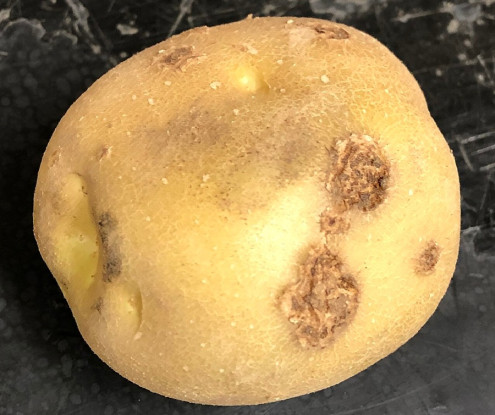
Potato scab is a tuber disease that causes dark brown, pithy patches on potato tubers. If left unchecked, it can lead to significant economic losses due to reduced yields.
The good news is that there are natural ways to treat and prevent potato scab in your garden. Before the problem gets out of hand, take action now.
Symptoms of Potato Scab
The main signs of potato scabs are spots, pits, and scaly patches on the potato skin [1]. The scabs themselves are usually tan to brown.
As the spots get bigger, they become raised and rough. Infected potatoes develop a scabby, crusty appearance.
Scabs on potatoes don’t usually go deep, except in severe cases, so you can eat the potatoes after cutting away the infected parts. The inside is fine.
Affected Crops
Certain potato varieties are less prone to scab than others. Varieties like Russet Burbank, Norland, and Superior tend to be less susceptible.
Potatoes with thin skin are more likely to be affected. Other root vegetables, such as parsnips, beets, turnips, rutabagas, carrots, and radishes, can also be affected by potato scab.
How to Get Rid of Potato Scab Naturally
By taking simple precautions, you can prevent this disease and grow flawless potatoes in your garden. Staying ahead of the problem is key, so start planning now for your next potato crop.
1. Crop Rotation
Crop rotation is one of the most effective ways to prevent potato scab organically. Every few years, rotate your potato crop to a different area of your garden.
Potatoes and other nightshade plants can carry the fungus that causes powdery scab. So, don’t plant tomatoes, peppers, or eggplants in that area either.
Instead, plant crops like beans, broccoli, cabbage, carrots, cucumbers, lettuce, spinach, or Swiss chard in the year after potatoes.
These unrelated plants will not host the scab fungus. This helps eliminate it from the soil before you plant potatoes again.
2. Do Not Overwater
When soil is constantly soggy, it creates the perfect environment for powdery scab to thrive.
Overwatering your potato plants can also lead to misshapen tubers. Therefore, manage soil moisture levels properly through controlled watering.
3. Cover Crops
Planting a cover crop, like mustard, before potatoes can help prevent common scab.
As the cover crop grows, it acts as a biofumigant. This creates unfavorable conditions for the bacteria that cause scab.
When the cover crop is tilled into the soil, it also adds organic matter that feeds beneficial soil microbes.
Good bacteria defend against pathogens. They help lower the chances of infection.
4. Keep the Soil Moist During Tuber Formation
Keeping the soil consistently moist is critical once the potato plants start forming tubers.
A high level of soil moisture encourages bacterial growth. This may crowd out Streptomyces scabiei on the potato.
5. Keep the Soil Slightly Acidic
Keep the soil slightly acidic, with a pH of 5.5 to 6.5.
Potatoes prefer slightly acidic soil. Besides, the ideal soil conditions for potato scab are dry, alkaline soil.
You can test your soil’s pH with an inexpensive soil pH tester. If it is too alkaline, add some gardening sulfur according to the package directions.
Some other natural ways to lower the pH and increase soil acidity include adding compost or peat moss.
The slight acidity creates an environment that is less favorable to the disease.
6. Keep the Planting Area Free of Invasive Weeds
It’s also essential to keep your planting area free of invasive weeds that can serve as hosts for potato scab.
Weeds may also compete with your potato plants for water, nutrients, and space.
Weeds also provide shelter for pests such as aphids, leafhoppers, and flea beetles. The pests may damage your potato plants.
Moreover, removing weeds from around plants will promote better growth and yield in your crop. Therefore, stay on top of weeding, especially early in the growing season.
7. Molasses
Blackstrap molasses contains fatty acids that destroy pathogens that cause scab in potatoes. It is believed that the molasses will encourage the growth of beneficial bacteria, which may help outcompete scab.
To use molasses as a preventative treatment, mix 1 cup of molasses with 5 gallons of water. When planting the potatoes, sprinkle this homemade solution on the soil beneath them.
Repeat this process a few more times as they grow.
Moreover, you can use molasses as a plant fertilizer. It can be incredibly beneficial for growing healthy plants. It also helps keep pests at bay.
8. Cueva Fungicide
This is an organic copper-based fungicide that can help prevent and treat potato scab.
Cueva Fungicide Concentrate works in two different ways.
First, it helps the copper (the active ingredient) enter the fungal or bacterial cells. Copper destroys the pathogenic cell once it has entered.
It also protects plants from further damage or reinfection.
Takeaway
So there you have it: some of the best natural ways to prevent and treat potato scabs in your garden.
The key is to keep your soil healthy and balanced and avoid overwatering. Also, rotate where you plant your potatoes each year and consider growing scab-resistant varieties.
Give some of these home remedies and natural methods a try!



Add comment