

 Sasha Campbell
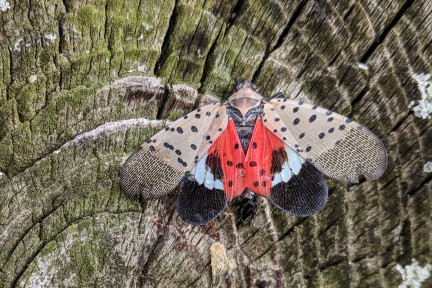
In recent years, spotted lanternflies have spread to many parts of the United States. They were first detected in Pennsylvania in 2014 and have become a serious invasive pest [1].
At first, you might think they are butterflies or moths because they look attractive. But don’t let their looks fool you! These insects can damage certain plants, especially grapevines.
They can also become a major nuisance when large numbers gather around homes and yards. As a result, learning how to get rid of them is crucial.
Spotted lanternflies feed on many kinds of plants, including grapevines, fruit trees, ornamental plants, and hardwood trees. Large numbers can weaken some plants, and grapevines are especially at risk.
As spotted lanternflies feed, they produce a sticky liquid called honeydew [2]. It can coat plants and objects below them. Honeydew can also attract ants, bees, and wasps and cause black sooty mold to grow.
Some birds, spiders, praying mantises, and other predators eat spotted lanternflies. However, these natural predators are not known to control large infestations on their own.
How to Get Rid of Spotted Lanternflies Naturally
Several natural, biological, and non-chemical methods can help control spotted lanternflies. Some involve pesticide products, so always follow the product label carefully.
1. Scrape Off the Eggs
Female spotted lanternflies begin laying eggs in late summer and may continue into early winter. Most egg masses are laid in the fall.
Each egg mass usually contains about 30 to 50 eggs [3]. A female can lay more than one egg mass.
The eggs look like gray or tan patches of dried mud. You may find them on tree bark, fences, walls, outdoor furniture, and other hard surfaces.
To get rid of spotted lanternfly eggs, use a scraper or any other flat-edged tool to scrape them off.
Scrape the eggs into a plastic bag or container with rubbing alcohol or hand sanitizer. Seal it tightly and place it in the trash.
2. Insecticidal Soap
Insecticidal soap can kill spotted lanternfly nymphs and adults when the spray touches them. Choose a product labeled for use on the plants you want to treat, and always follow the label directions.
3. Vacuum Them
A vacuum can help remove spotted lanternflies when many gather around your home, porch, or other easy-to-reach areas.
After vacuuming, make sure the insects are dead before disposing of them. Any live insects can be dropped into a container of soapy water.
4. Control the Tree of Heaven
Tree-of-heaven (Ailanthus altissima) is a favorite host of spotted lanternflies [4].
Removing it may help reduce feeding sites.
However, simply cutting down a tree-of-heaven can cause new shoots to grow from its roots. Use a proper tree-of-heaven removal method instead of just cutting the tree down.
5. Hand-Picking and Stomping
Spotted lanternflies are often easy to spot on trees, fences, and other outdoor surfaces.
Although they can jump quickly, they usually jump a few times before flying away. This makes it possible to catch or crush them.
Wear gloves and drop them into a bucket of soapy water. You can also step on them.
Killing the nymphs and adults you find can help reduce their numbers around your property. This is especially helpful in small yards and gardens.
6. Inspect Outdoor Items
Spotted lanternflies can lay eggs on many hard surfaces. Check outdoor furniture, grills, vehicles, trailers, firewood, tools, and other items before moving them.
Scrape off and destroy any egg masses you find. This is especially important when moving items out of an area where spotted lanternflies are common.
7. Neem Oil
Some neem-based insecticide products may be used against spotted lanternflies. If you choose one, use a product labeled for the plants you are treating and follow all label directions.
Do not assume that a homemade neem spray will work the same way as a tested commercial product.
8. Horticultural Oil
Horticultural oil may help kill spotted lanternfly eggs that are difficult to scrape away.
The oil must cover the egg mass well to work. However, scraping or crushing egg masses you can easily reach is usually more effective.
Choose a horticultural oil product labeled for this use and follow all label directions. Oil sprays can damage some plants, so check the label before spraying.
9. Sticky Wraps
Sticky wraps can catch spotted lanternfly nymphs as they crawl up tree trunks to reach the leaves.
However, sticky bands can accidentally trap birds, butterflies, helpful insects, and other animals. If you use them, place a raised mesh or window-screen guard around the sticky surface.
Sticky bands can catch many nymphs, but they will not eliminate an infestation. Check the bands often and replace them when needed.
You can purchase sticky bands at many garden centers or online.
10. Circle Traps
Circle traps are a useful non-chemical method for catching spotted lanternflies, especially young nymphs.
The traps are installed around tree trunks. These traps work because spotted lanternflies naturally crawl up tree trunks to find food.
As the lanternflies crawl upward, the trap guides them into a bag or container that they cannot easily escape.
Unlike sticky bands, circle traps are less likely to capture birds, butterflies, and other beneficial wildlife.
You can get commercial circle traps or create your own. For a homemade lanternfly trap, use screening, wire or cable, and a collection bag.
This DIY method is often called an SLF circle trap. This video demonstrates a more professional approach.
11. Encourage Natural Predators
Various animals have been seen feeding on spotted lanternflies. These predators can kill some nymphs and adults naturally.
Birds such as chickens, turkeys, and some wild songbirds may eat spotted lanternfly nymphs and adults. Praying mantises, spiders, wheel bugs, and certain predatory insects have also been seen feeding on them.
You can encourage these beneficial predators by avoiding broad-spectrum pesticides. You can also plant a variety of native plants and maintain a habitat that supports wildlife.
Natural predators will not eliminate a spotted lanternfly infestation. Still, protecting these helpful animals can be part of a healthy garden pest-control plan.
12. BioCeres EC
BioCeres EC is a biological insecticide that contains Beauveria bassiana, a naturally occurring fungus that can infect and kill spotted lanternflies.
When the insects come into contact with the fungus, its spores attach to their bodies. The fungus then grows and eventually kills them.
BioCeres EC is labeled for use against spotted lanternflies and can be used as part of a pest-control plan.
For the best results, follow the product label carefully. Proper coverage, timing, and weather conditions can affect how well biological insecticides work. Always follow the label directions for where, when, and how much product to apply.
Report Spotted Lanternflies in New Areas
If you find a spotted lanternfly in an area where it has not been reported before, report it to your state agriculture department or local Cooperative Extension office.
Take a clear photo and write down where and when you found it. If possible, safely collect the insect so officials can identify it.
You should also check nearby trees, outdoor furniture, fences, vehicles, and other hard surfaces for spotted lanternflies or their egg masses.
Reporting new sightings can help officials find new infestations early and slow the spread of this invasive pest.
Takeaway
You may not be able to remove every spotted lanternfly from your property, but you can greatly reduce their numbers.
Scrape away egg masses, kill nymphs and adults when you find them, use circle traps, and manage tree-of-heaven carefully.
Also check vehicles and outdoor items before moving them. This helps stop spotted lanternflies from spreading to new areas.
For large infestations, contact your local Cooperative Extension office for advice.




Thank you! Very helpful