

 Sasha Campbell
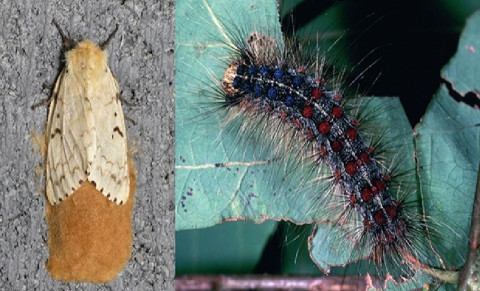
During an outbreak, gypsy moth caterpillars will feed on many different trees and shrubs [1].
The caterpillars can also wreak havoc on other plants and become an annoyance in your yard. However, there are many natural and eco-friendly remedies to help control them.
How to Get Rid of Gypsy Moths Naturally
1. Yard Clean-Up
Begin with a good yard clean-up, disposing of any dead branches. Also, clear away twigs and cut back tree stumps.
Adult female moths lay their eggs in this kind of debris, so keeping a clean yard will help prevent an infestation.
The eggs are laid in masses, and those masses can contain hundreds of eggs [2]. You may spot these during cleanup.
2. Spinosad
This commercial spray works on the nervous systems of certain insects. It causes paralysis, killing them in 1 to 2 days.
Spinosad is safe to use in the organic garden, but it is toxic to bees. Therefore, follow the package instructions for proper application.
3. Soap and Water
A little soap-and-water solution is a great home remedy for many pest problems.
Once you’ve spotted these caterpillars, make up a bucket of dish soap and water. Next, put on some gardening gloves and collect the caterpillars and egg masses that you see on the trees.
Throw them (eggs and all) into the soapy water. The solution will suffocate them and kill them.
You can also make a DIY gypsy moth caterpillar spray by combining 5 tablespoons of dish soap with a gallon of water.
Spray this homemade soapy water solution directly on the critters. The caterpillars that are completely soaked in the solution will eventually die.
4. Bacillus thuringiensis (Bt)
Bacillus thuringiensis will kill caterpillars when they ingest it. However, the product should be applied according to the label instructions.
You’ll likely achieve the best results by spraying when caterpillars are young.
Spray BT in the cool of the evening to avoid direct sunlight, as it degrades in the sun. Apply once you spot the caterpillars.
It may also require repeated applications, but expect to see results after a couple of weeks. BT is slow-acting but effective.
5. Scrape Off Egg Masses
Gypsy moth egg masses are covered in hair. Therefore, wear gloves to scrape them off the fuzzy eggs, as the hairs can be irritating.
Also, avoid scraping egg masses onto the ground, where they may survive. Instead, put them in a container of soapy water to soak for about two days.
Dispose of them afterward.
6. Horticultural Oil
You can also use horticultural oil for gypsy moth eggs, especially if the egg masses are hard to reach.
Purchase this as a ready-to-use spray and apply it according to the instructions that come with the product.
Horticultural oil is a multi-use product for dealing with a host of pest problems. Use a bottle sprayer to apply it to the infested area.
However, ensure you spray thoroughly, even into crevices. The spray needs to make direct contact with the moth eggs to be effective.
7. Scentry Gypsy Moth Trap & Lures
Adult moths are not the cause of the defoliation of trees. But these traps can help limit the breeding stage and reduce egg production.
The traps are baited with pheromone lures for the best results. These traps and lures have been produced especially to help control the gypsy moth population.
For assembly, follow the instructions that come with your purchase. Hang them in the trees when the pests are active.
8. Molt-X
This product is an effective knockdown spray. It contains 3% azadirachtin, a chemical compound derived from the neem tree seed.
Molt-X is not neem oil, so it doesn’t have fungicidal properties. However, its triple action slows insect feeding, disrupts molting, and acts as an insect repellent.
You can use it as a foliar spray or as a soil drench for potted plants and trees. Moreover, it will not leave a residue on flowers or leaves.
Molt-X is also suitable for indoor, greenhouse, or outdoor use.
9. Bug Buster-O
Another effective knockdown spray; this natural pesticide contains pyrethrins.
Therefore, Bug Buster-O is safe to use on almost any plant—vegetables, fruit trees, herbs, flowers, and ornamentals.
Follow the instructions that come with your purchase for using it.
10. Trichogramma Wasps
Using beneficial insects as part of an organic pest control system is an increasingly popular way to address pest problems.
Trichogramma wasps are small wasps that parasitize moth eggs. They lay their eggs inside the eggs of these pests. When the Trichogramma egg hatches, the larva feeds on the host egg, killing it.
You can purchase these moth egg parasites from various suppliers and release them according to the package instructions.
Moreover, these parasitic wasps control other pests, including cutworms, borers, and armyworms.
11. Birds
This is another natural gypsy moth control method—and an attractive one.
Some birds will eat any pest larvae they encounter while feeding on seeds. So, planting attractive plants like sunflowers can help bring birds to the garden.
Additionally, set up a bird feeder on the lawn. This may attract orioles, black-billed cuckoos, blue jays, and chickadees to feast on unwanted moth larvae.
A water fountain can also help bring the birds to the feast.
12. Cover Woodpiles
In the summer and fall, woodpiles that are normally used as firewood in the winter are attractive places for female spongy moths to lay egg masses.
Therefore, covering woodpiles with tarpaulins or a similar material will help keep these pests away.
13. Vinegar
Vinegar can be used to control many pests and insects that threaten plants. These caterpillars will die within hours of coming into contact with vinegar.
Therefore, make a spray by adding 1 part vinegar to 3 parts water and a few drops of dish soap. This spray works well on caterpillars and other pests.
14. Neem Oil
Another remedy worth considering is neem oil. You can use it to kill and repel pests of all kinds. It can be purchased as a concentrate and used to coat plants, pests, and their eggs.
Takeaway
Gypsy moths (spongy moths) were accidentally released in North America in 1869 [3]. Since then, they have spread and infested many areas of the United States.
Healthy trees can withstand a season of damage. However, take precautions and apply the natural treatments above to prevent a gypsy moth infestation.



EXCELLENT! Thank you. All but the Spinosad. I have found that people will take the quick way and think that the bees will not suffer.
But it is in the arsenal against gypsy moths.
I am promoting bee population by encouraging the growth of snowdrops (or are they bells). Two weeks ago, the snowdrops were attracting bees. In this weather! In NJ.
I am glad that this is your dilemma and not mine. All the best.
What keeps chipmunks out of flower beds?
Try these suggestions: https://drecampbell.com/natural-ways-get-rid-chipmunks/