

 Andre Campbell
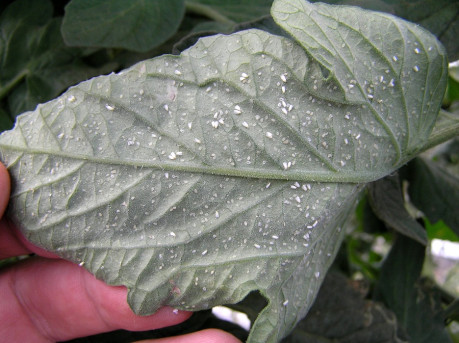
Whiteflies can quickly become a problem on garden plants and houseplants. These tiny insects suck sap from leaves. When you disturb an infested plant, the adults often fly into the air like a small white cloud [1].
Whiteflies attack hundreds of plant species. These include tomatoes, peppers, cucumbers, sweet potatoes, hibiscus, citrus, and many houseplants.
Large infestations may cause yellow leaves, weak growth, leaf drop, and poor harvests. Whiteflies also leave behind a sticky liquid called honeydew. Black sooty mold may grow on this sticky coating.
Some whiteflies can also spread plant diseases. It is best to begin treatment as soon as you notice them.
How to Get Rid of Whiteflies Naturally
The best way to control whiteflies is to use several methods together. Check your plants often and pay close attention to the undersides of the leaves.
1. Inspect and Isolate New Plants
Check new plants before bringing them into your home, greenhouse, or garden.
Look beneath the leaves for:
- Tiny white flying insects
- Pale yellow eggs
- Flat, oval young whiteflies
- Sticky honeydew
- Black sooty mold
Keep new houseplants away from your other plants for at least two weeks. Check beneath the leaves several times during this period.
If you find whiteflies, treat the plant before placing it near healthy plants.
If one of your houseplants already has whiteflies, move it away from the others. This may help keep the pests from spreading.
2. Hose Them Off
A strong stream of water can knock many adult whiteflies and some young whiteflies off sturdy plants.
Rinse a houseplant in a sink, bathtub, or shower. If you take it outdoors, keep it away from healthy garden plants.
Spray the tops and undersides of the leaves early in the day. Avoid using a forceful spray on tender plants.
Water may not remove all the eggs because the eggs are attached to the leaves. Repeat this treatment every few days and combine it with another control method.
The University of California recommends water sprays as one part of a whitefly control plan [2].
3. Vacuum Adult Whiteflies
A small handheld vacuum can remove many adult whiteflies.
Whiteflies are less active early in the morning and when the weather is cool. Gently shake the plant so the adults fly up. Hold the vacuum near the plant to catch them.
Be careful around young or tender leaves. The vacuum may damage them if the nozzle gets too close.
After vacuuming, empty the contents into a sealed bag. Place the bag in the trash.
Vacuuming will not remove all the eggs or young whiteflies. Use it with leaf cleaning, pruning, or another treatment.
4. Wipe the Leaves
You can remove whitefly eggs and young whiteflies by wiping the leaves.
Dampen a soft cloth with water. Carefully wipe the tops and undersides of the leaves. Pay close attention to the areas near the leaf veins.
This method works best on houseplants and small garden plants. Check the plant again after a few days and repeat if needed.
5. Remove Heavily Infested Leaves
Cut off leaves that are covered with whitefly eggs, young whiteflies, honeydew, or sooty mold.
Place the leaves in a bag and throw them in the trash. Do not leave them on the ground near your plants.
Avoid removing too many leaves at once. Plants need healthy leaves to make food and continue growing.
When an annual plant has finished producing flowers or food, remove it if it is badly infested. This can stop whiteflies from moving to nearby plants.
6. Use Yellow Sticky Traps
Yellow sticky traps attract adult whiteflies. When the insects land on the traps, they become stuck.
Place the traps close to the tops of infested plants. Raise the traps as the plants grow.
Sticky traps help you find whiteflies early. They may also reduce the number of adults, especially in greenhouses and around houseplants.
However, traps will not kill the eggs or young whiteflies feeding beneath the leaves. They should not be your only treatment. Colorado State University notes that much of the whitefly population remains on the plant [3].
Keep traps away from flowers when possible. Helpful insects may also become stuck on them.
7. Apply Insecticidal Soap
Commercial insecticidal soap can kill soft-bodied pests such as whiteflies.
The spray must touch the insects to work. Spray the tops and undersides of the leaves well. Repeat the treatment according to the product label.
Test the product on a few leaves first. Wait at least 24 hours and check for damage before spraying the entire plant.
Do not spray plants that are dry, wilted, or stressed. Avoid treating plants during the hottest part of the day.
Commercial insecticidal soap is safer for plants than many homemade soap mixtures. Dishwashing liquid and household detergents may burn leaves because they are not made for plant care.
8. Use Neem Oil
Neem oil may help control young whiteflies. It may also reduce feeding, growth, and egg-laying.
Neem oil must cover the pests to work well. Spray beneath the leaves, where whitefly eggs and young whiteflies are usually found.
Neem products come in different strengths. Mix and apply the product according to its label. Do not use one recipe for every brand.
Test the spray on a small part of the plant first. Do not spray in hot, sunny weather or on dry and stressed plants. Avoid spraying open flowers when bees and other pollinators are visiting.
Once the whiteflies are under control, gently wash the honeydew and sooty mold from the leaves. The mold may return if whiteflies continue to produce honeydew.
9. Protect Natural Predators
Many helpful insects eat whiteflies or their eggs. These include lacewing larvae, ladybugs, spiders, and some tiny parasitic wasps.
Avoid insecticides that kill many kinds of insects. These products may also kill the helpful insects that control whiteflies.
Grow small flowers near your garden to provide nectar and pollen. Good choices include sweet alyssum, dill, cilantro, and yarrow.
Helpful insects are also available for purchase. However, choose a predator that matches the type of whitefly and your growing area.
Purchased ladybugs may fly away after they are released. Lacewings and parasitic wasps are often better choices in greenhouses.
10. Release Encarsia formosa
Encarsia formosa is a tiny parasitic wasp used to control certain whiteflies. It is especially useful against greenhouse whiteflies.
The female wasp lays an egg inside a young whitefly. The developing wasp feeds inside the pest and kills it.
These wasps work best in greenhouses and other protected spaces. Release them early, while whitefly numbers are still low. They may not control every type of whitefly.
The University of California reports that Encarsia formosa attacks greenhouse whiteflies and certain other whitefly species [4].
Avoid spraying insecticides after releasing helpful insects unless the product label says it can be used with them.
11. Plant French Marigolds
One study found that French marigolds helped slow the growth of greenhouse whitefly populations on tomato plants [5].
Plant the marigolds between or near tomato plants before whiteflies become a serious problem.
Marigolds will not remove an infestation that is already large. Use them with sticky traps, water sprays, pruning, or another proven treatment.
There is not enough evidence to show that basil, mint, thyme, or chives provide dependable whitefly control. You can still grow these herbs, but do not rely on them to protect your plants.
12. Install Reflective Mulch
Reflective mulch has a shiny surface that bounces light upward. This light can make it harder for adult whiteflies to find young plants.
Place silver reflective mulch over bare soil before planting. Cut small holes for seeds or seedlings. If you use plastic mulch, install drip irrigation beneath it.
Reflective mulch works best early in the season, before whiteflies arrive. It becomes less useful when large plants cover the shiny surface.
Remove the mulch if it makes the soil or plants too hot. Research shows that reflective mulch can reduce the number of whiteflies reaching young crops [6].
13. Keep Plants Healthy
Healthy plants may handle light whitefly feeding better than weak plants.
Give each plant the right amount of water, sunlight, and space.
Avoid giving plants too much fertilizer that is high in nitrogen. Too much nitrogen can produce lots of soft, tender growth. This new growth may attract sap-sucking pests.
Worm castings can provide nutrients and improve the soil. However, worm castings do not directly kill or remove whiteflies. Do not depend on them as a whitefly treatment.
14. Control Ants
Whiteflies produce sweet, sticky honeydew. Ants feed on it and may protect whiteflies from their natural enemies.
Watch for ants moving up and down infested plants. Use barriers or ant baits labeled for your growing area.
Do not place sticky material directly on tree bark. It may damage the bark. Wrap the trunk with a safe tree wrap first. Apply the sticky barrier to the wrap.
Reducing ants can make it easier for ladybugs, lacewings, and parasitic wasps to reach the whiteflies.
Organic Products for Whitefly Control
Some purchased products can be used in organic gardening. However, “organic” does not mean that a product cannot harm plants, helpful insects, pets, or people.
Always read and follow the complete label.
Molt-X
This product contains azadirachtin, a compound taken from neem seeds.
Molt-X is not the same as ordinary neem oil. It contains a measured amount of azadirachtin, one of the active compounds found in neem seeds.
It interrupts the growth and molting of young insects. Molt-X may also reduce feeding and egg-laying. It does not provide quick control of adult whiteflies.
Apply it early, before the infestation becomes severe. Use it only on plants and crops listed on the label. Follow the mixing, timing, and safety directions carefully.
JMS Stylet-Oil
JMS Stylet-Oil is a refined horticultural oil. It coats and smothers whiteflies and certain other soft-bodied pests.
The oil must touch the pests to work. Good coverage beneath the leaves is important.
Check the label to make sure your plant and intended use are listed. Do not use horticultural oil on dry, wilted, or heat-stressed plants.
Horticultural oils may damage plants when used too close to sulfur treatments. Follow all label warnings.
Whitefly Remedies to Avoid
Do not use dish detergent, strong soap, vinegar, bleach, or rubbing alcohol on garden plants. These mixtures may burn or dry out the leaves.
Diatomaceous earth is not a dependable whitefly treatment. Whitefly eggs and young whiteflies stay beneath the leaves, where the powder is hard to apply. The dust may also harm helpful insects and irritate your eyes and lungs.
Garlic sprays may discourage a few adult whiteflies for a short time, but they do not provide dependable control. Strong homemade garlic and oil mixtures may also damage sensitive leaves.
Birds may eat an occasional whitefly, but they will not control a large infestation.
Takeaway
Whiteflies can weaken vegetables, fruit trees, ornamental plants, and houseplants. They may cause yellow leaves, sticky honeydew, sooty mold, and poor plant growth.
Begin treatment as soon as you see them. Inspect new plants, remove badly infested leaves, spray sturdy plants with water, and use yellow sticky traps to catch adults.
For better results, use two or more methods together. You might combine water sprays and sticky traps with insecticidal soap, labeled neem oil, reflective mulch, or helpful insects.
Check beneath the leaves every few days. Repeat treatments as directed until whitefly numbers are under control.

 Sasha Campbell



Great ideas! Especially: to use a combination of methods. And using them in conjunction with natural predators. Thank you!
What kind of vinegar do you use?????
Regular, white vinegar.
I want to get rid of white fly on my swan plants, but not kill Monarch caterpillars. What can I use, please?