

 Sasha Campbell
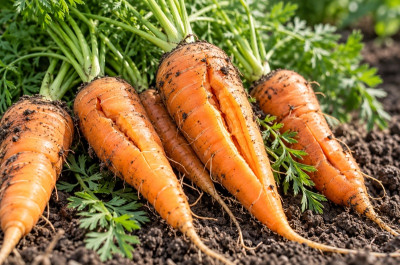
Have you ever pulled a carrot from your garden and found a large crack running down its side? You may even find carrots that have split wide open.
This can be disappointing, especially after spending weeks caring for your plants.
The good news is that carrots splitting while growing is a common problem. It often happens when the roots grow too quickly after a sudden change in soil moisture.
However, other growing conditions may also play a part.
So, why do carrots split and crack while growing, and how can you prevent it? Let’s look at the common causes and simple ways to grow healthier carrots.
Why Do Carrots Crack and Split While Growing?
Carrots usually crack when the inside of the root grows faster than its outer layer can stretch.
This often happens when dry soil suddenly becomes very wet. The carrot takes up water, grows quickly, and may split open.
According to the Royal Horticultural Society, sudden changes in water supply are the main cause of splitting in root vegetables [1].
Some cracks are small, while others run deep into the root.
Here are four factors that may increase the risk of cracked carrots.
1. Uneven Watering
Uneven watering is one of the main reasons carrots split.
When the soil becomes very dry, carrot growth slows down. If you suddenly add a lot of water, the roots may begin growing quickly again.
This fast growth can cause the outer layer to crack.
The problem is more common when carrots go through repeated periods of dry and wet soil.
2. Heavy Rain After Dry Weather
Even if you water your carrots carefully, heavy rain can sometimes cause them to crack.
After a long dry spell, a sudden downpour can soak the soil. The carrots may take up water and begin growing quickly again.
If the inside of a carrot grows faster than its outer layer can stretch, the root may split.
This is especially a problem when the soil has been very dry for several days or weeks.
3. Leaving Carrots in the Ground Too Long
Carrots that grow too large may be more likely to split, especially when soil moisture changes suddenly. Older carrots can also become tough, woody, or less sweet.
However, carrots do not always crack when left in the ground. Some varieties can stay in cool soil for weeks after they are ready to harvest.
For the best results, check your seed packet and harvest your carrots when they reach a good size.
4. Carrot Variety
Not all carrots grow the same way. Some varieties produce long, thin roots, while others grow short and thick.
Certain varieties may be more likely to crack when growing conditions are stressful. Larger-rooted types can be more at risk because they may take up more water.
If your carrots split often, even with steady watering, the variety may be part of the problem.
Try growing a different type next season and compare the results.
How to Prevent Carrots From Splitting and Cracking
You cannot control every rainstorm, but you can take steps to reduce the risk of cracked carrots.
Here are seven simple ways to protect your crop.
1. Water Your Carrots Consistently
Keeping the soil evenly moist is one of the best ways to prevent carrots from cracking.
As a starting point, carrots generally need about 1 inch of water each week, including rain. They may need more during hot, dry weather.
Check the soil before watering. It should feel slightly moist a few inches below the surface, not soggy or bone dry.
Water slowly so moisture can reach the growing roots.
West Virginia University Extension recommends steady watering throughout the growing season. It also warns that letting carrots become very dry and then adding too much water can cause splitting [2].
2. Add Mulch Around Your Plants
Mulch helps keep moisture in the soil. It also reduces how quickly the ground dries out during hot weather.
Spread a light layer of clean straw, shredded leaves, or another suitable organic mulch around your carrots.
Keep the mulch loose and avoid burying young seedlings. As the mulch breaks down, it can also add organic matter to your soil.
3. Prepare the Soil Before Planting
Carrots grow best in loose, well-drained soil.
Before planting, loosen hard, packed soil and remove large stones.
If your soil contains a lot of clay, adding finished compost may help improve its structure over time.
Avoid adding fresh manure just before planting carrots. It may lead to poorly shaped roots.
Raised beds are another option if your garden soil is very hard or drains poorly.
Good soil preparation mainly helps prevent carrots from becoming bent, short, or forked rather than directly preventing cracks.
4. Avoid Using Too Much Fertilizer
Carrots need nutrients to grow healthy roots. However, too much nitrogen can encourage leafy growth instead of good root growth.
Excess nitrogen may also increase the risk of splitting, although sudden changes in soil moisture are the main cause.
Test your soil if possible, and only add fertilizer when needed.
5. Harvest Carrots at the Right Time
Check your seed packet to learn how long your carrot variety takes to mature. Many carrots are ready in about 60 to 80 days, although some varieties need more or less time.
You can gently brush soil away from the top of a carrot to check its width. Harvest your carrots when they reach a suitable size for their variety.
Do not rely on root length alone, since carrots can grow differently depending on the soil.
6. Choose Suitable Carrot Varieties
If splitting happens every season, try growing a different carrot variety.
Choose carrots suited to your climate, soil, and growing season. Short-rooted types, such as Chantenay, are often useful in heavier or shallower soils.
Some varieties are also sold as being less likely to split. However, no carrot variety is completely safe from cracking when soil moisture changes suddenly.
7. Watch Soil Moisture After Heavy Rain
You cannot stop heavy rain, but you can help your garden drain properly.
Avoid planting carrots in areas where water collects for long periods. Use raised beds when needed and make sure excess water can drain away.
After heavy rainfall, check the soil before watering again. Wait until the soil needs more moisture.
This helps prevent the roots from sitting in waterlogged ground.
Split Carrots vs. Forked Carrots: What’s the Difference?
Split and forked carrots may look similar, but they are not the same problem.
Forked carrots have two or more roots growing from the same carrot. This can happen when the growing root tip is damaged or its growth is disturbed.
Split carrots have cracks running along the root. This often happens when the soil becomes very wet after a dry period.
Hard soil, stones, and other objects can sometimes cause roots to grow in unusual shapes. Fresh manure may also increase the risk of poorly shaped roots.
Iowa State University Extension explains that hard, packed soil can cause forked or twisted carrots, while uneven moisture can cause roots to split or crack [3].
Knowing the difference can help you find the right solution for your garden.
Can You Eat Carrots That Have Split?
Yes, carrots with small cracks are often safe to eat if they are fresh and show no signs of spoilage.
A crack does not always mean the carrot has gone bad. However, cracks can collect dirt and allow germs to enter.
Wash the carrot well under running water and check the damaged areas. Cut away small, shallow cracks if the rest of the carrot is firm and looks healthy.
Throw away carrots that are moldy, slimy, rotten, or badly damaged. If a deep crack is dirty inside and cannot be cleaned well, it is safer to throw the carrot away.
The U.S. Food and Drug Administration advises washing fresh produce under running water, cutting away damaged areas, and throwing away produce that looks rotten [4].
You can use carrots with minor cracks in soups, stews, and other cooked dishes.
Will a Split Carrot Heal Itself?
A carrot may form a protective layer around a crack, but the split will not close and return to its original shape.
Once a carrot cracks, the damage is usually permanent.
If the carrot is mature and otherwise healthy, you can harvest it rather than leave the damaged root in the soil.
This may help prevent further damage from pests or decay.
Takeaway
So, why do carrots split and crack while growing?
The most common reason is uneven soil moisture, especially when heavy rain follows dry weather. Other factors, such as carrot variety, root age, and growing conditions, may also play a part.
The best way to prevent cracked carrots is to keep the soil evenly moist, improve drainage, and harvest at the right time.
Even experienced gardeners sometimes grow split carrots. A few cracks do not mean your entire crop has failed.
With steady care, your next harvest may produce smoother, healthier roots.




[…] and peas add nitrogen to the soil, improving carrot growth. However, too much nitrogen can cause carrot roots to split and become hairy, so plant these companions […]