

 Sasha Campbell
Your squash plant has bright yellow flowers, but you do not see much squash. You may wonder whether something is wrong. Before you worry, take a closer look at the blooms.
A squash plant usually grows both male and female flowers. They look alike at first, but each has a different job. Male flowers provide pollen. Female flowers can grow into squash.
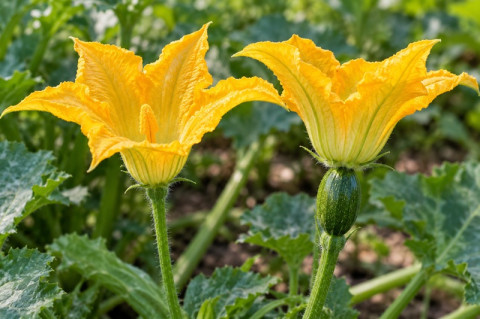
So, how do you spot a male or female squash flower? Look beneath the petals. A male flower has a narrow stalk. A female flower has a swelling that looks like a tiny squash.
Knowing the difference helps you check your plants, understand fallen blooms, and decide whether to try hand pollination.
How to Identify Male and Female Squash Flowers
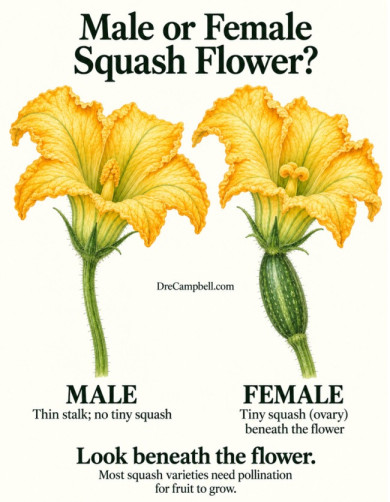
The infographic shows both flower types side by side. Look beneath the petals to spot the difference.
You can use this clue with zucchini, yellow squash, pumpkins, and other squash plants. The small swelling beneath a female bloom may look long, round, or curved, depending on the variety.
What Does a Male Squash Flower Look Like?
A male squash flower has no tiny squash below its bloom. Its yellow petals may look much like those of a female flower.
Inside, you will see a central part that carries pollen. This yellow powder must reach a female flower for most squash varieties to produce fruit.
Male flowers cannot grow into squash. However, they supply the pollen that helps your plant produce a crop.
What Does a Female Squash Flower Look Like?
A female squash flower has a small swelling directly beneath its petals. This part is called the ovary. It is the part that can grow into a squash.
Inside the bloom, you will find the stigma. This is the part that receives pollen.
The tiny squash is there before the flower opens. Seeing it does not mean the flower has been pollinated. Most varieties still need pollen for the fruit to keep growing [1].
Why Does My Squash Plant Have Only Male Flowers?
Many squash plants grow male flowers before female flowers appear. If your plant has just started blooming, give it time.
Check new blooms as they open. Watch for the small swelling that marks a female flower.
Do not pull up a healthy plant just because its first flowers produce no squash. Early male blooms are normal for many varieties.
However, plants do not all follow the same schedule. The variety, weather, and growing conditions can affect which flowers appear.
If your plant keeps producing mostly male flowers, check its sunlight and the weather. Too little light and very hot conditions can affect the mix of blooms.
Keep caring for your plant while you watch for changes. A few flowers without fruit do not mean your crop has failed.
How Do Squash Flowers Get Pollinated?
Pollination happens when pollen moves from a male flower to a female flower. Bees often carry it as they visit blooms.
Pollen sticks to a bee’s body inside a male flower. When the bee visits a female flower, some may rub onto the stigma.
Each squash flower usually opens for just one morning. It then closes and fades. This gives bees a short chance to do their work.
Most squash varieties need pollination to grow fruit. Some special varieties can produce squash without it. Check your seed packet or the grower’s notes to learn which type you have.
Bee visits are a good sign, but they do not prove that enough pollen reached the flower. Watch whether the tiny squash keeps growing over the next few days [2].
How to Hand-Pollinate Squash Flowers
If few bees visit your plants, you can try moving pollen yourself. This is called hand pollination.
Work early in the morning when both flowers are freshly open. You can use male and female flowers from the same plant.
- Find a male flower. Look for a narrow stalk and yellow pollen inside.
- Find a female flower. Check for the tiny squash beneath its petals.
- Collect pollen. Use a small, clean, dry brush to gently gather pollen from the male flower’s center.
- Move the pollen. Brush it over each lobe of the female flower’s stigma. These are the rounded parts in the center.
- Leave the female flower attached. Watch the small squash over the next few days.
You can also pick a male flower and carefully remove its petals. Gently touch its pollen-bearing center to the female flower’s stigma.
Handle the blooms with care. Hand pollination can help when bees are scarce, but it cannot fix every cause of poor fruit growth [3].
Why Do Squash Flowers Fall Off?
A fallen flower does not always mean trouble. Male flowers naturally fade and drop after blooming. No squash will grow from them.
Female flowers also fade. If the small squash beneath a faded bloom stays firm and grows, that is a good sign.
Poor pollination can cause young squash to stop growing, shrivel, or fall off. Cool, rainy weather may reduce bee visits.
However, poor pollination is not the only possible cause. Water stress, extreme heat, and other plant problems can affect fruit growth too.
Check the soil, leaves, and recent weather before choosing a fix. One failed fruit does not mean every new flower will fail.
Simple Ways to Help Your Squash Plants
Good care gives your plants a better chance of growing flowers and fruit.
Grow squash in a sunny spot. Follow the spacing advice for your variety so the plants have enough room.
Keep the soil moist without leaving it soaked. Check often during dry weather, especially if your squash grows in pots.
Plant flowers nearby to provide food for bees. Avoid spraying insecticides on open squash blooms. Some organic insecticides can harm bees too.
For most varieties, remove row covers or insect netting when flowering begins. This lets bees reach the blooms. Varieties that grow squash without pollination can stay covered.
Very hot weather can make it harder for young squash to grow. Keep watering as needed and watch for better growth when conditions improve [4].
Should You Remove Male Squash Flowers?
Leave male flowers on the plant if your main goal is to grow squash. Removing them all takes away a source of pollen.
Squash blossoms are edible. If you want some for cooking, pick extra male flowers. Leave fresh male blooms available when female flowers are open.
Picking a female flower means giving up that possible squash. This is why gardeners who want both blossoms and fruit often harvest male blooms.
Check picked flowers for insects and rinse them gently before use. Their soft petals tear easily, so handle them with care [5].
Look Beneath the Bloom
To tell male and female squash flowers apart, look below the petals. A narrow stalk means male. A tiny squash means female.
Check your plants early while the flowers are open. With practice, you can quickly spot both types and better understand how your crop is growing.




Add comment