

 Sasha Campbell
Do you throw away beet leaves, broccoli stalks, or watermelon rind? These food scraps may have a place on your plate.
Many fruits and vegetables have edible parts that people often throw away. These may include leaves, stems, seeds, and peels. Learning how to use them can help you waste less food and get more from your garden.
However, an edible fruit does not mean the whole plant is safe to eat. Always check the plant and the part you want to use.
Here are ten fruits and vegetables with extra edible parts, plus easy ways to enjoy them.
Fruits and Vegetables With More Than One Edible Part
1. Beets: Roots, Leaves, and Stalks
Beets offer more than their sweet, colorful roots. Their leaves and the stalks that hold them are edible, too. You can cook the greens much like Swiss chard [1].
Roast the roots, grate them into salads, or add them to soup. Cook the leaves with garlic and a little oil.
Chop the stalks into small pieces and cook them before adding the leaves. They take longer to soften.
For storage, separate the tops from the roots. Keep both in the fridge, and use the greens while they are fresh.
2. Sweet Potatoes: Roots, Leaves, and Young Shoots
The part we call a sweet potato is a thick storage root. You can also eat the leaves and tender young shoots. These shoots are the soft new growth at the ends of the vines [2].
Bake or mash the roots. Wash the young leaves and cook them in soups, stews, or a pan with garlic.
Choose tender shoots rather than old, tough vines. Pick lightly so the plant keeps plenty of leaves to grow.
Keep fresh leaves in the fridge. Store whole raw sweet potatoes in a cool, dry place outside the fridge.
Regular potato leaves are not safe to eat. Sweet potatoes and regular potatoes are different plants.
3. Broccoli: Flower Buds, Stalks, and Leaves
A broccoli head is a bunch of unopened flower buds. The stalk and leaves are edible as well. You do not need to throw them away after cutting off the head [3].
Peel the tough outer layer from a thick stalk. Slice the tender center for stir-fries, soup, or slaw.
Cook broccoli leaves like other leafy greens. Cut out the thick middle vein if it feels tough.
If you grow broccoli, leave plenty of healthy leaves on the plant while it is still making heads. Some varieties also grow smaller heads along the sides after the main head is cut.
4. Carrots: Roots and Leafy Tops
Carrot roots are familiar, but their green tops are edible, too. The leaves have a strong, earthy taste, so start with a small amount.
Use tender leaves in pesto, a blended sauce made with ingredients such as garlic, oil, and nuts or seeds. You can also chop some into soup or mix them with other herbs.
Remove tough stalks and wash the greens well to get rid of soil and grit.
Use tops from carrots you grew or bought for food. Do not gather wild carrot-like plants, as some poisonous plants look similar.
5. Radishes: Roots and Greens
Radish leaves are edible, even though many people only use the roots. Some leaves feel rough or hairy when raw, but cooking softens them.
Slice the roots into salads or roast them for a milder taste. Add the greens to soup, stir-fries, or cooked beans.
Young leaves are often more tender than older ones. Wash them carefully to remove soil.
When buying a bunch, look for fresh green tops. Remove the leaves before storing the roots. Keep both the roots and greens in the fridge, in separate containers.
6. Turnips: Roots and Leaves
Turnips give you both a root crop and leafy greens. The roots can taste mild or sharp, while the leaves often have a peppery flavor.
Roast small turnips, add them to stew, or mash them with potatoes. Cook the leaves until tender, then season with garlic or lemon juice.
Older greens may take longer to soften. Remove thick, tough stalks if needed.
Some turnip varieties are grown mainly for greens. Others are grown for their roots. Choose a variety that suits the harvest you want.
7. Pumpkins: Flesh, Seeds, Flowers, and Young Greens
Pumpkins have several edible parts. Along with the flesh and seeds, you can use their flowers and tender young leaves and shoots [4].
Roast the flesh or blend it into soup. Clean the seeds and roast them for a crunchy snack.
Use young greens from a known pumpkin variety grown for food. Remove tough stalks and prickly fibers, wash well, and cook until tender. You can also add the flowers to cooked dishes.
If you want pumpkins, leave female flowers on the plant. These have a tiny pumpkin beneath the petals. Leave some male flowers, too, so bees can carry their pollen to female flowers.
Do not eat ornamental gourds. If pumpkin or squash tastes unusually bitter, spit it out and stop eating it. Throw it away.
8. Celery: Stalks and Leaves
Celery leaves often end up in the bin, but they are edible and full of flavor. Both the crunchy stalks and leafy tops can help season meals.
Chop the stalks for salads, soups, and stews. Add tender inner leaves to salads, or use larger leaves in cooked dishes.
Their strong taste means a little may be enough. Try a small handful in vegetable soup.
Wash between the stalks near the base, where dirt may collect. Cut away small bruised spots, but throw away celery that is rotten or slimy.
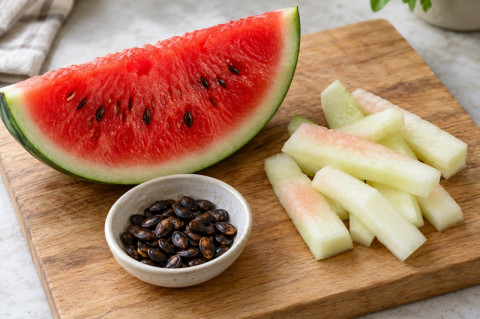
9. Watermelon: Flesh, Inner Rind, and Seeds
Watermelon offers more than its juicy flesh. The firm white inner rind can be cooked or pickled, and the seeds can be eaten.
Wash the whole melon before cutting it. For rind recipes, peel away the hard green outer skin and use the white part.
Slice the white rind thinly for a stir-fry, or use it in pickles. Keep refrigerator pickles in the fridge. If you want to store sealed jars on a shelf, follow a tested canning recipe exactly.
Clean and roast mature seeds. Shelled watermelon seeds are another option and are easier to chew.
10. Citrus Fruits: Flesh, Juice, and Peel
Oranges, lemons, and limes have useful edible peel. The thin colored outer layer is called zest. It adds a bright taste to food [5].
Wash the fruit before grating it. Remove just the colored layer for zest. The white layer beneath is edible but can taste bitter.
Add a little zest to cakes, sauces, rice, or salad dressings. Orange peel can also go into marmalade or be made into candied peel.
Enjoy the flesh and juice as usual. Do not assume the tree’s leaves, bark, or roots are safe to eat.
How to Use Edible Plant Parts Safely
Start with one new ingredient, such as beet greens or broccoli stalks. Try it in a meal you already enjoy.
Wash produce under running water. Do not use soap or bleach. Use clean tools, and keep cut produce in the fridge. Throw away produce that looks rotten [6].
If you use garden sprays, check that the label allows use on the crop and the part you plan to eat. Follow the waiting time before harvest. A spray allowed on roots or fruit may not be allowed on leaves you plan to eat.
Never assume cooking makes every plant part safe. Avoid tomato leaves, regular potato leaves, rhubarb leaves, and unknown plants.
Using more edible parts of fruits and vegetables can stretch your harvest and reduce waste. Start with fresh, familiar crops and give useful food scraps a second look.





Add comment