

 Sasha Campbell
Bark beetles may be tiny insects, but they can cause serious damage to trees. These pests tunnel beneath the bark, where they feed, reproduce, and lay their eggs.
As bark beetles tunnel through the inner bark, they damage the parts of the tree that move water and food through it.
Many bark beetles also carry fungi. These fungi block the tree’s ability to move water, which can weaken or even kill the tree.
The good news is that there are several natural ways to prevent and control bark beetles. By keeping your trees healthy and taking action early, you can lower the risk of severe damage.
What Are Bark Beetles?
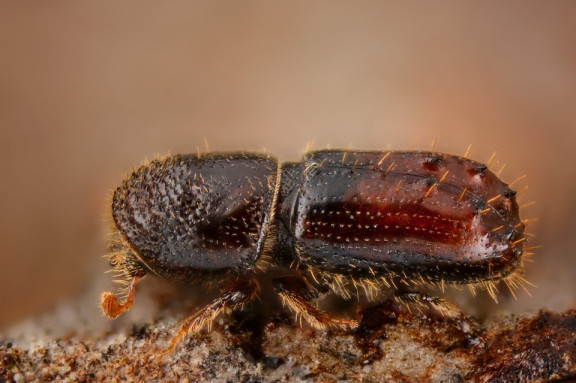
Bark beetles are small insects that spend most of their lives beneath tree bark [1].
Most species are brown, black, or reddish-brown and measure from 0.5 to 9.0 mm in length. Since they hide under the bark, infestations can remain unnoticed. This often results in serious damage before it is detected.
These pests commonly attack pine, spruce, fir, and other conifer trees. Some species may also infest cedar and hardwood trees [2].
Healthy trees can often defend themselves against a small number of beetles. However, stressed or weakened trees are much more vulnerable to infestations.
Life Cycle
Bark beetles go through four life stages:
- Egg – Adult females lay eggs beneath the outer bark.
- Larva – The larvae hatch and feed on the inner bark.
- Pupa – The larvae develop into pupae beneath the bark.
- Adult – New adult beetles leave the tree and fly to another tree to lay eggs.
Depending on the species and climate, bark beetles may produce one or more generations each year.
Common Bark Beetle Species
There are thousands of bark beetle species around the world. However, only a few of these species cause most of the tree damage in North America.
Southern Pine Beetle (Dendroctonus frontalis)
This species attacks pine trees and can kill large numbers of trees during outbreaks. It is considered one of the most destructive forest pests in the Southeastern United States [3].
Mountain Pine Beetle (Dendroctonus ponderosae)
The mountain pine beetle mainly attacks pine species, including lodgepole and ponderosa pines. Large infestations have killed millions of trees across western North America [4].
Ips Engraver Beetles (Ips species)
Ips beetles commonly attack weakened, storm-damaged, or recently cut trees. They are known for creating distinctive engraving-like tunnels beneath the bark.
Spruce Beetle (Dendroctonus rufipennis)
Spruce beetles primarily infest spruce trees. They can lead to widespread forest damage, especially after periods of drought or following storm damage.
Oak Bark Beetles (Pseudopityophthorus species)
Oak bark beetles are small insects that attack oak trees, especially those weakened by drought, disease, or physical damage.
Their tunneling can further stress affected trees. Some species may also contribute to the spread of fungal diseases, such as oak wilt.
Signs of a Bark Beetle Infestation
One of the best ways to protect your trees is to catch infestations early. Watch for these common signs:
- Tiny round holes in the bark.
- Small piles of sawdust-like material around the base of the tree.
- Loose or cracked bark.
- Yellow, pale green, or reddish-brown needles on evergreen trees.
- Dead branches.
- Increased woodpecker activity.
- Sticky sap or resin coming from the trunk.
These signs don’t always indicate that bark beetles are present. However, if you see several signs at the same time, it should prompt a closer inspection.
How to Get Rid of Bark Beetles Naturally
Below are some home remedies and natural methods that you can try. However, arborists often emphasize prevention because treatments are much less effective once bark beetles are established inside a tree.
1. Keep Trees Properly Watered
Providing enough water is one of the simplest ways to help trees resist bark beetles.
During dry periods, trees can become stressed and lose some of their natural ability to fight off pests. Deep watering encourages strong root growth and helps trees stay healthy.
Water the soil around the root zone rather than directly against the trunk. Young trees typically need more frequent watering than mature trees.
However, avoid overwatering. Constantly wet soil can stress trees and cause other problems.
Healthy trees often make enough sticky sap to push attacking beetles back out of the holes they make. This action helps stop an infestation from becoming severe.
2. Apply Organic Mulch
Organic mulch can help trees stay healthy. Materials such as wood chips, shredded bark, pine needles, or leaf mold work well.
Spread a layer of mulch around the base of the tree, but avoid piling it directly against the trunk. Keeping mulch a few inches away from the bark helps prevent rot and disease.
Mulch helps keep the soil cool and moist. This helps trees stay healthy and makes them less attractive to bark beetles.
3. Remove Dead and Infested Wood
Dead, dying, and severely damaged wood can become breeding grounds for bark beetles.
If you leave these materials on your property, beetles may continue to reproduce. This can lead to them spreading to nearby healthy trees.
Therefore, inspect your yard regularly and remove dead branches, fallen logs, and heavily infested wood. If a branch is severely damaged by bark beetles, pruning it away may help limit the spread of the infestation.
Prompt cleanup is one of the most important steps in managing bark beetles naturally.
4. Encourage Woodpeckers
Woodpeckers are among the most helpful natural predators of bark beetles [5]. These birds search tree trunks for insects and larvae hiding beneath the bark.
When woodpeckers feed on bark beetles, they can help eat some of the bark beetles naturally.
You can attract woodpeckers to your yard by providing bird feeders, fresh water, and native plants.
Note: While woodpeckers help reduce bark beetle numbers, they are unlikely to control large infestations on their own.
5. Attract Beneficial Insects
Many beneficial insects also prey on bark beetles and their larvae. Some helpful beetles and tiny wasps feed on bark beetles or their young.
One way to attract these helpful insects is by planting a variety of flowering plants throughout your landscape.
Flowers such as yarrow, dill, fennel, coreopsis, and black-eyed Susans provide both nectar and shelter for beneficial insects. These plants attract insects that help with pollination and pest control.
6. Avoid Injuring Trees
Damaged trees are more likely to attract bark beetles [6]. Injuries to the bark can release scents that signal weakness, making the tree more appealing to pests.
Take care when mowing or trimming grass near trees. Avoid striking trunks with lawn equipment, and try not to disturb roots during landscaping projects.
Proper pruning techniques can also reduce unnecessary injuries. Protecting your trees from damage helps keep them strong and better able to resist attacks.
7. Improve Soil with Compost
Healthy soil supports healthy trees.
Adding compost around the base of your trees can enhance soil quality. It adds nutrients to the soil, helps it retain moisture, and supports beneficial microbes that help trees grow.
Therefore, apply a layer of finished compost around the root zone once or twice a year.
Over time, compost can strengthen trees and improve their ability to withstand environmental stresses, including bark beetle infestations.
8. Reduce Overcrowding
When trees grow too close together, they compete for sunlight, water, and nutrients. This competition can weaken them, making them more vulnerable to pests and diseases.
If your landscape has many crowded trees, thinning some can improve air circulation. This helps reduce stress on the remaining trees.
Healthier trees are generally more capable of defending themselves against bark beetles.
9. Use Trap Logs
Trap logs are a natural management technique sometimes used to reduce bark beetle populations.
Freshly cut logs are placed near healthy trees to attract bark beetles. The beetles move into the logs instead of the trees. Before new beetles hatch, the logs are removed and destroyed.
This method requires careful timing, but it can help reduce local bark beetle numbers when used correctly. However, be sure to monitor the logs closely so they do not become a source of additional infestations.
Also, if trap logs are not removed before beetles emerge, they can actually increase local bark beetle populations.
10. Protect Trees During Drought
Extended periods of dry weather can place significant stress on trees.
During drought conditions, trees may struggle to produce enough sap. This lack of sap weakens their ability to defend against bark beetles.
To help trees handle drought stress:
- Provide extra water.
- Apply mulch.
- Reduce competition from weeds and grass.
The healthier a tree remains during dry weather, the less attractive it is likely to be to bark beetles.
11. Avoid Moving Firewood
Bark beetles can hitchhike in firewood, logs, and other untreated wood.
Therefore, avoid transporting firewood from one area to another, especially if you suspect it contains bark beetles.
12. Clean Up Storm Damage Quickly
Storms can leave behind broken branches, damaged trunks, and fallen trees. These injured trees often attract bark beetles looking for easy places to reproduce.
After severe weather, inspect your property. Remove damaged limbs and tree debris as soon as possible.
Prompt cleanup reduces potential breeding sites and helps prevent beetle populations from increasing.
13. Monitor Trees Regularly
Regular inspections can also help you detect bark beetles before they cause serious damage.
Walk around your property every few weeks and examine your trees for signs of infestation. Check for small holes, sawdust, dying branches, or any changes in leaf and needle color.
The earlier you spot a problem, the better your chances of protecting the tree. This helps prevent the infestation from spreading.
14. Use Kaolin Clay
Some gardeners and arborists use kaolin clay as a physical barrier that may help deter certain bark beetles. However, research on its effectiveness against bark beetles is limited, and results can vary.
To give it a try, mix kaolin clay powder with water according to the product directions. Then, spray the mixture on the trunk and major branches of the tree.
Reapply after heavy rain or as needed during periods of high bark beetle activity.
It may help keep some bark beetles from landing on the tree, but it does not always work. This remedy is most effective when combined with proper tree care and the removal of infested wood.
When to Call a Professional
Natural methods can be very effective, especially when infestations are caught early. However, some situations require professional help.
If large sections of a tree are dying, or multiple trees are affected, it may be time to consult a certified arborist. This is crucial if the infestation continues to spread despite your efforts.
A tree care professional can assess the extent of the damage and recommend the best course of action. In some cases, removing a severely infested tree may be necessary to protect nearby trees.
Frequently Asked Questions (FAQ)
What do bark beetles do to trees?
They tunnel under the bark, feed on the tree, and block the flow of water and nutrients, which can weaken or kill the tree.
Can a tree survive bark beetles?
Yes. Trees are more likely to survive when infestations are small and detected early, especially if the tree is healthy enough to defend itself.
The chances of survival are much higher when the infestation is detected early.
What trees do bark beetles like most?
They usually attack pine, spruce, fir, and other conifers, especially when stressed. Some species may also attack cedar and hardwood trees.
How do I know if I have bark beetles?
Look for tiny holes in the bark.
Also, check for sawdust-like material around the tree. Watch for dying branches and any changes in leaf or needle color.
Also, check for sawdust-like material around the tree, dying branches, and changes in leaf or needle color.
How do bark beetles spread?
Bark beetles spread by flying from one tree to another [7]. They are attracted to stressed or damaged trees and can also spread through infested firewood or fallen logs.
What is the best insecticide for bark beetles?
Preventive insecticides containing pyrethroids are often considered the most effective chemical option for protecting healthy trees.
However, they usually do not work well once beetles are already beneath the bark.
Are bark beetles dangerous to humans?
No, bark beetles are not dangerous to people or pets [8]. They do not bite, sting, or spread disease to humans.
What is the best natural way to stop bark beetles?
Keeping trees healthy through proper watering, mulching, and the removal of dead wood is one of the best natural defenses.
Do bark beetles attack healthy trees?
They prefer weak or stressed trees, but in large numbers, they can sometimes attack healthy ones too.
Can I get rid of bark beetles without chemicals?
Yes. To control them naturally, focus on improving tree health.
Remove infested wood and encourage natural predators. These methods work together to help reduce bark beetles naturally.
Should I remove a tree with bark beetles?
If the infestation is severe and the tree is dying, removal may be necessary to protect nearby trees.
What attracts bark beetles to a yard?
Stressed trees, dead wood, drought conditions, and damaged bark can all attract them.
How can I prevent bark beetles in the future?
Keep trees healthy, water them during dry periods, avoid injury, and clean up dead or damaged wood quickly.
Takeaway
Bark beetles can be destructive, but they are often easier to manage when you focus on prevention.
Watering trees, adding mulch and compost, and checking them often can help keep them healthy. These practices can significantly lower the risk of infestations.
Encouraging natural predators, removing infested wood, and addressing tree stress early can all help protect your landscape.





Add comment