

 Sasha Campbell
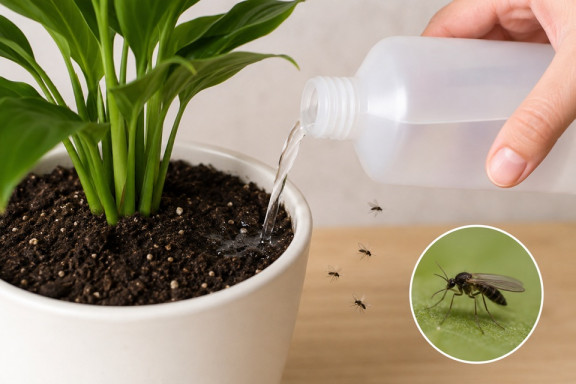
Fungus gnats are tiny flying insects that can become a big problem for houseplants and seedlings. You may notice small black flies hovering around your plants or crawling on the soil.
While adult fungus gnats are mostly annoying, their larvae (baby gnats) can damage plant roots.
One simple and inexpensive way to control these pests is with hydrogen peroxide. Many gardeners use it because it is easy to find, affordable, and simple to use.
In this guide, you’ll learn how hydrogen peroxide works against fungus gnats. You’ll also find out how to use it safely and get helpful tips to keep your plants healthy.
What Are Fungus Gnats?
Fungus gnats are tiny flying insects that resemble miniature mosquitoes [1]. They are usually black or dark gray and are often seen flying around indoor plants.
Adult fungus gnats lay their eggs in moist soil. When the eggs hatch, the larvae stay in the soil. They feed on fungi, decaying organic matter, and sometimes tender plant roots.
A few fungus gnats may not cause much trouble. However, a large infestation can weaken young plants and seedlings.
Signs of a Fungus Gnat Problem
You may have fungus gnats if you notice:
- Tiny black flies around your plants.
- Gnats flying when you water or move a plant.
- Larvae in the soil that look like tiny clear worms with black heads.
- Slow-growing seedlings.
- Yellowing leaves.
- Plants that seem unhealthy despite proper care.
The sooner you spot fungus gnats, the easier they are to control.
What Is Hydrogen Peroxide?
Hydrogen peroxide is a clear liquid often used to clean minor cuts and scrapes. The most common type sold in stores is a 3% solution.
Gardeners also use hydrogen peroxide in the garden. When used correctly, it can help kill fungus gnat larvae living in the soil.
How Hydrogen Peroxide Kills Fungus Gnat Larvae
Hydrogen peroxide works by breaking down into water and oxygen [2]. When it breaks down, it releases oxygen that can kill or injure fungus gnat larvae in the soil.
The treatment targets larvae in the soil, which are responsible for most of the damage caused by fungus gnats.
Adult gnats flying around your plants may survive the treatment. However, reducing the number of larvae can greatly lower the overall population.
How to Make a Hydrogen Peroxide Soil Drench
Making a hydrogen peroxide soil drench is very easy.
You will need 1 part 3% hydrogen peroxide and 4 parts water. For example, mix 1 cup of hydrogen peroxide and 4 cups of water.
Stir the mixture gently and use it right away.
Avoid using higher concentrations unless properly diluted, as they may harm plant roots.
How to Use Hydrogen Peroxide for Fungus Gnats
You can use hydrogen peroxide for houseplants. Use a simple soil drench to help control fungus gnat larvae.
After mixing one part 3% hydrogen peroxide with four parts water, slowly pour the solution onto the soil until it is evenly moist. It is best to apply the treatment when the top layer of soil has dried slightly.
As the solution soaks into the soil, you may notice fizzing or bubbling. This is completely normal. It occurs when hydrogen peroxide reacts with organic matter in the soil.
The hydrogen peroxide mixture targets fungus gnat larvae that hide under the soil. Allow any excess liquid to drain from the pot before returning the plant to its usual location.
If fungus gnats are still present after a week, you can repeat the treatment.
Many gardeners notice a significant reduction in fungus gnats after one or two treatments. However, severe infestations may require additional applications and other control methods.
To prevent future infestations, don’t keep the soil too wet. Fungus gnats love moist conditions. Letting the top inch of soil dry out between waterings can make your plants less appealing to these pests.
Is Hydrogen Peroxide Safe for Plants?
When properly diluted, hydrogen peroxide is generally safe for most plants.
The solution breaks down quickly into water and oxygen, leaving no harmful residue behind.
However, it is important not to overuse it. Too much hydrogen peroxide or using it too often may stress plant roots.
If you are treating a sensitive plant for the first time, test the solution on one plant and monitor it for a few days before treating more plants.
Hydrogen peroxide may also affect some beneficial microorganisms living in the soil. Occasional treatments are usually not a problem, but repeated use may disrupt parts of the soil’s natural microbial community.
Tips for Better Results
Hydrogen peroxide works best when combined with good plant care practices.
Try these tips:
- Avoid overwatering your plants.
- Let the top inch of soil dry out between waterings when appropriate.
- Remove dead leaves and plant debris from the soil surface.
- Use pots with drainage holes.
- Improve air circulation around your plants.
Since fungus gnats love moist soil, keeping the soil from staying constantly wet can help prevent future infestations.
Other Natural Ways to Control Fungus Gnats
Hydrogen peroxide is helpful, but it is not the only solution.
You can also try:
Yellow Sticky Traps
These traps catch adult fungus gnats flying around your plants. They help reduce the number of egg-laying adults.
Diatomaceous Earth
Sprinkling food-grade diatomaceous earth on the soil surface can help kill fungus gnat larvae near the soil surface and newly emerging adults.
It works by damaging their outer coating. Reapply it after watering, as it works best when dry.
Beneficial Nematodes
These microscopic worms live in the soil and attack fungus gnat larvae.
Mosquito Bits
Mosquito Bits contain Bacillus thuringiensis israelensis (BTI). This is a naturally occurring bacterium that specifically targets mosquito, black fly, and fungus gnat larvae.
For severe infestations, combining hydrogen peroxide with yellow sticky traps and BTI products such as Mosquito Bits often provides the fastest and most effective control.
Common Mistakes to Avoid
Many people accidentally make fungus gnat problems worse.
Avoid these mistakes:
- Watering too often.
- Leaving standing water in trays.
- Using undiluted hydrogen peroxide.
- Treating only the adult gnats.
- Ignoring heavily infested plants.
Remember, the larvae in the soil are the main target. Killing the adults without controlling the larvae usually won’t solve the problem.
Why Fungus Gnats Keep Coming Back
Fungus gnats can be stubborn because their eggs and larvae are hidden in the soil. Even if you kill many larvae with a hydrogen peroxide soil drench, some eggs may survive and hatch a few days later.
Overwatering can also create the moist conditions that fungus gnats need to thrive.
Moreover, adult fungus gnats can lay hundreds of eggs during their brief lifespan [3]. This ability allows their populations to rebound quickly if conditions stay favorable.
To break their life cycle, combine treatments with good watering habits. Then, continue monitoring your plants for several weeks to ensure effectiveness.
This helps prevent new generations from becoming established.
When to Repeat the Treatment
Hydrogen peroxide is most effective against larvae. However, it does not reliably kill fungus gnat eggs, which is why repeat treatments are sometimes necessary.
If you still see fungus gnats after a week, you can repeat the treatment using the same dilution ratio.
Continue monitoring your plants. Combine the treatment with better watering habits for the best long-term results.
Takeaway
Hydrogen peroxide is a simple, affordable, and effective way to help control fungus gnats in potted plants.
By mixing one part 3% hydrogen peroxide with four parts water, you can create a soil drench that helps kill fungus gnat larvae hiding beneath the soil surface.
Hydrogen peroxide can greatly reduce fungus gnat infestations, but it is most effective when combined with proper watering habits and other natural control methods.




Add comment