

 Andre Campbell
The Virginia opossum is the only opossum species native to the United States and Canada.
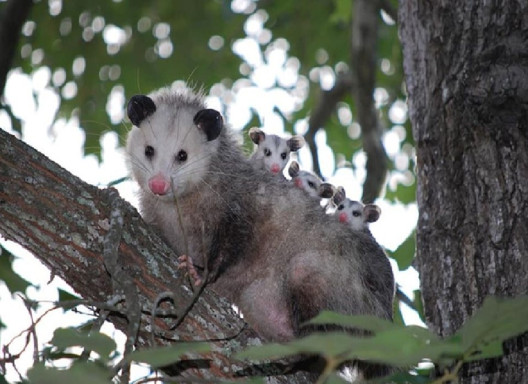
It has a pointed face, grayish fur, and a long, nearly hairless tail. It is a marsupial, which means its babies continue to grow in their mother’s pouch after they are born [1].
Opossums eat insects, fallen fruit, and dead animals. That can make them helpful visitors to a yard. But they may also eat fruit growing in a garden, so their benefits have limits.
How Long Do Opossums Live?
Most wild Virginia opossums live only about 1 to 2 years. Some live longer [2].
A female has about two litters of babies a year on average, though the number can vary. Her pregnancy lasts just 12 to 13 days.
The tiny babies crawl into her pouch and attach to a teat so they can keep growing. A female usually has 13 teats. Babies that cannot attach to one do not survive.
The babies stay in the pouch for about two months. As they grow, they may ride on their mother’s back. They can live on their own at around five months old [2].
Opossum vs. Possum: What Is the Difference?
In the United States, people often call the Virginia opossum a possum. Both words may mean the same animal in everyday speech. In Australia, possum is also a name for different marsupials.
How Do Opossums Help Gardens?
Opossums eat a wide range of food. In a yard, they may eat insects, snails, and fruit that has fallen to the ground.
They also eat dead animals. This is why people sometimes call them part of nature’s cleanup crew [2, 3].
Eating an insect or snail does not mean an opossum will clear pests from your garden. Opossums may also eat berries, grapes, and other fruit still growing on plants. If you have a fruit garden, you may need to protect it [3].
You may have heard that opossums eat thousands of ticks. Research has not shown that they eat enough ticks to control them in a yard. Keep using other ways to protect yourself from ticks [4].
What Do Opossums Eat?
Virginia opossums eat both plants and animals. Their food may include fruit, nuts, seeds, insects, worms, snails, eggs, frogs, small rodents, and dead animals. What they eat depends on what they can find.
Near homes, they may also eat pet food or food from open trash cans. Bring pet food indoors at night and keep trash cans closed. These steps can help prevent unwanted visits [2].
Opossums may eat eggs or young chicks if they can get into a chicken coop. Close and secure the coop at night to help protect your chickens.
Where Do Opossums Sleep?
Opossums are mostly active at night. During the day, they rest in sheltered places, such as hollow logs, old animal burrows, or tree cavities.
They may also shelter beneath a porch or shed. They do not usually dig their own burrows.
Are Opossums Dangerous?
Opossums usually avoid people. If one feels trapped, it may hiss, show its teeth, or bite to defend itself. Give it room to leave, and never try to pick it up [3].
Rabies is rare in opossums, but they can carry other diseases and parasites. Treat them as wild animals and keep your distance [3, 5].
Why Do Opossums Play Dead?
When an opossum cannot get away from danger, it may fall over, become limp, and appear dead. This is an automatic reaction. It may get up and leave once the danger has passed.
Can Opossums Hang by Their Tails?
Opossums can use their tails to grip branches and carry leaves to a resting place.
They can hang upside down for a short time, but adults cannot stay that way for long. They do not sleep hanging by their tails.
Takeaway
Opossums play a part in nature by eating many kinds of food, including insects, fallen fruit, and dead animals. They can be useful visitors, but they may also eat garden fruit or get into food left outdoors.
Give them space, keep pet food and trash secure, and protect crops or chickens when needed.

 Sasha Campbell



Add comment