

 Andre Campbell
The Americas are home to the common and Virginia opossum. They are good to have around because they provide many benefits to your yard and garden.
Opossums are the largest order of marsupials in the Western Hemisphere, with 103 species in 19 genera [1]. You won’t find either of them in deserts or barren areas, as they like to hide.
They have no natural defense against predators, even though they can “play dead” and excrete a horrible smell from their anal glands.
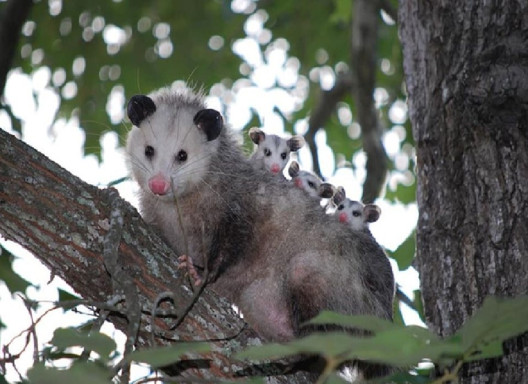
These creatures look like large rats with coarse gray hair, prehensile hairless tails, beady eyes, and a mouth full of 50 teeth.
They are marsupials [2], meaning they give birth to live young and carry them in pouches.
In this article, we will mostly discuss the facts and benefits of the Virginia opossum. They live in areas from southern Canada to the U.S. border with Mexico.
Lifespan
Opossums live 2 to 4 years, depending on where they reside [3].
They mate twice a year. The male is generally called a jack, and the female is called a jill.
As marsupials, their young are called joeys.
The female gestates for two weeks before giving birth to about two dozen opossum babies. The little ones have to find their way into mom’s pouch, where she has a dozen teats.
Between this and predators like snakes, only about a dozen survive.
The joeys stay in the pouch for 2 months and stay with mom until they’re 5 months old. Now, they’re fully capable of fending for themselves.
Opossum vs. Possum
While this does have something to do with how people pronounce and spell the word depending on where they live, it also relates to two distinct families of opossums.
The word opossum has been traced back to 1610, and the word possum to 1613. Regional dialects determine whether the “o” is pronounced and added to the word “possum” or not.
People in the southern portions of the United States tend to drop the “o,” while their northern brethren use the “o.”
In addition, opossum refers to all species of opossum living in the Americas. However, possum refers to the Australian marsupial resembling an opossum and to all species of this animal living in Australia.
The possum was given its name by traders who brought it to Australia from the Americas.
Benefits of Possums
Opossums are part of nature’s cleanup crew.
They prefer food that’s on the ground and easy to get. This means they get rid of anything rotten or overripe, including bones.
They also get rid of venomous snakes, snails and slugs, rodents, beetles, and other pests that could infest a garden.
It’s their preference for eating things that most others won’t, which makes them beneficial to a garden.
Unlike deer and small rodents, they won’t go after your lovely fruits and veggies while they’re growing and ripening. They’ll wait until they’re no longer edible and then get rid of them before they start to rot.
What Do Opossums Eat?
The opossum’s diet may include the following:
- Dangerous pests, especially disease-carrying ticks. The Virginia opossum can eat up to 5,000 ticks in a single season [4].
- Snakes, including venomous ones, compete with opossums. Opossums are resistant to toxins. They often prey on one another, showcasing their predatory skills.
- Overripe fruit. If it’s on the ground, it’s fair game.
- Spoiled vegetables. The softer and more rotten they are, the more they like them.
- Carrion, including roadkill. They require large amounts of calcium, so they will even eat the bones.
- Outdoor pet food. They don’t care if it’s for dogs or cats, wet or dry.
- They’re also as bad as raccoons at getting into unsecured garbage cans.
- They won’t go after hanging bird feeders or any that they have to climb to reach, but if it’s on the ground, they’ll be happy to clean it up.
- Small rodents. This includes eating mice that are beneficial to farmers and gardeners alike.
- Worms: There is no list of what kinds of worms opossums eat.
- Slugs and snails. Another opossum habit that benefits gardeners.
- Small amphibians, like frogs. Frogs will also eat the newborn joeys if they find them.
- Bird eggs and bird young. Like snakes, opossums, and birds of prey hunt each other. The only difference is that opossums will only eat the eggs and birds’ young if they’re on the ground.
- Do possums eat chickens? Yes. They will enter chicken coops to get young ones and eggs.
- In extreme circumstances, they eat each other. Yes, they do have cannibalistic tendencies and will more likely eat their young before another adult does. This only happens when food is scarce.
Where Do They Sleep?
Opossums are nomadic, solitary wanderers who do not hibernate.
They use the abandoned burrows of other animals and sleep in hidden, secure areas as their habitat. These include hollow branches, hollow trees, under your porch, in your garage, crevices, and even caves made under stones, soil, and leaf litter.
Opossum Predators
- Snakes eat the baby opossums.
- Dogs will injure or even kill opossums, but not necessarily eat them.
- Foxes will eat rodents of all kinds, but the slow-moving opossum seems to be a favorite.
- Some people living in the southern U.S. states consider the opossum a good source of meat [5].
- Birds of Prey – this includes eagles, falcons, owls, and ospreys.
- Coyotes are another animal that favors the slow-moving rodent as ideal prey.
- Feral cats may or may not eat the opossum.
- Wild cats also find opossums to be ideal prey.
- Raccoons may or may not eat the opossum.
Do They Carry Diseases?
Possums themselves don’t carry diseases, but they do carry fleas and lice that may cause disease.
Takeaway
As you can see, opossums are some very misunderstood animals who should be left alone to do their job as nature’s janitors. They have a very important job to do.


 Sasha Campbell


Add comment