

 Andre Campbell
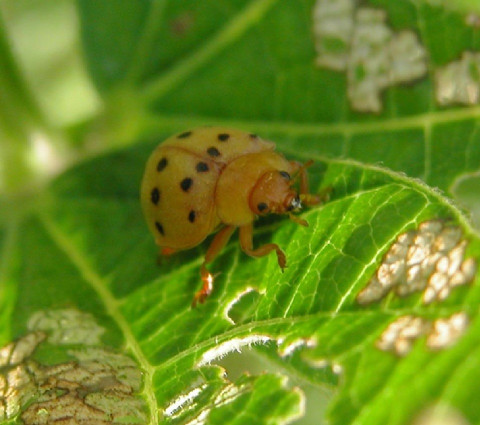
Mexican bean beetle (Epilachna varivestis) larvae cause more damage than mature beetles. They feed on the undersides of leaves, pods, and stems.
This pest causes considerable damage to bean plants and other legumes [1].
Here’s how to get rid of Mexican bean beetles naturally:
1. Diatomaceous Earth (DE)
Few pests can survive long-term treatment with DE. Sprinkle it on the soil and directly on the crops.
Diatomaceous earth is effective against all life cycle stages of the Mexican bean beetle. However, the most effective time to use it is during the pest’s larval stage, when the product can cut through its soft body.
You must also reapply after a rain shower or garden watering.
2. Neem Oil
This home remedy is widely used as a pesticide in organic farming. Neem oil inhibits feeding and disrupts the growth of many pests, including bean beetles.
Pure neem oil can be used to make a homemade Mexican bean beetle spray. Combine 4 tablespoons of neem oil with 2 teaspoons of organic liquid soap and 1 gallon of water.
Use this solution to spray your plants’ leaves in the evening.
3. Pyrethrin
Pyrethrin is an organic compound derived from some chrysanthemum flowers. It has a powerful effect on the nervous systems of certain insect pests, including beetles.
Our recommended brand is PyGanic. This product contains pyrethrin as its active ingredient.
You can use it as an insecticide to control infestations of many pests, including bean beetles.
Direct contact with the pests is needed for adequate control. However, be careful when using this organic insecticide, as it is toxic to honeybees.
4. Beneficial Insects
Encouraging insects that eat other insects in your garden is a natural way to help reduce crop damage.
The ladybug and the lacewing are extremely helpful in the garden. These insects are happy to eat the eggs and larvae of Mexican bean beetles and other pests.
Minute pirate bugs and spined soldier bugs help by eating bean beetles, cutworms, and leafhoppers.
5. Crop Rotation
This is a time-tested method to control pests. Farmers move crops away from infested soil for a while and then plant them in a different spot.
As a result, the overwintering beetles will have no source of sustenance come next season, and most will die.
6. Row Covers
To protect plants from pests, use floating row covers designed for this purpose. The thin, lightweight material allows air and sunlight in while keeping pests out.
7. Trap Crop
Both adults and larvae of Mexican bean beetles love to feed on lima beans. Hence, this is one type of crop you can use to deter these pests from your other crops.
Plant lima beans a little away from your garden to attract these pests.
8. Pick Them Off
This is another easy way to get rid of these bugs on green beans and other plants. As soon as you spot them, pick them off.
The beetles’ eggs can be scraped off, and the larvae and adult beetles can be squished.
9. Milky Spore
Milky spore uses a naturally occurring bacterium to control Japanese beetle larvae. Still, some farmers also swear by it for controlling bean beetle larvae.
To use this commercially available product correctly, follow the directions on the package.
10. Insecticidal Soap
This method is best used for a small Mexican bean beetle infestation.
Spraying a solution of organic insecticidal soap (like this one) can kill a few larvae or adults. However, to be effective, thoroughly drench the plants’ leaves and stems to smother the bugs.
11. Kaolin Clay
Kaolin clay is another commercially available organic product. When used as a spray, it controls Mexican beetles and other pests organically.
The clay forms a protective barrier film wherever it is applied to your plants. This film prevents these chewing insects from damaging the plants.
Surround WP is our recommended brand. Use it according to the product instructions.
12. Garden Cleanup
Clearing away the detritus of summer and fall is vital to keeping harmful insects at bay.
Leaves, waste, and litter harbor overwintering Mexican beetles. Therefore, a thorough spring cleanup will help prevent infestations of these pests.
13. Debug Turbo
This is a highly effective product for controlling beetles and other pests.
Debug contains the active ingredients neem oil, triterpenoids, and azadirachtin. These compounds deal with insect pests at all stages of their life cycle.
Debug acts as a repellent, inhibiting feeding and larval development. However, to speed up infestation control, dilute it with water and spray thoroughly on crops early in the morning or in the evening.
Repeat applications as advised by the manufacturers.
Takeaway
It is a miserable sight for gardeners to find these beetles on beans. However, using one or a combination of the above natural methods will help deter or kill these pests.

 Sasha Campbell


Add comment