

 Sasha Campbell
The damage from leafrollers is usually not severe.
It can start as a minor problem on fruit trees—maybe just a few curled leaves that spoil the look of the plants. After a while, the fruit may look scarred and deformed, and the leaves may have a ragged appearance.
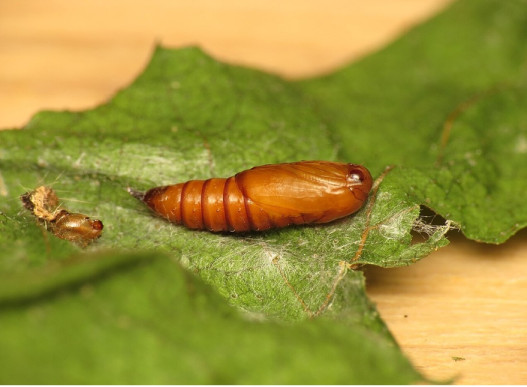
Look closely, and you may spot small leaf-rolling caterpillars inside the leaves. They are neatly tied up with silk. These are likely the larvae of certain tortricid moths [1], busily feeding.
Apart from fruit trees, leaf rollers commonly go after ornamentals and some flowering plants. These include box elder, canna, oak, birch, maple, rose, and willow.
Here’s how to get rid of leafrollers naturally:
1. Bacillus thuringiensis (Bt)
This is a naturally occurring soil bacterium. Bacillus thuringiensis is often used in commercial organic pesticides.
If applied properly, Bacillus thuringiensis will deliver a fatal toxin to leaf rollers, bad garden worms, and certain other pests. However, it will not harm beneficial insects or plants.
Spray on the leaves before the leaf roller larvae begin feeding on them. Once they are rolled up and sealed in, sprays cannot reach the pests.
Additionally, Bt becomes less effective in sunlight. As a result, you may need to reapply in a spell of hot, sunny weather. Also, do not store it for more than one season.
2. Spinosad
This product is similar to Bt as a natural soil bacterium, but with a different, possibly quicker action.
Spinosad acts on the nervous system, causing paralysis and disrupting feeding patterns. Thus, larval death occurs within 1 to 2 days.
It is widely available in commercial pesticides as powders, granules, and sprays. It is also often used in organic gardening.
3. Scrape Off the Eggs
An excellent home remedy is to remove the eggs before they hatch.
At the beginning of summer or late spring, batches of light green to light brown eggs may be visible on the upper side of the leaves.
This is a good time to prevent destructive larvae from developing. Simply scrape off the eggs and dispose of them, preferably by burning them.
4. Lacewing Eggs
Around the same time as removing moth eggs, or in early spring, scatter green lacewing eggs onto the leaves of fruit or nut trees.
These natural predators will hatch out and devour moth eggs and leafroller caterpillars. You can purchase lacewing eggs online or from some local farm stores.
5. Trichogramma Wasps
These very tiny wasps will also help prevent an infestation of leaf-rolling insects.
They parasitize the eggs of a wide variety of moths, thwarting development and destroying the host. Female wasps lay eggs in the moth eggs, potentially killing large numbers of pests each season.
You can also buy these beneficial wasps online or from various gardening suppliers.
6. Azera
Some farmers use this commercial product for the biological control of many pests affecting food crops. The two powerful active ingredients of Azera are pyrethrins and azadirachtin.
Neem oil is a popular natural insecticide that comes from neem trees. Pyrethrins are also famous for their insecticidal properties.
However, exercise caution when using Azera. Spray it in the evening, not directly onto blooming flowers or ripe fruits, as it may harm pollinators like bees.
If you use the product as directed, Azera is effective against leaf-roller insects. You can also use it against other pests, such as wireworms, aphids, and tortrix moth caterpillars.
7. Bonide Spray
Bonide is a specially prepared, concentrated, lightweight mineral oil spray. You can use it for winter pest control during the dormant period.
Dilute it as per its instructions. Use it in stages over the colder months to prevent pest eggs from hatching or larval forms from developing.
Spray all parts of the trees, including the bark, branches, and leaves, thoroughly. Additionally, you can use this leafroller control product at other times of the year if needed.
8. Organocide
The decline of bee populations is partly due to the overuse of chemical pesticides. As a result, a return to biological control is helping to restore balance.
Organocide is one such product that helps deal with insects, mites, and fungus. Also, if used properly, it will not harm pollinators, particularly bees.
The main components of the spray are sesame and fish oils with soybean extracts. These are supplied in a ready-to-use form or as a concentrate.
One application should clear existing leaf roller infestations. However, repeat monthly if any further damage is visible. Also, do not use this product indoors.
9. JMS Stylet Oil
You can use this product year-round. Besides, it is suitable for greenhouse use and for fruit trees and crops.
This product is a highly refined white-grade mineral oil used to control powdery mildew and other fungal diseases of plants. A spray solution of JM Stylet Oil and water is also effective against mites and pests, including leaf rollers.
Takeaway
The larval form of the leaf roller moth can affect fruit trees such as pear, peach, and apple.
A perfect harvest may be ruined by discoloration, stunting, or deformity. Moreover, because there are so many garden pests, it is often difficult to assess the culprits.
Leaf rollers, however, are easy to identify as they hide within rolled-up leaves secured by silken threads. Once spotted, you can control them by one or more of these natural means.



Add comment