

 Sasha Campbell
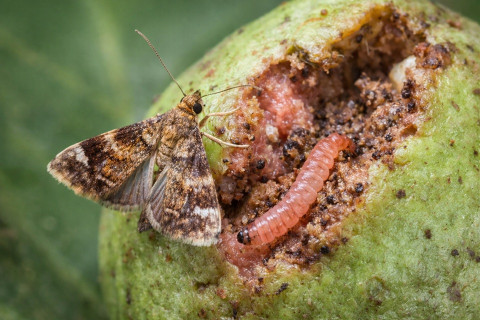
Ever notice those black and white, speckled little moths fluttering around your guava tree? Chances are, you have guava moths.
These pesky insects lay their eggs on guava fruit, and the larvae hatching from those eggs burrow inside and feed on the flesh. Before you know it, your once-flourishing guava tree is experiencing an early fruit drop.
But don’t be dismayed; there are natural ways to get rid of these guava pests. In this article, we will explore natural remedies to control guava moths and their caterpillars.
Identification
The guava moth (Coscinoptycha improbana) is a small, white-and-black speckled moth about one centimeter in length [1]. Its larvae, or guava moth caterpillars, are pinkish in color and can grow up to 10 mm long.
The adult moths lay their eggs on ripening guava fruit or other affected fruits. Once the eggs hatch, the caterpillars burrow into the fruit and feed on its flesh.
You’ll know you have guava moths if you see small holes in the fruit skin and larvae inside the fruit.
There may also be premature fruit drop. This is when the caterpillars damage the fruit, causing it to fall from the tree prematurely.
Trees Affected by Guava Moth
The guava moth can become comfortable around several trees.
Guava, of course, is a favorite target. These moths just can’t resist their namesake. Apples, pears, and feijoa trees are also commonly infested, as the larvae drill into the flesh of the fruits.
The critters may also attack plums, loquats, peaches, citrus, and quinces.
How to Get Rid of Guava Moths Naturally
To keep these pests away naturally, regularly inspect your trees that may be affected, especially when they are fruiting.
Remove any damaged or fallen fruit from the ground. Also, apply neem oil or spinosad, which are organic pesticides. These will help deter the moths from laying eggs on the fruit.
As a last resort, you may need to cover the fruit with mesh bags to physically keep the moths away until harvest.
Below are some other home remedies and natural strategies you can try. We’ll also expand on the ones already mentioned.
1. Neem Oil
Neem oil can help control guava moths and reduce infestations.
To make a homemade guava moth spray, combine 2 tablespoons of pure neem oil, 1 teaspoon of liquid soap (as an emulsifier), and 1 gallon of water.
Shake well to mix, and spray it all over your fruit tree, including the fruits. This will keep moths away, which are the root cause of the problem.
This solution will also repel other guava pests.
2. Moth Traps
You can make simple homemade guava moth traps using everyday items.
Fill a plastic jug with a mixture of 5 cups of water, 1/2 cup of molasses, and 1 cup of vinegar to attract and drown the moths.
Next, cut a large enough hole just below the jug’s shoulder. Now hang it in trees to attract and trap the critters.
You can also make a DIY solar light trap by placing the light over a milk jug.
Next, pour a liquid solution into the jug. For the recipe, combine 1 liter of water, 1/2 cup of sugar, and 1 teaspoon of vanilla in the jug. The light will attract the moths, after which the solution will kill them.
For a more high-tech option, purchase pheromone traps. These contain scents that mimic the pheromones female moths release to attract males for mating. The males enter but then get trapped.
3. Spinosad
Spinosad is an organic pesticide that can control guava moth caterpillars. It works by disrupting the moth larvae’s nervous system, causing paralysis and later death.
Spray it on the affected fruit and nut trees as directed.
4. Pick Up Fallen Fruits
Picking up fallen, rotting fruits and destroying them helps break the life cycle of these pests. Therefore, regularly patrol your fruit trees and pick up any fallen fruit.
Dispose of the fruits in sealed bags to prevent eggs and larvae from escaping. The moths also pupate in the fallen fruits, so destroying them is crucial.
5. Cover the Tree with a Fine Mesh
Some farmers have had success using a mesh to cover trees such as feijoas immediately after they start flowering.
This home remedy protects the fruits from pests of all kinds. However, use a lightweight mesh that still allows sunlight and airflow.
Drape the mesh over the canopy of the tree, fastening it around the base of the trunk to keep it in place. Also, make sure there are no gaps or tears in the mesh that would allow insects to enter.
6. Chickens
Another organic guava moth control method is to employ chickens.
Chickens are natural predators of maggots, grubs, and all kinds of insect larvae. Allowing chickens to roam freely in your orchard or garden can help reduce guava moth populations.
Chickens will feed on the grubs as they pupate in the soil. Chickens are excellent foragers and will search the ground for these pests.
7. Remove Heavily Infested Trees
In heavy infestations, remove the entire tree. Simply pruning branches won’t be enough, as the moths can still linger.
Also, remove any fallen fruit under the tree that could harbor moth larvae or pupae. Dispose of all tree parts and fallen fruit by burning or sealing them in plastic bags and throwing the bags in the trash.
The most effective way to control guava moth infestations in your yard or orchard is to eliminate their breeding sites. This method is both organic and eco-friendly.
By eliminating the moths’ habitat and food source, you cut off their lifeline. This action prevents future generations from emerging.
While it may seem drastic, removing diseased or damaged trees will improve the overall health of your remaining plants in the long run.
8. Arber Bio Insecticide
This biological insecticide can help control moths and other common garden pests.
It is toxic to insects when ingested. It also destroys insects’ exoskeletons. Both of these actions kill the targeted pests.
Arber Bio Insecticide works at fighting codling moths, alfalfa webworms, fruit flies, sharpshooters, diamondback moths, and other moths and bugs.
Takeaway
So there you have it: a few natural remedies to eliminate guava moths without resorting to harsh chemicals. Give these methods a try in your garden, and you may enjoy blemish-free fruits in no time.
And remember, the key is to be consistent and patient throughout the process. Stay vigilant with regular inspections and reapply these natural treatments as needed.



Add comment